
Blog
Wall Hugger Recliners Leather


In Central Maine, a lot of living rooms ask one piece of furniture to do three jobs. It has to be comfortable enough for a long winter evening, compact enough for a cape, cottage, or apartment, and sturdy enough to earn its place for years. That's where leather wall hugger recliners start to make sense.
A standard recliner can feel like trying to park a half-ton pickup in a one-car garage. It may be comfortable, but it needs room behind it, room in front of it, and room for everyone to walk around it. A wall hugger changes that equation. Add leather, and the chair starts pulling double duty as both a practical seat and a finished piece of the room.
For shoppers sorting through wall hugger recliners leather options, the primary question isn't just whether the chair reclines. It's whether it fits the home, the household, and the way people live.
Table of Contents
- Finding Comfort in a Small Space
- The Smart Mechanics of Wall-Away Reclining
- The Benefits and Trade-Offs of Leather
- How to Measure for Your New Recliner
- Finding Your Recliner in Central Maine
- Keeping Your Leather Recliner Looking New
Finding Comfort in a Small Space
In Augusta, Skowhegan, and across Central Maine, plenty of homes have good bones and modest room sizes. A living room might have a woodstove on one side, a window facing the yard on the other, and just enough open floor to keep traffic moving. That's usually when a homeowner starts looking for comfort without turning the room into an obstacle course.
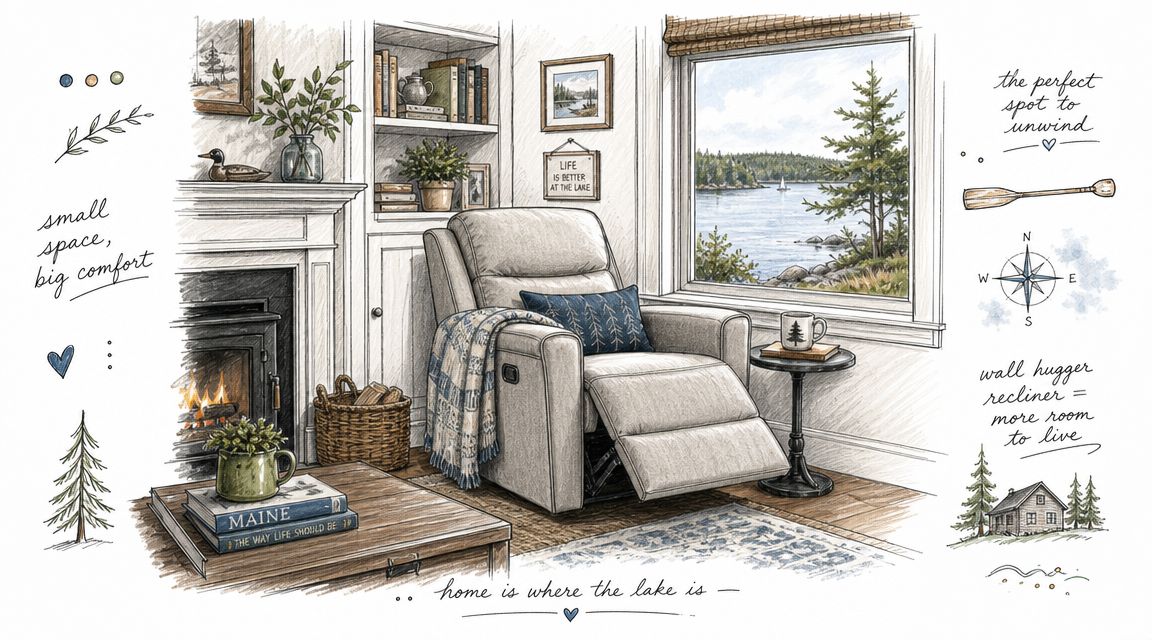
A leather wall hugger recliner works well in that kind of setup because it solves a very Maine problem. People want a chair that feels like a place to land after a long day, but they don't want to give up half the room to get it. Contemporary furniture guidance treats wall-hugger recliners as a practical option for tight spaces because the chair uses a wall-away motion that minimizes rear travel, which helps preserve usable floor area in smaller rooms and apartments, as noted in this guide to wall-hugger recliners for small spaces.
A small room doesn't need less comfort. It needs better planning.
For households working through a tighter layout, this kind of chair often fits naturally beside a sofa, in a bedroom reading corner, or in a den where every inch matters. The same logic shows up in smart small-space living room ideas. The chair earns its spot because it respects the room instead of dominating it.
A good recliner should make a room feel easier to live in, not harder to walk through.
Where wall huggers make the most sense
- Older homes: Rooms in classic capes and farmhouses often have less open depth than newer builds.
- Multi-use spaces: A den that also handles reading, TV, and guest overflow benefits from a compact footprint.
- Apartments and cottages: Limited square footage makes rear-saving motion much more valuable.
The Smart Mechanics of Wall-Away Reclining
A wall hugger recliner saves space because it moves differently from a traditional recliner. Instead of needing a big backward swing, it works more like a chair sliding forward on a track while the back pivots. That motion changes how the chair uses the room.
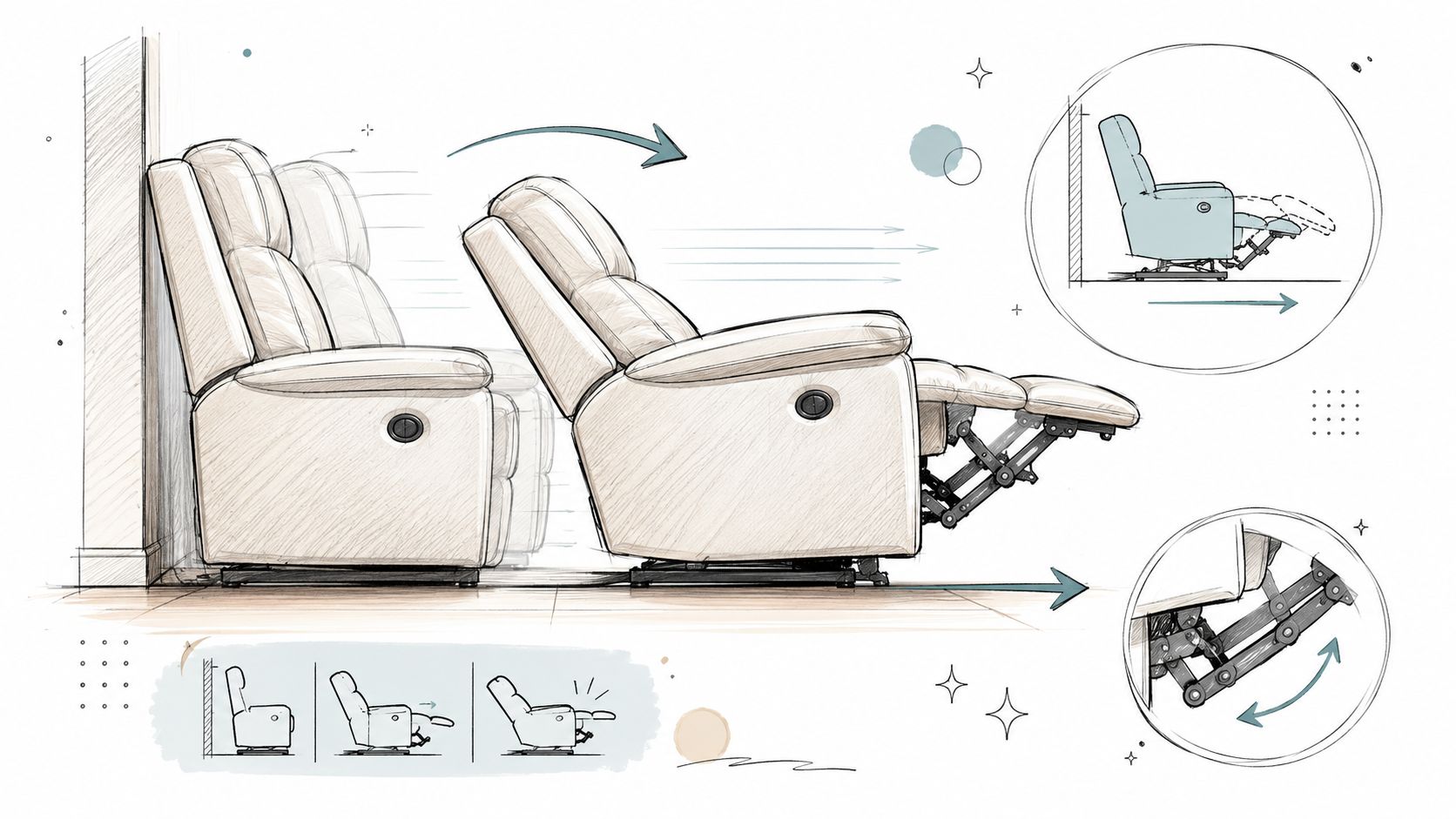
One clear description puts it this way: wall-hugger recliners use a reduced rear-clearance path so the seat pan moves forward while the back pivots, letting the chair reach a full recline with much less wall clearance, according to this wall-hugger recliner overview. That's the whole trick. The chair doesn't ask the wall behind it for much room.
Why that matters in a real living room
Traditional recliners can eat up the wrong kind of space. They may look fine upright, then suddenly need more room behind them once they open. In a narrow room, that creates two headaches. The chair competes with the wall at the back, and it crowds the walkway in front.
A wall-away design handles the first problem much better. That's why these chairs are often a solid choice for apartments, dens, and RV-style layouts where a standard recline arc would cause trouble. For many households, the practical benefit isn't only the recline itself. It's being able to keep the room usable after the chair is in place.
Practical rule: The best space-saving chair is the one that still lets people pass through the room without turning sideways.
What works and what doesn't
Here's the plain-English version.
| Recliner type | What usually works | What often doesn't |
|---|---|---|
| Wall hugger | Tight wall placement, smaller rooms, shared spaces | Assuming rear clearance is the only measurement that matters |
| Traditional recliner | Larger rooms with extra depth | Narrow rooms, busy walkways, furniture placed close behind |
That second point matters. A wall hugger can save the back clearance, but it still needs smart placement overall.
Features that change the feel
Today's models often go beyond a simple lever chair. Shoppers looking through types of power reclining seating will notice that some wall hugger recliners leather designs now include power motion, easier controls, and seating details aimed at daily use.
A simple manual model can be the right pick for some homes. A power model can be easier for others, especially when the chair is used often. The key is matching the mechanism to the room and the user, not just the spec sheet.
The Benefits and Trade-Offs of Leather
Leather lives up to its reputation. It looks finished, it wipes up more easily than many fabric choices, and it tends to fit both casual and more formal rooms. In a recliner, that matters because this isn't a once-in-a-while accent chair. It's often the seat people reach for every single day.
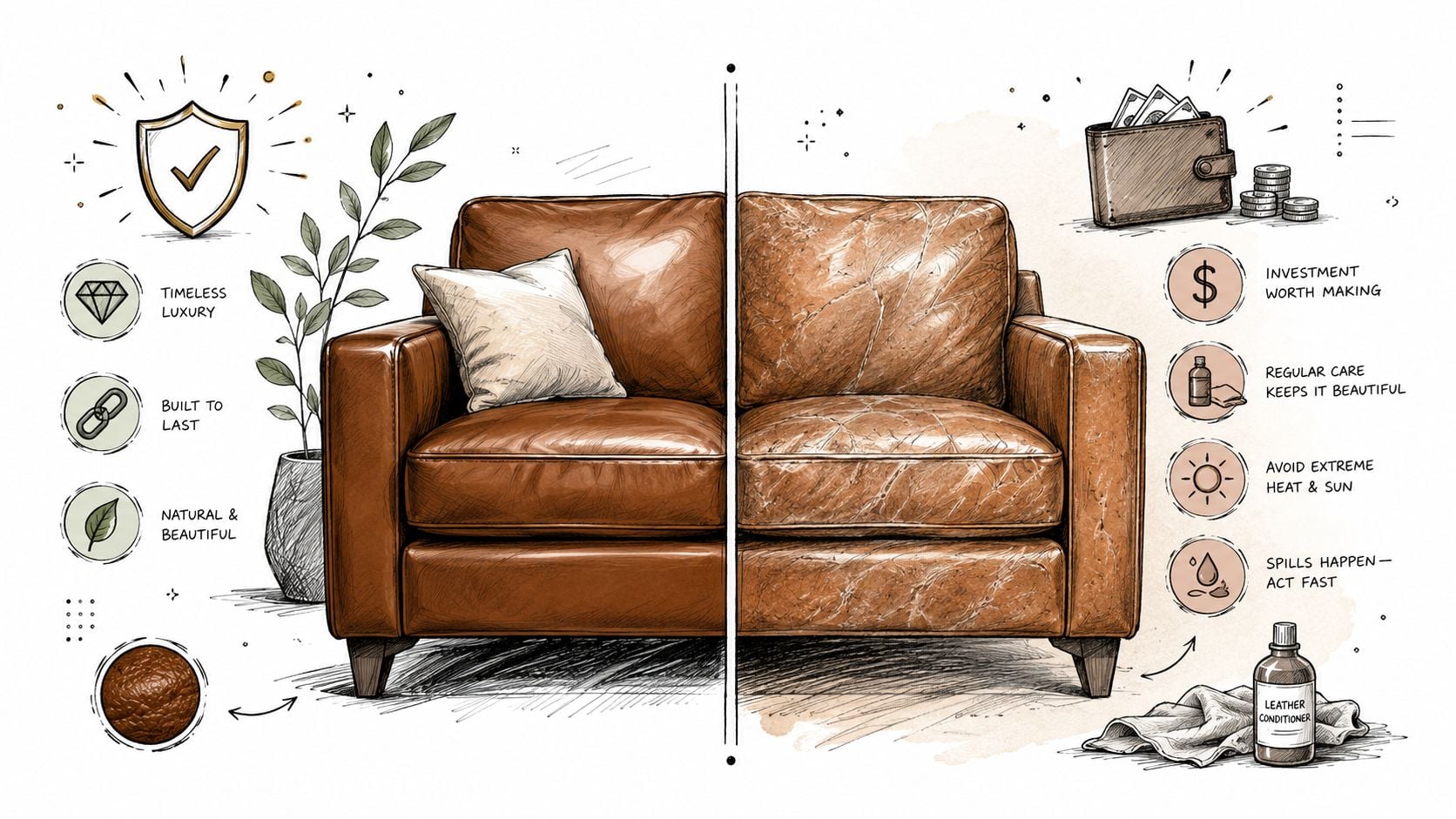
For families with kids, pets, or frequent use, leather's biggest advantage is straightforward maintenance. Dust, crumbs, and everyday mess don't sink in the way they can with some textiles. The surface also has a classic look that doesn't go out of style every few years. That helps when a recliner is meant to stay part of the home for the long haul.
Where leather shines
- Easy cleanup: A quick wipe handles most day-to-day messes.
- Timeless appearance: Leather tends to work with changing paint colors, rugs, and tables.
- Durable feel: It often gives a recliner a more substantial, furniture-grade presence.
That said, leather isn't magic. It asks for some care, and buyers should know that before they commit.
The trade-offs buyers should weigh
One of the more honest cautions in current product guidance is that more motors and electronics can mean more failure points, while leather surfaces need regular conditioning and protection from scratches and spills, as noted on this genuine leather wall hugger power recliner product page. That's exactly the kind of trade-off shoppers deserve to hear.
A leather recliner with power features can be a very good purchase. It can also be the wrong purchase for a household that wants zero upkeep and zero mechanical complexity.
Leather is like a good pair of boots. It can age beautifully, but only if it gets the kind of care that keeps it from drying out and getting beaten up.
A simple side-by-side view
| Consideration | Leather wall hugger recliner | Fabric wall hugger recliner |
|---|---|---|
| Cleanup | Usually easier to wipe clean | Often needs more spot-cleaning care |
| Look | More tailored and classic | Often softer and more casual |
| Feel near heat or sun | Can be more sensitive to placement | Often a bit more forgiving |
| Care routine | Needs conditioning and protection | Needs cleaning based on fabric type |
For Maine homes, placement matters more than people think. Leather can feel cooler at first touch, but it's also less breathable than fabric in some settings. A chair placed in direct sun, near a heating source, or in a spot that dries out the air can show wear faster if it's neglected.
For a broader look at surface options, this guide to upholstery materials and what to know before choosing is a useful place to compare how different coverings behave in daily life.
Who should lean toward leather
Leather usually makes the most sense for shoppers who want these three things:
- Long-term style: The chair should still look right after other parts of the room change.
- Straightforward cleanup: Everyday living needs a surface that doesn't feel fragile.
- A premium finish: The room calls for something a bit more polished than a casual fabric recliner.
How to Measure for Your New Recliner
A recliner can be perfect on the sales floor and wrong for the house if the measuring is sloppy. That's where many furniture mistakes start. The chair itself may fit the room on paper, but the doorway, hall, front clearance, or traffic path says otherwise.
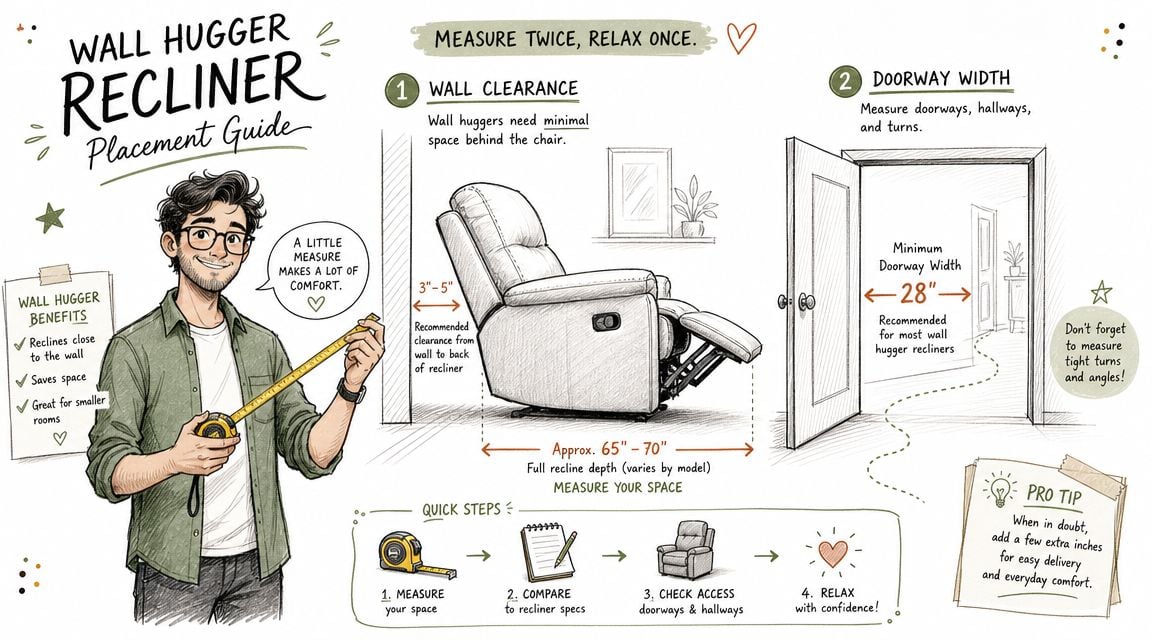
One of the most useful practical reminders is this: a recent furniture review notes that wall-saver designs can work with 0 to 3 inches of rear clearance, but it also stresses the importance of measuring the full reclined depth and walkway space before buying, as explained in this wall-saver recliner review. That second part is where people often get tripped up.
Measure the room in two stages
Start with the chair in the closed position. Then think about the chair in use.
Closed-position checks
- Wall width: Make sure the chair has enough breathing room so it doesn't look jammed in.
- Side clearance: Leave room for end tables, lamps, or nearby seating.
- Visual balance: A recliner can technically fit and still feel oversized.
In-use checks
- Footrest extension: Measure how far forward the recliner will come when open.
- Walking path: Check whether someone can still move past the chair safely.
- Getting in and out: Don't crowd the chair so tightly that standing up becomes awkward.
Rear clearance sells the chair. Front clearance determines whether the chair works.
Don't forget the delivery path
A lot of buyers focus on where the recliner will live and forget how it gets there. That's a mistake.
Take a tape measure to:
- Entry doors
- Storm doors
- Hallways
- Stairwells
- Tight turns near railings or corners
If the recliner has a taller back, wider arms, or a bulkier mechanism, delivery can become a significant bottleneck. A few minutes of measuring prevents the unpleasant surprise of finding out the chair fits the room but not the route.
A short measuring checklist
| Area to check | What to measure | Why it matters |
|---|---|---|
| Placement wall | Width and nearby furniture spacing | Keeps the chair from feeling crammed |
| Reclined footprint | Full forward depth when open | Prevents blocked walkways |
| Traffic path | Open floor area around the chair | Helps daily movement stay easy |
| Delivery route | Doorways, halls, stair turns | Avoids delivery-day problems |
For households that want a cleaner step-by-step reference, this furniture measuring guide for home delivery and placement helps organize the process before a purchase is made.
Finding Your Recliner in Central Maine
A recliner isn't just a product choice. In most homes, it becomes part of the daily routine very quickly. That's why shoppers in Central Maine usually do better when they look past the headline features and focus on fit, frame, upholstery, and support after the sale.
Since 1950, third-generation furniture retail in places like Augusta and Skowhegan has taught one lesson over and over. The right chair is rarely the flashiest one on the floor. It's the one that suits the room, the person using it, and the budget that has to live with the purchase.
What shoppers are seeing in the market
Today's leather wall huggers can include a lot more than a reclining back. A current market example shows a genuine-leather wall-hugger power recliner offered with dual motors, cup holders, side pockets, and USB/Type-C charging ports, and some models in the category have a stated support capacity of over 400 lb, according to this genuine leather wall-hugger power recliner listing.
That tells shoppers something useful. The category has matured. Buyers can now find compact reclining chairs that still offer charging ports, stronger support, and convenience features that used to show up mostly on larger seating.
But more features don't automatically equal a better fit.
How to narrow the field without getting overwhelmed
A practical way to sort through wall hugger recliners leather options is to decide in this order:
Room fit first
If the chair doesn't work in the space, nothing else matters.User comfort second
Seat depth, arm height, and ease of getting in and out matter more than gadget count.Material and mechanism third
Leather, power motion, and added features should support daily life, not complicate it.Value last, not first
The cheapest chair can cost more if it wears poorly or doesn't fit the room.
Where local shopping has a real advantage
Local furniture buying still beats guessing from a screen. Shoppers can sit in a chair, check whether the back hits them right, feel the leather, and compare a simpler mechanism with a more feature-heavy one. That matters in a category where small differences in comfort decide whether the chair gets used every day or ends up being the “good-looking one nobody sits in.”
Northern Mattress & Furniture 1st is one local option for shoppers comparing recliners in Central Maine. The store serves Augusta and Skowhegan, carries living room seating, offers custom order options beyond the floor, and provides financing through the Nest Credit Card with pre-qualification that doesn't impact a credit score. For buyers who care about color, scale, or matching existing furniture, that custom order side can be more important than many realize.
The right recliner should fit the home twice. Once in measurements, and again in the way the household actually uses the room.
Four local buying questions worth asking
Can this be custom ordered?
Floor samples only tell part of the story. A different leather color or configuration may suit the home better.Is the price a real sale price?
In any furniture category, shoppers should ask whether the deal reflects genuine value or just markup-and-markdown theater. Northern's Price Chop and Real Sale Prices approach speaks directly to that concern.What financing looks realistic?
For some households, simple monthly payments make the right chair possible without pushing the budget too hard.What will delivery look like?
Delivery planning matters just as much as selecting the chair itself.
A no-hassle showroom also helps. For many people, being able to walk through options, ask practical questions, and not feel rushed leads to a much better decision than chasing features online. Complimentary coffee and bottled water don't choose the chair, of course, but they do make the process feel more human.
Keeping Your Leather Recliner Looking New
Leather ages well when it's treated like a material, not a miracle. A recliner gets body oil, friction at the seat and arms, sunlight, dust, and the occasional spill. None of that is unusual. The goal is to keep daily use from turning into avoidable wear.
Start with a simple care routine
A leather recliner doesn't need constant fussing. It does need consistency.
- Wipe regularly: Use a soft dry or slightly damp cloth to remove surface dust and everyday grime.
- Handle spills quickly: Blot instead of rubbing so the mess doesn't spread or grind in.
- Condition on schedule: Leather needs periodic conditioning to stay supple and less prone to drying.
If a chair is used every evening, those small habits matter more than occasional deep cleaning.
Protect it from the room itself
A lot of wear comes from placement, not misuse. Leather can be less breathable than fabric, and homes that place recliners near direct sun or heating sources may notice comfort and wear issues sooner. That makes location part of maintenance.
Good placement usually means keeping the chair away from:
- Strong direct sunlight
- Heating vents
- Woodstove heat
- Radiators
- Areas where pet claws regularly catch the side panels
A recliner wears fastest where the room works against it.
Keep the mechanism in mind too
The leather isn't the only part worth protecting. Power models deserve a quick visual check now and then. Keep the area around the base clear, avoid forcing the mechanism when something is in the way, and pay attention if the motion starts sounding strained or uneven.
A chair with more electronics and moving parts can offer excellent convenience. It also benefits from everyday common sense. Don't let cords get pinched, and don't ignore small issues until they become bigger ones.
A practical owner checklist
| Habit | Why it helps |
|---|---|
| Dust and wipe the chair | Keeps grime from settling into high-contact areas |
| Blot spills right away | Reduces the chance of staining or surface damage |
| Condition the leather | Helps prevent dryness and surface fatigue |
| Watch sun and heat exposure | Protects color and feel over time |
| Keep the base area clear | Supports smooth reclining motion |
Seasonal care is often the easiest way to stay ahead of wear. A maintenance habit that lines up with spring or fall cleaning tends to stick better than a vague promise to “get to it later.” This fall furniture maintenance checklist is a practical reference for keeping upholstered furniture in good shape through the year.
If a leather wall hugger recliner is on the shortlist, the next step doesn't need to be complicated. Northern Mattress & Furniture 1st offers a low-pressure way to compare fit, comfort, upholstery, and custom-order possibilities for Central Maine homes. A visit to the Augusta or Skowhegan showrooms can help narrow down what best suits the room, the budget, and everyday life.