Blog
Maximize Your Small Spaces Living Room Design

A small spaces living room usually starts with one familiar problem. The sofa fits, but now the walkway feels pinched. The TV wall works, but there's nowhere for blankets, books, or a laptop. In Central Maine, I see this all the time in older Augusta homes with odd corners, capes with low windows, and apartments in Skowhegan where the living room has to handle relaxing, hosting, and sometimes a workday too.
That doesn't mean you need to settle for a room that feels cramped. It means the room has to be planned with intention. A 2023 Taskrabbit analysis found a 13% year-over-year increase in people downsizing or moving into a smaller space and a 10% increase in moves into studio apartments, a clear sign that more households are trying to make flexible, multi-purpose rooms work well, not just look good (Furniture Today coverage of the Taskrabbit findings).
If you're trying to make a small spaces living room feel open, comfortable, and useful every day, the answer usually isn't “buy smaller everything.” The answer is better layout, better scale, and smarter choices about what each piece needs to do.
Table of Contents
- Making the Most of Your Maine Living Room
- Start with a Smart Floor Plan
- Find Furniture That Works Harder
- Create Space with Clever Storage Solutions
- Brighten and Broaden with Color and Light
- Get the Perfect Fit for Your Home and Budget
- Your Small Living Room Questions Answered
Making the Most of Your Maine Living Room
In Central Maine, small living rooms come in all kinds of shapes. Some are narrow and long. Some have a front door opening right into the seating area. Some have a radiator under the only sensible sofa wall. A lot of people think they have a furniture problem when they really have a planning problem.
That's good news, because planning is fixable.
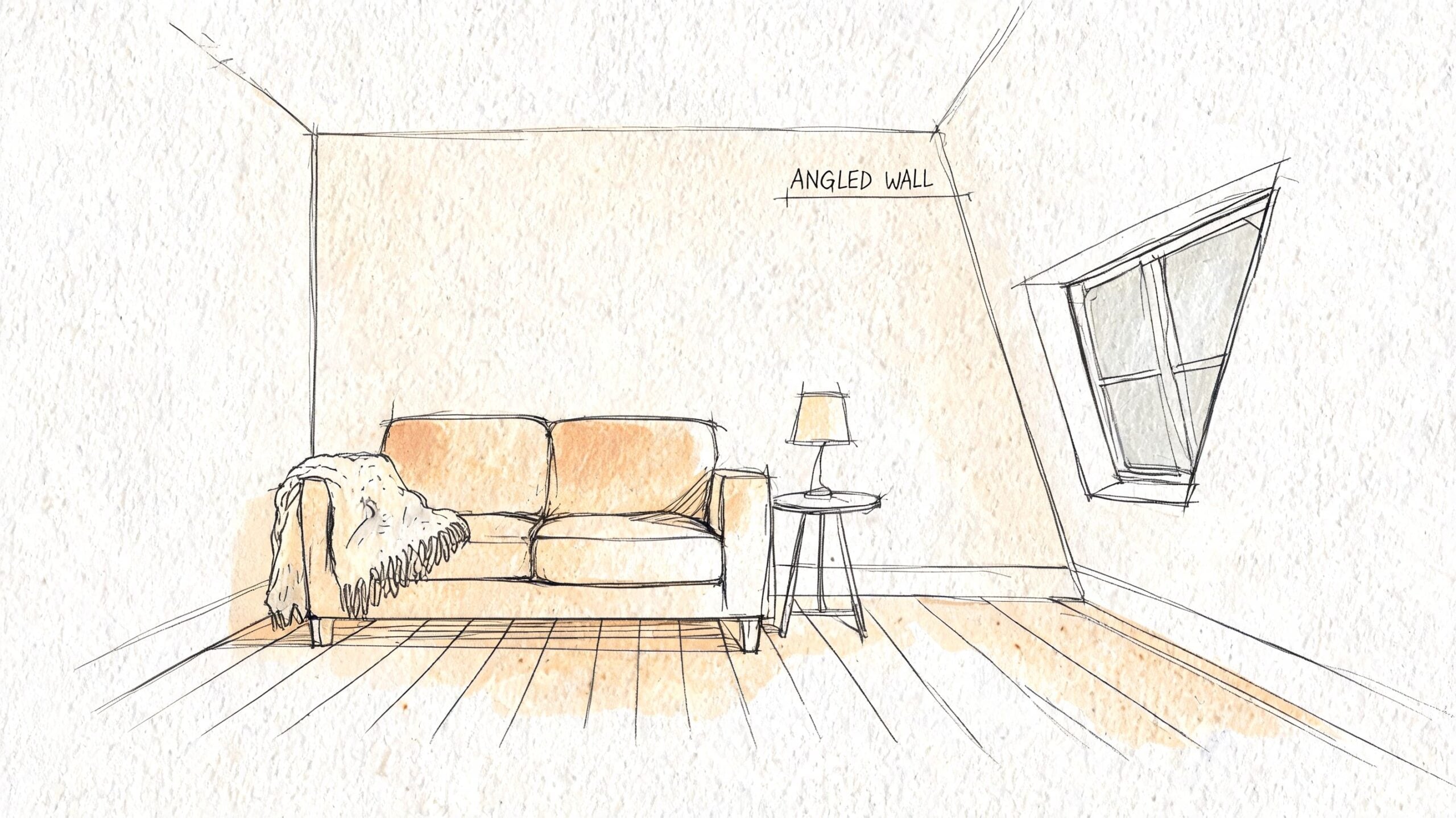
I've seen neighbors try to solve a tight room by pushing every piece hard against the wall. That often leaves the center feeling empty but the room still awkward. I've also seen the opposite. Too many little tables, too many accent pieces, and no clean path from one side of the room to the other. Neither layout feels easy to live in.
What small rooms in Maine usually need
A practical living room in Augusta or Skowhegan often needs to handle more than one role at once. It may be your TV room, reading room, homework spot, and guest conversation area all in one. That's why the right small spaces living room design starts with how you live on a Tuesday night, not how the room looks in a staged photo.
A strong plan usually does three things well:
- Keeps the walkway clear so boots, bags, kids, and pets can move through the room naturally.
- Gives the largest piece a real job instead of letting it float without purpose.
- Builds in storage early so clutter doesn't become part of the decor.
Small rooms feel bigger when they work better. Comfort comes from flow, not from stripping the room bare.
If you want more visual ideas for opening up a tighter room, this guide on how to make a small room feel big is a useful next read.
A better way to think about the room
Don't treat a small living room like a reduced version of a big one. Treat it like a room with a stricter job description. Every choice matters more. The sofa shape matters more. The rug size matters more. Whether a coffee table can hide remotes and chargers matters more.
That's where a lot of off-the-shelf decisions fall short. The room doesn't need random “small” furniture. It needs the right combination of seating, storage, and openness.
Start with a Smart Floor Plan
Before you shop, map the room. Not roughly. Precisely. Measure wall lengths, window trim, heat vents, door swing, and the spots where people naturally walk through the room every day.
That up-front work saves you from one of the most common mistakes in a small spaces living room. Buying pieces that fit individually, but don't fit together.
Use the 60 40 balance
A helpful benchmark comes from Apartment Therapy's 60/40 rule, which recommends filling about 60% of the room with furniture and leaving 40% open so circulation stays comfortable. The same guidance also notes that a larger rug can make a room feel bigger, while small rugs tend to clutter the visual field (Apartment Therapy on the 60/40 decorating rule).
You don't need to calculate this like a contractor. Use it as a reality check. If the room feels jammed with side pieces and there's no visual rest, you've probably crossed the line. If it feels sparse and unsettled, the main pieces may be too scattered or too small.
A simple planning sequence
I usually recommend this order:
Measure first
Write down the room dimensions, but also note the ceiling height, window location, and outlets. In a small room, those details shape your layout more than people expect.Mark your traffic paths Identify where people walk. Across the room to the hallway. Past the sofa to the lamp. Around the coffee table to the favorite chair. Those routes need to stay easy.
Place the anchor piece
In most living rooms, that's the sofa. Put it where it supports the room's main use, whether that's conversation, TV viewing, or both.Add only the essentials
Start with seating, one surface, and one real storage solution. Then stop and reassess before adding more.
For more examples of workable setups, these living room furniture layout ideas can help you compare room shapes and seating plans.
Practical rule: If you need three tiny tables to do the job of one properly sized piece, the room usually ends up looking busier, not smarter.
Rug mistakes that shrink a room
A too-small rug is one of the fastest ways to make the room feel chopped up. People often choose a rug that only fits under the coffee table because they're trying not to overwhelm the room. The result is the opposite. The room looks disconnected.
A better rug grounds the seating group. It helps the sofa, chair, and table read as one zone instead of several unrelated pieces. In a compact room, visual unity matters as much as square footage.
What to bring into the showroom
A short list helps more than vague photos on your phone. Bring:
- Your wall measurements
- A sketch of the room
- Notes about door swings and windows
- The size of your current TV or media console
- Any must-keep pieces you're designing around
That gives you a real working plan. It also makes it much easier to tell whether a loveseat, apartment sofa, or compact sectional will improve the room.
Find Furniture That Works Harder
Once the floor plan is clear, the next question is simple. Which pieces earn their spot?
In a small spaces living room, furniture has to do more than fill the room. It has to protect circulation, provide comfort, and solve a second problem at the same time. That might mean hidden storage. It might mean a table that doubles as a desk. It might mean a chair with a smaller frame that still feels supportive enough for nightly use.
Scale first, then style
A compact room doesn't always need miniature furniture. It needs furniture with the right visual weight. That often means:
- Slimmer arms instead of heavily rolled arms
- Cleaner bases or visible legs so the room feels lighter
- Tighter back cushions that don't push the seat too far into the room
- One substantial seating piece rather than several fussy small ones
Shoppers frequently get tripped up by sectionals. Some compact sectionals work beautifully in corner layouts. Others eat up too much walkway and make the room feel pinned down. A sofa with one well-scaled chair can sometimes outperform a sectional because it preserves movement and sightlines.
Every piece needs a second job
Industry guidance on small rooms emphasizes using vertical space with wall-mounted storage and tall decor, and it sets a clear benchmark for efficiency. Each piece should serve at least one primary and one secondary role, like an ottoman that also stores blankets or games (Star Furniture guidance on making a small living room seem bigger).
That benchmark is worth borrowing because it keeps impulse purchases in check.
Here are the pieces I reach for most often in compact living rooms:
Storage ottoman
Footrest, extra seat, and hidden storage in one piece.Lift-top coffee table
Good for laptop use, casual meals, puzzles, and tucking away remotes.Console table behind a sofa
Creates a landing zone without needing a separate desk elsewhere.Tall narrow bookcase
Uses the wall instead of the floor. Especially helpful in corners that otherwise become dead space.Sleeper sofa
Useful when the living room also has to absorb guest duty.
If you're comparing these kinds of pieces, this article on choosing multi-functional furniture for modern homes lays out the trade-offs well.
The wrong furniture makes a room look full. The right furniture makes it feel capable.
What works better than a room full of “small” pieces
A common mistake is buying lots of little furniture because it seems safer. A tiny chair, a tiny side table, a tiny cabinet. The room ends up nervous-looking. Nothing anchors it.
A better approach is usually one appropriately scaled sofa, one hard-working table, and one strong storage piece. Then add only what daily use demands. In practical terms, a well-built loveseat, a storage ottoman, and a narrow media unit often outperform five mismatched pieces trying to solve the same set of problems.
For shoppers who need something more exact than the floor model, Northern Mattress & Furniture 1st offers custom orders with alternate fabrics and configurations, which can help when the standard version of a sectional, sofa, or chair is close but not quite right for the room.
Brand quality still matters in a small room
Small rooms don't excuse flimsy construction. In fact, a hardworking room puts more stress on every piece. If the living room is also the family room, movie room, and occasional workspace, the seating gets used constantly.
That's why durable lines from brands such as Flexsteel and Ashley deserve a look. The room may be small, but the investment still needs to hold up.
Create Space with Clever Storage Solutions
Storage changes the feeling of a room faster than almost any decor update. In a compact living room, visible clutter steals space even when the floor plan is technically fine. The room might fit the furniture, but if cords, toys, throws, mail, and chargers are always out, it never feels settled.
The goal isn't to hide your life. It's to give daily-use items a defined home.
The storage moves that usually pay off
Some storage ideas look clever online but don't help much in real homes. What works best is usually boring in the best way. It makes cleanup faster and the room easier to use.
A few reliable options:
- Wall-mounted media consoles free up floor area and make vacuuming easier.
- Floating shelves work well when you need a place for books or decor without adding heavy case goods.
- Closed-door cabinets hide visual noise better than fully open shelving.
- Baskets with structure corral blankets, toys, and pet items without looking temporary.
- Nested stools or cubes can slide under a console until guests arrive.
Open storage versus closed storage
Open shelves look airy, but they demand discipline. If everything on them is mismatched, half-used, or tangled with cords, the room feels crowded fast. Closed storage is often the better choice for busy households because it creates a calmer visual field.
If you like the look of shelves, a mix tends to work best. Display a few items you want to see. Hide the rest.
A room doesn't need more places to pile things. It needs fewer things left without a place.
For households trying to get ahead of the mess, this guide on solving clutter issues once and for all offers practical organizing ideas that pair well with furniture planning.
Use forgotten spaces on purpose
The best storage is often in the spots people ignore:
| Area | Better use |
|---|---|
| Under a window | Low cabinet or storage bench |
| Beside a sofa arm | Slim end table with drawer |
| Behind a sofa | Narrow console for baskets and chargers |
| Empty corner | Tall cabinet or narrow shelf |
| Under an open side table | Basket for throws or magazines |
A small living room improves when storage is tucked into the architecture of the layout instead of added as an afterthought.
Brighten and Broaden with Color and Light
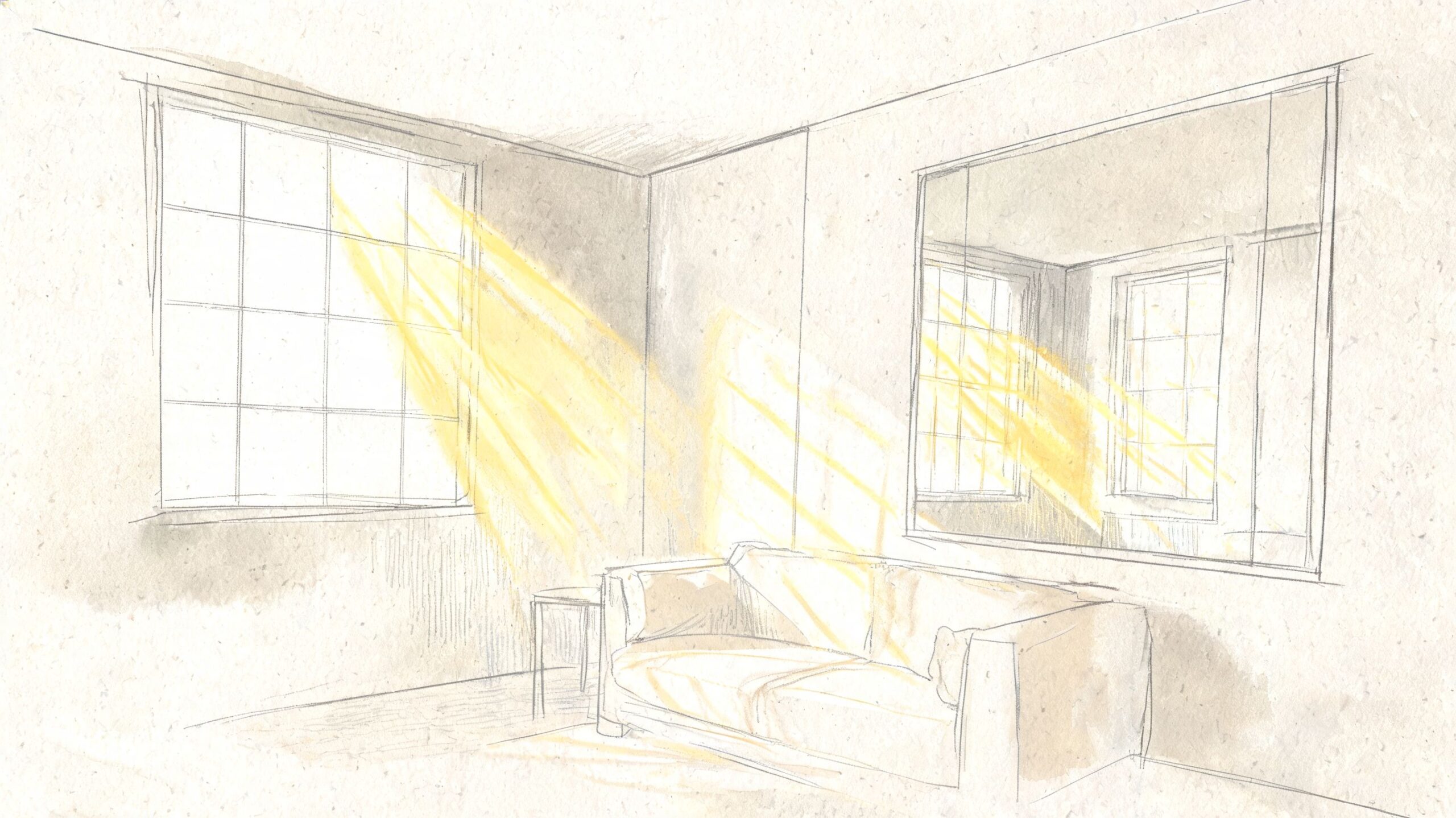
A tight room can be well furnished and still feel closed in if the light falls flat. That's why color and lighting deserve as much attention as the sofa size. They change how the walls recede, how corners read, and whether the room feels restful when evening falls.
In many Maine homes, especially through the darker months, this matters more than people expect.
Keep the palette calm
If your goal is to make the room feel broader, lighter wall colors usually help because they don't visually crowd the perimeter. That doesn't mean everything has to be stark white. Soft neutrals, warm grays, muted greens, and light greige tones can all do the job while still feeling inviting.
What usually hurts a small room is too much contrast in too many places. Strong shifts between wall color, trim, rug, and major upholstery can make the room feel broken into pieces. A more connected palette tends to help the eye move through the space without stopping.
Layer the light
One ceiling fixture rarely does enough. It lights the room, but it doesn't shape it. A better setup usually includes a mix of sources that light the room from different heights.
Try a combination like this:
- Ambient light from an overhead fixture or flush mount
- Task light from a floor lamp beside a reading chair
- Accent light from a table lamp or wall sconce that softens a darker corner
That layered approach makes the room feel warmer and more dimensional. It also gives you control. Bright when you need to work or clean. Softer when you want to watch a movie or settle in for the evening.
For more guidance on fixtures and placement, this article on putting your living room in the best light is worth a look.
Mirrors need a job
A mirror can help a compact room, but only when it reflects something useful. Good light. A window. A calm part of the room. If it reflects clutter, cords, or a crowded corner, it doubles the problem.
A larger mirror usually works better than several tiny reflective pieces. The room feels cleaner, and the added light looks intentional rather than fussy.
Good lighting doesn't just brighten a room. It softens edges, expands corners, and makes the whole layout feel more relaxed.
Get the Perfect Fit for Your Home and Budget
This is the part many people don't realize until they've shopped a few stores. The challenge in a small spaces living room usually isn't finding furniture you like. It's finding furniture you like that also fits the room, the fabric needs, and the budget.
That's where compromise starts creeping in. The sofa is the right size but the wrong color. The sectional shape works but the fabric won't hold up to pets. The chair looks great online but the seat depth is wrong for everyday use.
Where custom options help most
Custom ordering makes the biggest difference when you're dealing with one of these situations:
- You need a specific configuration for an awkward corner or narrow wall
- You want a durable fabric that can handle kids, pets, or heavy daily use
- You're trying to match an existing piece instead of replacing the whole room
- You need a smaller-scale version of a style you already know works
This matters in older Maine homes, where dimensions often don't cooperate with standard layouts. A little flexibility in arms, orientation, upholstery, or overall scale can be the difference between “good enough” and “finally right.”
Don't let budget decisions create layout problems
Low price alone can get expensive if the piece doesn't solve the room properly. A bargain sofa that blocks movement or wears out quickly isn't a win. Value comes from fit, durability, and honest pricing.
That's why shoppers often look for stores with Real Sale Prices rather than inflated tags that only look discounted later. The Price Chop approach speaks to that concern directly. So does simple financing when the right long-term piece costs more than you planned to spend upfront.
Practical support matters too
If you're furnishing carefully, a few service details help:
- Custom Order programs for fabric, style, and configuration changes
- Simple financing options such as the Nest Credit Card
- Pre-qualification without a credit score impact
- A no-hassle showroom environment where you can sit, compare, and think
For many families, that combination matters as much as the furniture itself. It lets you choose the right fit for the room instead of settling for whatever happens to be boxed and ready.
Since 1950, a third-generation family business serving Central Maine, with showrooms in Augusta and Skowhegan, has built its reputation on helping neighbors make practical decisions for their homes. That kind of local experience shows up in the questions asked, the measurements checked, and the willingness to guide you without pressure. Complimentary coffee and bottled water don't hurt either.
Your Small Living Room Questions Answered
Some of the most useful small-room decisions come down to trade-offs. Not trends. Not what looked good in a photo. Just what works in your actual room.
Quick answers to common layout questions
| Question | Recommendation |
|---|---|
| Should I use a sectional in a small living room? | Use one if the room has a natural corner layout and the sectional won't choke the main walkway. Skip it if separate seating gives you better flow and easier TV sightlines. |
| Is a sofa and chair set better than a sectional? | Often, yes. A sofa with one compact chair can feel more open and flexible, especially in rooms that double as TV and traffic zones. |
| How do I add a workspace to the living room? | Use a narrow desk, a console-height surface, or a corner setup that doesn't interrupt the main seating zone. Keep work storage closed if possible. |
| What should renters do differently? | Choose pieces that can move easily, use floor and table lamps instead of hardwired changes, and lean on baskets, shelving, and rugs to define zones without damaging walls. |
How to decide between a sectional and separate seating
A sectional works when the room wants one clean seating block. That's usually true in a corner-focused layout where the TV wall is obvious and you don't need much pass-through behind the seating.
Separate pieces work better when the room has multiple pathways, a fireplace plus TV conflict, or a need for occasional rearranging. If you host often, a movable chair or ottoman is usually more useful than a fixed chaise.
Can a living room really handle a home office
Yes, but the work zone has to be visually quiet. A desk shoved into the room without a plan often makes the whole space feel temporary. The better approach is to fold the workspace into the room with intention.
A few good options:
- A slim desk behind the sofa
- A writing table in an underused corner
- A storage console that doubles as laptop space
- A shelf-and-chair setup with a lamp to define the zone
If the desk has to live in the room full time, keep the chair compact and keep paper storage out of sight.
The best multi-use rooms don't try to hide their jobs. They organize them clearly.
What renters should prioritize
Renters usually get the best results from reversible changes. Use rugs to define zones. Add lamps instead of relying on harsh overhead light. Choose furniture with built-in storage so the room does more without needing wall changes.
Most of all, avoid overfilling the room just because every piece is technically small. In a small spaces living room, breathing room is part of the furniture plan.
If you'd like help finding the right fit instead of guessing from measurements alone, visit Northern Mattress & Furniture 1st in Augusta or Skowhegan. You can browse room setups, ask about custom orders, compare real sale prices, and explore simple financing options in a no-hassle showroom built for practical decisions.