Blog
Custom Furniture Near Me: 2026 Guide to Local Makers

You are likely searching custom furniture near me because the standard options haven't solved the primary problem. The sofa is too deep for the living room in your farmhouse. The table that looked perfect online would crowd the kitchen once the leaves are in. Or you've got a camp, cottage, or older Central Maine home where nothing seems to fit the angles, the traffic flow, or the way your family lives.
That's where custom furniture stops feeling like a luxury idea and starts looking like a practical one. A well-planned custom piece can help you use a room better, live with it longer, and avoid the cycle of buying something close enough, then replacing it when it never quite worked.
In Maine, that matters. We ask a lot from our homes. They host muddy boots, holiday meals, overnight guests, long winters, and everyday routines. Furniture should support that life, not fight it.
Table of Contents
- Finding the Perfect Fit for Your Maine Home
- How to Find Trustworthy Custom Furniture Makers Nearby
- Your Guide to a Successful Design Consultation
- Choosing Materials and Brands for Lasting Quality
- Financing Your Custom Furniture Without the Stress
- From Our Showroom to Your Living Room
Finding the Perfect Fit for Your Maine Home
A lot of homes in Central Maine weren't built around standard furniture dimensions. In Augusta, you'll see older homes with narrow entries and formal rooms that need careful scale. In Skowhegan and the surrounding towns, it's common to find open family spaces that still need defined seating and storage. Lakeside places bring another challenge. You want comfort and character, but you also need pieces that can handle regular use without feeling oversized.
When stock furniture almost works
Many individuals don't start out wanting custom. They start by trying to make a floor sample work.
That usually looks like this:
- The sofa fits the wall: but the arm style blocks a walkway.
- The dining set looks right in the showroom: but once it's home, the chairs can't slide back comfortably.
- The recliner feels good: but the color or scale throws off the whole room.
- The bedroom set matches nicely: but one chest is too tall for the window line.
Those are small misses on paper. In daily life, they become the things you notice every single day.
Practical rule: If a piece forces you to change how you move through the room, it's the wrong piece, even if you love the look.
Custom is about fit before style
The best custom projects usually begin with function. A family needs a sectional that opens the room instead of swallowing it. A couple wants a dining table that handles everyday meals and still works when everyone comes over. Someone downsizing wants a chair that's easier to get in and out of without giving up comfort.
Style still matters. It should. Furniture helps make a house feel like home. But the right sequence is simple:
- Measure for the room
- Choose the function
- Match the style
- Refine the details
That order saves money and frustration.
A Maine way to think about value
In a third-generation family business that's been rooted here since 1950, one lesson comes up again and again. The furniture people regret isn't always the least expensive piece. It's the one that never fit the room, the use, or the home.
Custom ordering can be the smarter buy because it lets you adjust the parts that matter most. Width. Depth. Configuration. Fabric. Finish. Comfort. That's how you stop furnishing around compromises and start investing in pieces that belong in your home.
How to Find Trustworthy Custom Furniture Makers Nearby
Searching custom furniture near me will give you a long list. The challenge isn't finding names. It's figuring out who will guide you well, communicate clearly, and deliver a piece that still makes sense years from now.
The U.S. furniture manufacturing industry supports nearly 6,000 manufacturers, and custom production thrives nationwide through local and family-owned operations, including those that work with brands like Flexsteel and Amish craftsmen, according to IndustrySelect's furniture manufacturing overview. That gives shoppers real options. It also means you need a way to separate dependable providers from generic listings.
Signs of a local partner worth your time
A trustworthy custom furniture provider usually leaves clues before you ever sit down for a consultation.
Look for these:
- A real local history: Businesses with roots in a community tend to have a clearer process and stronger follow-through.
- A showroom you can visit: You should be able to test seat comfort, compare fabrics, and ask questions in person.
- Named brand partnerships: If a store carries established lines such as Flexsteel or Amish-made collections, that tells you something about construction standards and sourcing.
- A no-hassle atmosphere: You want help, not pressure. Good stores let you browse, think, and come back with questions.
- Clear next steps: If the custom process sounds vague, delays and misunderstandings usually follow.
A practical place to start is a page that explains how the process works, such as this guide to getting started with custom order furniture.
Questions to ask before you commit
Some of the best vetting happens in the first conversation. Ask plain questions and pay attention to whether you get plain answers.
| Question | What a solid answer sounds like |
|---|---|
| How do you handle custom measurements? | They ask for dimensions, room details, and access points. |
| What brands or makers do you work with? | They name them directly. |
| Can I see fabric or finish options in person? | Yes, and they can explain trade-offs. |
| How do you communicate during the order? | They describe updates, not vague promises. |
| What happens at delivery? | They explain placement and setup clearly. |
If a seller talks only about looks and avoids the process, keep looking.
What works and what doesn't
What works is experience paired with guidance. In Central Maine, that often means family-owned retailers with deep local ties, practical showroom staff, and enough product knowledge to steer you away from poor choices.
What doesn't work is chasing the lowest sticker price online without understanding dimensions, materials, or order details. That route often creates the exact problem custom furniture is supposed to solve.
Your Guide to a Successful Design Consultation
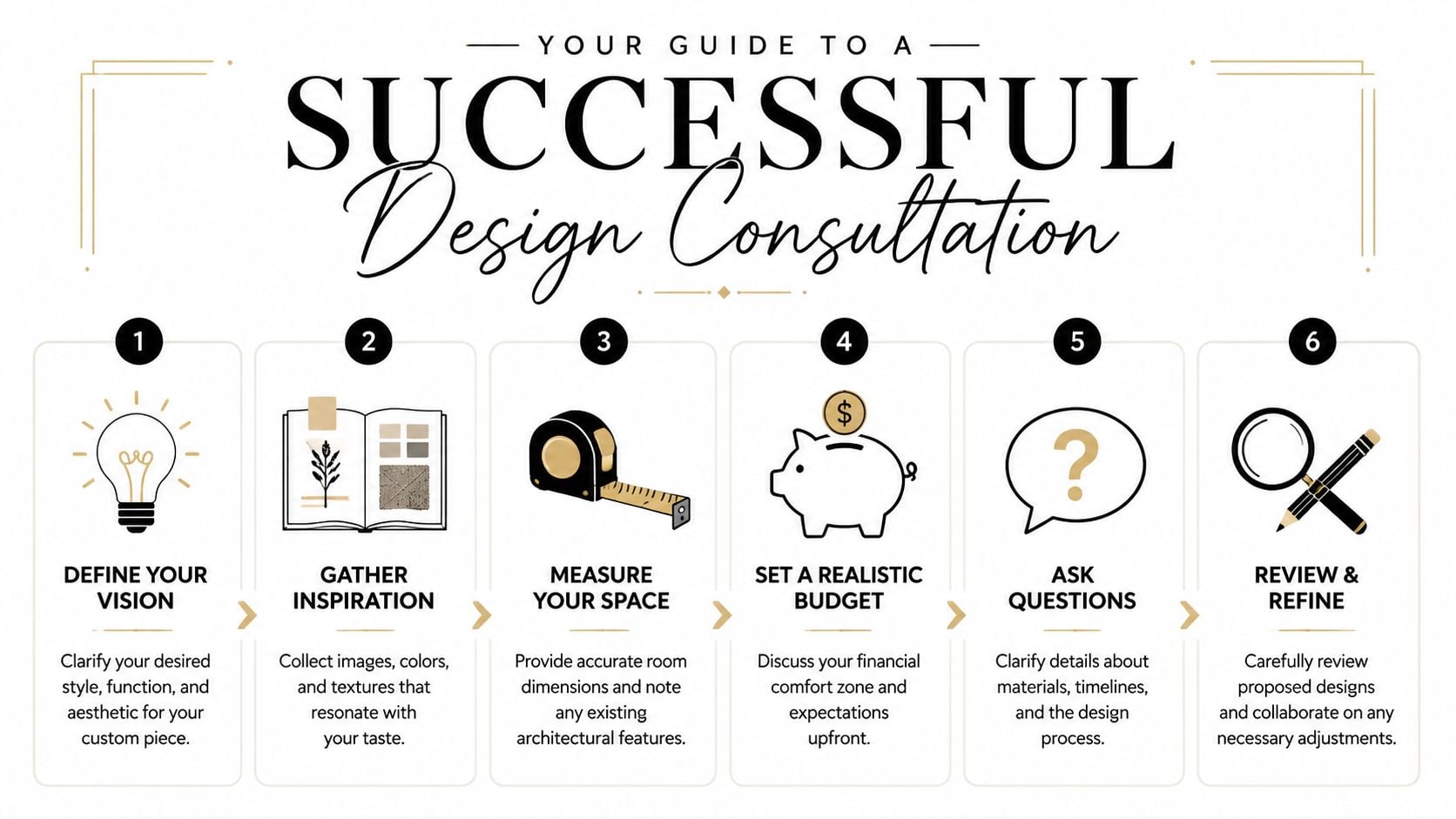
The design consultation is where a custom project either gets easier or gets expensive. This is the moment when good questions save you from bad assumptions.
Industry guidance on the custom furniture process points to the initial discovery Q&A phase as the critical step. It sets the client criteria and budget before sketching begins, and that can prevent overruns that add 20% to 40% to the project duration, as explained in this overview of the custom furniture creation process.
What to bring with you
You don't need a designer's portfolio. You do need useful information.
Bring these items:
- Room measurements: Wall lengths, window locations, and door swing are the basics.
- Entry measurements: Hallways, stair turns, and doorway widths matter just as much as room size.
- Photos of the space: Wide shots help. So do photos of adjoining rooms.
- A few inspiration images: Not fifty. A small set is easier to interpret.
- Your practical limits: Budget range, timeline concerns, and any must-have dimensions.
If you're unsure how to organize your ideas, a planning resource like home design and where to begin can help you narrow your direction before you walk in.
What the consultant should ask you
A strong consultation feels like a conversation, not a sales script. The designer or specialist should ask how you use the room and who uses it.
Expect questions like:
- Who sits here every day? A tall household, kids, guests, and pets all change the recommendation.
- How do you use the room most often? Lounging, reading, hosting, eating, working.
- What do you already own nearby? The custom piece needs to live with the rest of the room.
- What problems are you solving? Scale, comfort, traffic flow, storage, durability.
- What can't happen again? Maybe your last sofa felt too soft, or your last fabric showed every mark.
The best consultation usually spends more time on your habits than on fabric names.
Questions you should ask back
Buyers ensure their protection. Ask specific, practical questions.
- How will this piece sit in the room? Ask about depth, arm width, seat height, and visual scale.
- What material options fit my household? Don't ask only what looks nice. Ask what will wear well.
- What part of this design is fixed and what can change? Sometimes you can adjust size, cushion feel, leg finish, or configuration.
- How will the final order be documented? You want a written summary of selections.
- What should I expect at delivery and setup? Details matter at the end too.
Common mistakes that derail a consultation
Some issues come up over and over:
- Choosing from a swatch under bright showroom light only
- Forgetting to measure the path into the home
- Prioritizing color before comfort
- Using vague words like “big” or “cozy” instead of dimensions and use
- Leaving budget unspoken
One body recommendation belongs here because it fits naturally. Northern Mattress & Furniture 1st works through one-on-one custom order consultations with trained design specialists in Augusta and Skowhegan, which is useful if you want help narrowing down configurations, fabrics, and room fit without relying on the floor model alone.
Choosing Materials and Brands for Lasting Quality
Material choice is where custom furniture becomes real. Two sofas can look similar from a few feet away and live very different lives once kids, pets, guests, and Maine winters get involved.
A common buyer frustration is time. A 2024 Houzz report noted that 68% of custom furniture buyers named longer-than-expected wait times as their top frustration. The same market view also points to U.S.-made items from partners like Flexsteel often having lead times of 4 to 8 weeks, compared with 3 to 6 months for overseas orders, which is why material and brand decisions should include delivery realities, not just appearance, as noted in this discussion of custom furniture timelines.
Comparing common material choices
Here's the practical version of what matters most.
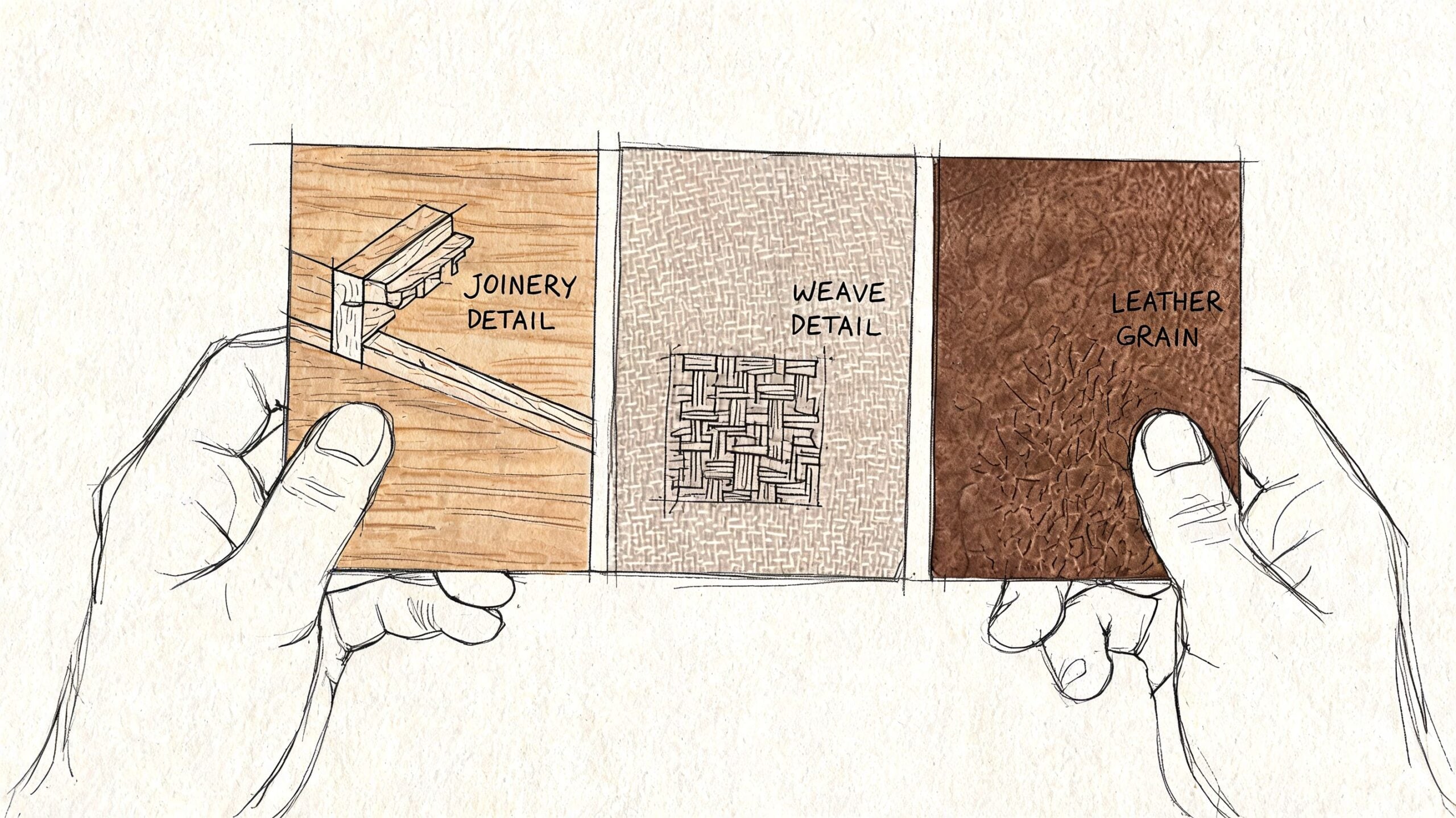
| Material or category | Strength | Trade-off |
|---|---|---|
| Solid wood | Long-term durability and repair potential | Usually costs more and needs thoughtful design for seasonal movement |
| Engineered wood | Can help manage cost and consistency | Not every build has the same lifespan or feel |
| Woven upholstery fabrics | Broad style range and often family-friendly | Performance depends on weave, color, and texture |
| Leather | Easy to wipe down and develops character | Shows wear differently and may not suit every budget or style |
What to watch for in upholstery
A fabric should match the way the room gets used. That means asking what happens on an ordinary Tuesday, not just on holidays.
- Homes with kids: Tighter weaves and forgiving colors usually make daily life easier.
- Homes with pets: Look closely at texture. Some fabrics collect evidence fast.
- Formal spaces: You can lean more decorative if the room isn't in constant use.
- Multi-purpose rooms: Balance matters more than trend.
A fabric that looks perfect for ten minutes in a showroom may be a headache after ten days at home.
Brands and makers matter
Brand reputation matters because it often reflects consistency in frames, motion parts, tailoring, and finish options. Flexsteel is a name many shoppers recognize when they want custom upholstery with dependable structure and practical configuration choices. Amish-made collections appeal to buyers who want wood furniture with a handcrafted feel, straightforward construction, and a wider range of finish options.
If wood furniture is part of your search, this roundup of Amish furniture brands and what makes them different is a useful starting point.
The key point is simple. Don't choose materials and brands as separate decisions. Choose them together, based on use, look, and realistic delivery expectations.
Financing Your Custom Furniture Without the Stress
Custom furniture often makes sense in every way except one. People worry the total will be hard to manage all at once.
That hesitation is common. A 2025 Furniture Today survey found that 72% of U.S. custom furniture inquiries are abandoned due to unclear pricing, and the same verified summary notes that financing options such as pre-qualification with no credit score impact directly address that concern for budget-conscious families and new homeowners, as cited in this custom furniture pricing discussion.

Why financing helps when it's done simply
Financing is useful when it turns a rushed compromise into a considered purchase. That might mean choosing the configuration that fits the room, the fabric that will hold up better, or the dining set you won't want to replace after a few seasons of use.
Good financing does a few things well:
- It removes guesswork: You know early whether the purchase is workable.
- It lowers pressure: You don't have to settle for the nearest in-stock option just because it's immediate.
- It supports better decisions: You can focus on fit, durability, and use.
What to look for in a financing option
Not all financing feels the same from a shopper's side. The easiest programs are transparent from the first click.
A useful checklist:
- Pre-qualification without a credit score impact
- Clear monthly payment structure
- Simple online account access
- Promotional terms explained in plain language
For shoppers who want to review one local option, this page on monthly payments on furniture outlines the Nest Credit Card approach and the no-impact prequalification step.
Budget note: The wrong custom piece is expensive even when the ticket price looks lower. The right one often costs less over time because you keep it.
Don't ignore the starting price
Financing works best when the store also prices transparently. Around here, shoppers are tired of inflated list prices that exist mainly to create fake markdowns later. Real sale pricing matters because it lets you compare choices without playing math games in the showroom.
That's why a straightforward pricing approach, including “Real Sale Prices” and the Price Chop mindset, is worth paying attention to. You want a clear base price first, then a payment option if you need one.
From Our Showroom to Your Living Room
The last stage matters more than people expect. A custom order doesn't feel finished when the paperwork is signed. It feels finished when the piece is in the room, placed correctly, and working the way it was intended to work.
That's especially true in Maine homes with tight entries, older staircases, and rooms that need careful setup. Delivery isn't just transportation. It's part of the service.
What professional delivery should include
A good final experience is organized and calm. The crew should know what's arriving, where it's going, and how the space needs to function.
That usually includes:
- Placement in the correct room
- Assembly or setup as needed
- Care around floors, walls, and doorways
- A final check on position and fit
White-glove handling matters because custom furniture is built around specific dimensions and use. If it lands crooked in the room or gets left half-set-up, part of the value is lost.
What you should do before delivery day
There are a few simple steps that make the install smoother:
- Clear the path from entry to room
- Move fragile décor and floor lamps
- Have your measurements handy
- Decide on the final wall or room position before the truck arrives
For a local example of what that service can look like, this page on free furniture delivery gives a practical sense of the in-home support shoppers often want.
A custom piece should arrive feeling like the solution you planned for, not another task on your list.
The real payoff
The payoff isn't just having something no one else has. It's walking into a room that finally works.
The chair fits the corner without blocking the window. The table handles weeknight dinners and still welcomes everyone at the holidays. The sectional defines the space instead of overwhelming it. That's what people are usually looking for when they type custom furniture near me. Not novelty. Fit, function, and a home that feels more settled.
In Central Maine, that kind of purchase tends to age well. It respects the room, the routine, and the people living there.
If you'd like help sorting through options for your space, visit Northern Mattress & Furniture 1st in Augusta or Skowhegan. You can browse in a no-hassle showroom, grab a coffee or bottled water, and have a straightforward conversation about custom orders, real sale pricing, and simple financing when it makes sense.