Blog
How to Choose a Dining Room Table: A 2026 Buying Guide

In Central Maine, the dining table tends to earn its keep. It handles Tuesday meatloaf, Saturday puzzles, school papers, coffee with a neighbor, and the holiday meal where somebody always needs one more place at the table. That's why choosing one can feel bigger than picking out a nice piece of furniture. You're not just filling a room. You're investing in your home and in the way your family lives every day.
People often begin by focusing on appearances. They find a finish they admire, or a shape that attracts their attention, and then attempt to force a fit. I have seen that approach fail more times than I can count. A table can be beautiful and still be wrong for the room, wrong for the traffic flow, or wrong for the way your household uses it.
If you want long-term satisfaction, the process matters. The right table fits the room, suits your routines, holds up to use, and still feels good a few years down the road. If you're sorting through ideas, this guide works well alongside these dining room starting points.
Table of Contents
- The Heart of a Maine Home
- Start With Your Space Not the Table
- Find the Right Shape and Size for Your Life
- Choose Materials That Match Your Lifestyle
- Pairing Your Table with the Perfect Seating
- The Northern Advantage Finding Your Fit in Central Maine
The Heart of a Maine Home
In a lot of homes around Augusta and Skowhegan, the dining room isn't a formal room that sits untouched until a holiday. It's a working part of the house. Kids spread out homework. Someone pays bills there. A slow Sunday breakfast turns into planning the week. Then November rolls around, the leaves come in, and suddenly that same table has to welcome everybody comfortably.
That's why I tell people to treat this choice with some respect, but not fear. A good dining table doesn't have to be flashy. It has to fit your life. If it feels steady, allows people to move around it, and suits the way your household gathers, you'll keep enjoying it long after the newness wears off.
A dining table should make the room easier to use, not harder.
There's also a practical side that matters in Maine homes. Many dining spaces do double duty. They might sit near a kitchen pass-through, open into a living room, or share square footage with a home office corner. In those rooms, the wrong table becomes a daily annoyance. The right one makes the whole house run better.
Three generations of furniture experience teaches you this fast. Since 1950, families in Central Maine have been trying to solve the same problem in different homes and different styles. They want something that looks right, lasts, and doesn't leave them regretting the purchase six months later. That's a sensible goal, and it starts with the room itself.
Start With Your Space Not the Table
The most common mistake is shopping by eye. A table can look perfectly scaled in a showroom or in an online photo and still overwhelm your room at home.
Before you think about farmhouse, modern, pedestal, trestle, or anything else, get clear on your usable space.
Measure the room you actually live in
Start with the full length and width of the dining area. Then look at what shares that footprint.
A hutch, radiator, doorway swing, traffic path to the kitchen, or even the route people take to another room all count. If the room has to function while chairs are occupied, that needs to be built into your plan. This furniture measuring guide is a useful way to think through those practical constraints before anything gets delivered.
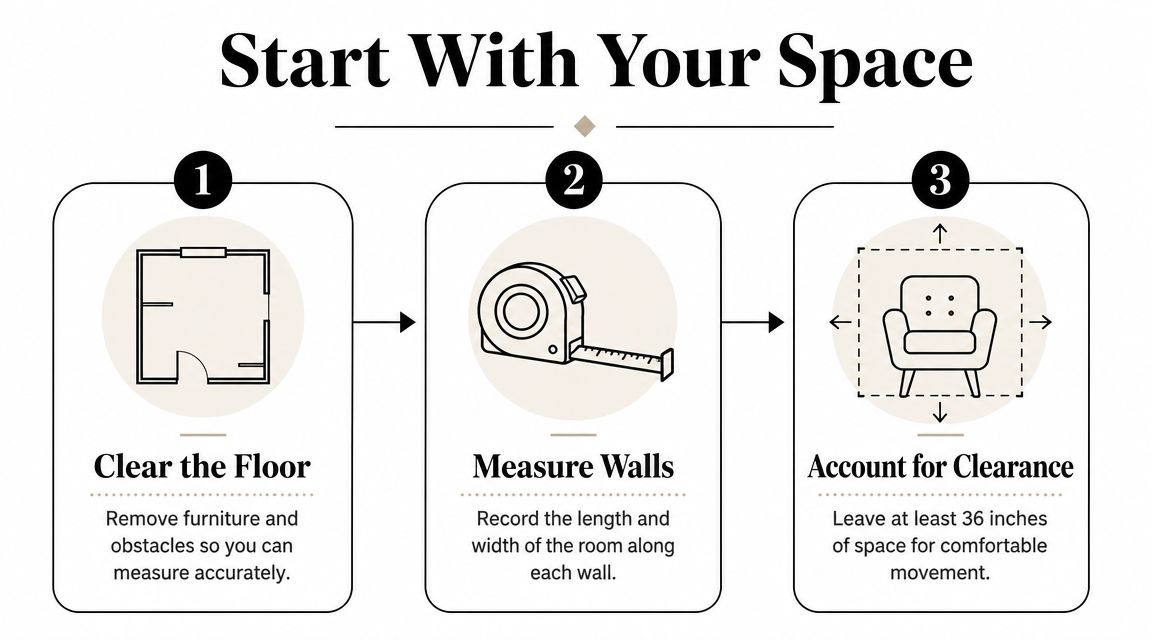
Use a simple process:
- Clear your assumptions. Don't measure around what you hope the room can do. Measure what's really there.
- Record wall-to-wall size. Write down length and width.
- Mark doors and paths. Note where people naturally walk.
- Remember chair use. A table that fits on paper can still fail once chairs are pulled out.
Practical rule: Choose the table size around circulation, not just seat count.
A foundational guideline from furniture buying advice is to leave at least 36 inches of clearance around the table so chairs can be pulled out and people can move comfortably. Some guidance broadens that to 3 to 4 feet of walking space. Povison also notes that West Elm suggests subtracting 6 feet from both room length and width to estimate a workable table footprint, and gives examples such as a 10-foot-wide room supporting only about a 3-foot-wide table with comfortable circulation, while a 15-foot-long room points to a table around 5 feet long using the common room-proportion approach. That guidance appears in Povison's dining table buying guide.
Use the clearance rule before you shop
Once you know your room dimensions, subtract the clearance you need on all sides. What remains is your realistic table zone.
That number often surprises people. It's usually smaller than the table they first imagined, but it works better in daily life. You're not losing space. You're protecting comfort, traffic flow, and the ability to sit down without turning the room into an obstacle course.
A quick planning table helps:
| Room concern | What to check | Why it matters |
|---|---|---|
| Walkways | Paths to kitchen, hall, or patio | Prevents chairs from blocking movement |
| Chair pull | Space behind occupied chairs | Keeps the room comfortable during meals |
| Nearby furniture | Buffets, hutches, cabinets | Avoids doors and drawers colliding |
| Daily use | Homework, serving, laptop time | Makes sure the table supports real life |
If you're learning how to choose a dining room table, this is the step that saves the most regret. Style is easy to swap in your mind. A cramped room is hard to ignore every single day.
Find the Right Shape and Size for Your Life
After the room dictates the footprint, shape becomes the primary decision. This point marks the intersection of function and feeling. The top's shape influences how people converse, how the room flows, and how flexible the seating feels on an ordinary weeknight.
How each shape changes the feel of the room
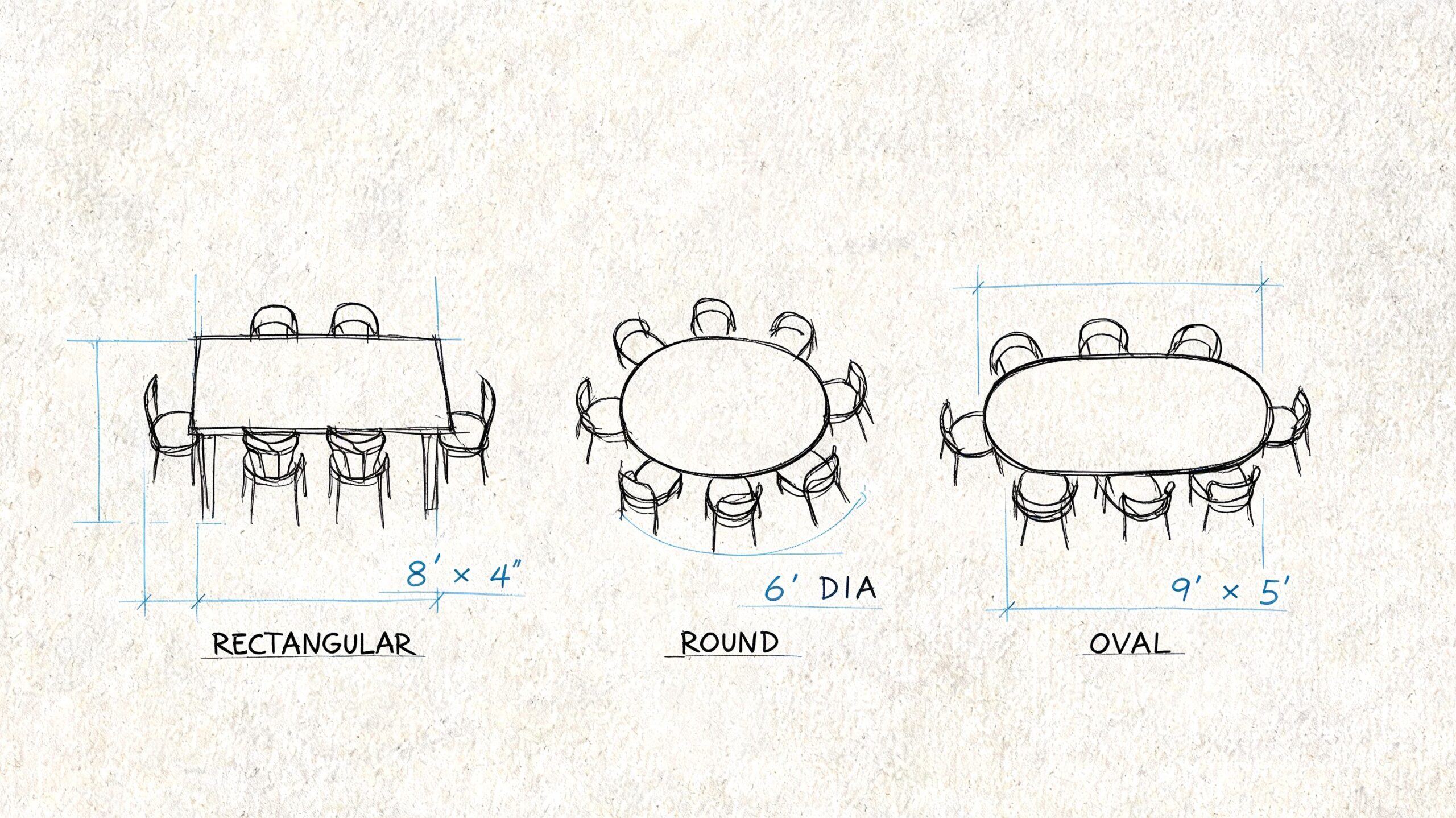
Narrowing the choice down to rectangular or round is common, but the better question is how you want the room to behave.
Here's the plain-English version:
- Rectangular tables usually make the most sense for larger groups and longer rooms. They use perimeter space efficiently and give you more serving area.
- Round tables suit compact rooms well and tend to make conversation easier because everyone sits at a more equal distance.
- Oval tables soften the look of a rectangular room and can improve flow around the corners.
- Square tables can feel balanced in square rooms, but they need the right room proportions to avoid feeling tight.
Aosom notes that round tables create a more intimate, equal-distance conversation setup and have no sharp edges, which improves flow and can be safer in homes with children. That's a useful reminder that table shape isn't only about room geometry. It's also about interaction and movement, as discussed in Aosom's table shape guide.
If your household values easy conversation, a round table often punches above its weight. If you host larger meals with platters, serving bowls, and a little elbow room, rectangular usually works harder.
For more room-by-room examples, this guide to dining table shapes and seating arrangements can help you picture how each layout behaves in a real home.
When extensions and pedestal bases make sense
Some of the best choices aren't about shape alone. They're about what happens underneath and what happens when company comes over.
Ethan Allen's buying guidance points out several trade-offs worth knowing. Pedestal bases can improve seating efficiency because they remove corner legs that interfere with chair placement. Extension tables are a practical option for households that host occasionally, but you should measure the table in its fully extended length before buying. The same guidance notes that leaves can add 2–4 extra seats and that advertised seat counts can be misleading if you ignore elbow room. It also mentions allowing about 12 inches between chairs along a table side for comfortable spacing, in Ethan Allen's dining table buying guide.
The smartest hosting table is often the one that stays modest most of the year and expands only when you need it.
That's especially true in homes where the dining area also has to serve everyday life. A giant table that only shines twice a year usually isn't the best long-term answer.
Choose Materials That Match Your Lifestyle
A dining table doesn't live in ideal conditions. It lives with plates, mugs, backpacks, spilled juice, laptop chargers, and the occasional craft project that somebody promised would stay tidy.
That's why material choice should come from use first and appearance second.
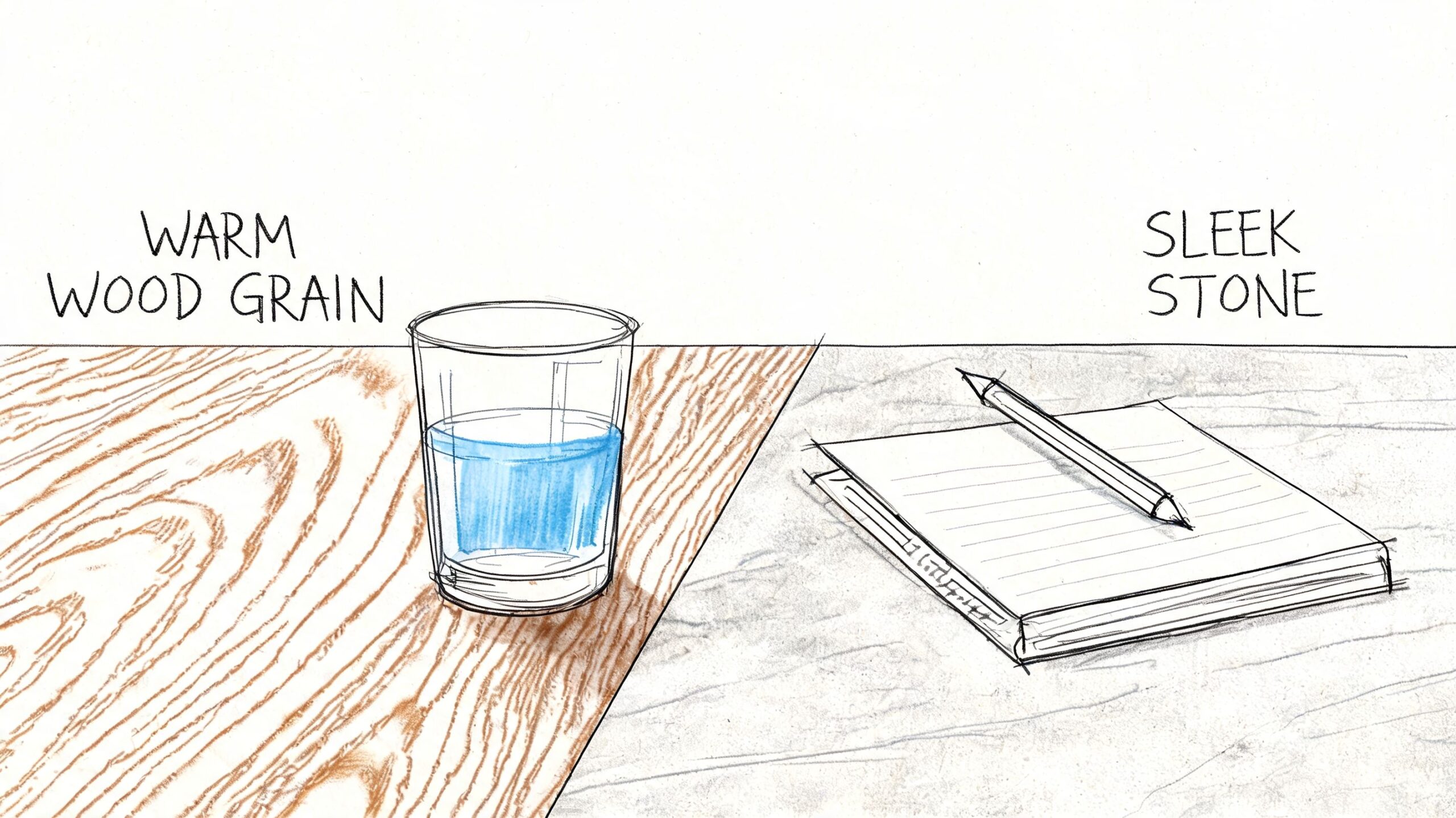
What works for daily wear
If the table will see heavy family use, durability matters more than a delicate finish that looks pretty on day one.
Houzz points out a practical pitfall many shoppers miss. They buy for the room's empty footprint rather than the room with chairs in use. The same guidance recommends looking at durable tops such as solid wood, tempered glass, or ceramic for heavy-use environments rather than high-maintenance finishes, in Houzz's dining table guide.
Here's how I'd think about the common options:
| Material | What it does well | Trade-off to consider |
|---|---|---|
| Solid wood | Warm, timeless, repairable in many cases | Shows everyday life, which some families love and others don't |
| Tempered glass | Feels visually lighter in smaller rooms | Needs regular cleaning to keep fingerprints in check |
| Ceramic | Practical for frequent use and easy cleanup | Has a cooler visual feel than wood |
| Veneer | Can offer a furniture look at a friendlier budget | Depends heavily on construction quality |
What to think about before you choose a finish
Ask yourself a few honest questions before you commit:
- Do you want character or uniformity. Wood develops a lived-in look over time. Some people call that charm. Others call it wear.
- Will kids use it daily. If they will, low-fuss cleanup usually matters more than a fussy finish.
- Is the room dark or tight. Glass can make a room feel more open, while wood adds visual weight and warmth.
- Are you buying for a short phase or a long stretch. A table for your main home should age well with you.
A table that fits your habits will always feel better than one that only fits a style trend.
If you lean toward wood, this hardwood guide for longevity and style gives a solid overview of what to look for. In practical terms, many Central Maine households end up happiest with a surface that forgives daily life and still feels at home in the room.
Pairing Your Table with the Perfect Seating
A table can be right on its own and still feel wrong once the seating goes around it. Chairs and benches change how formal the room feels, how easily people get in and out, and whether the space can flex during the week.
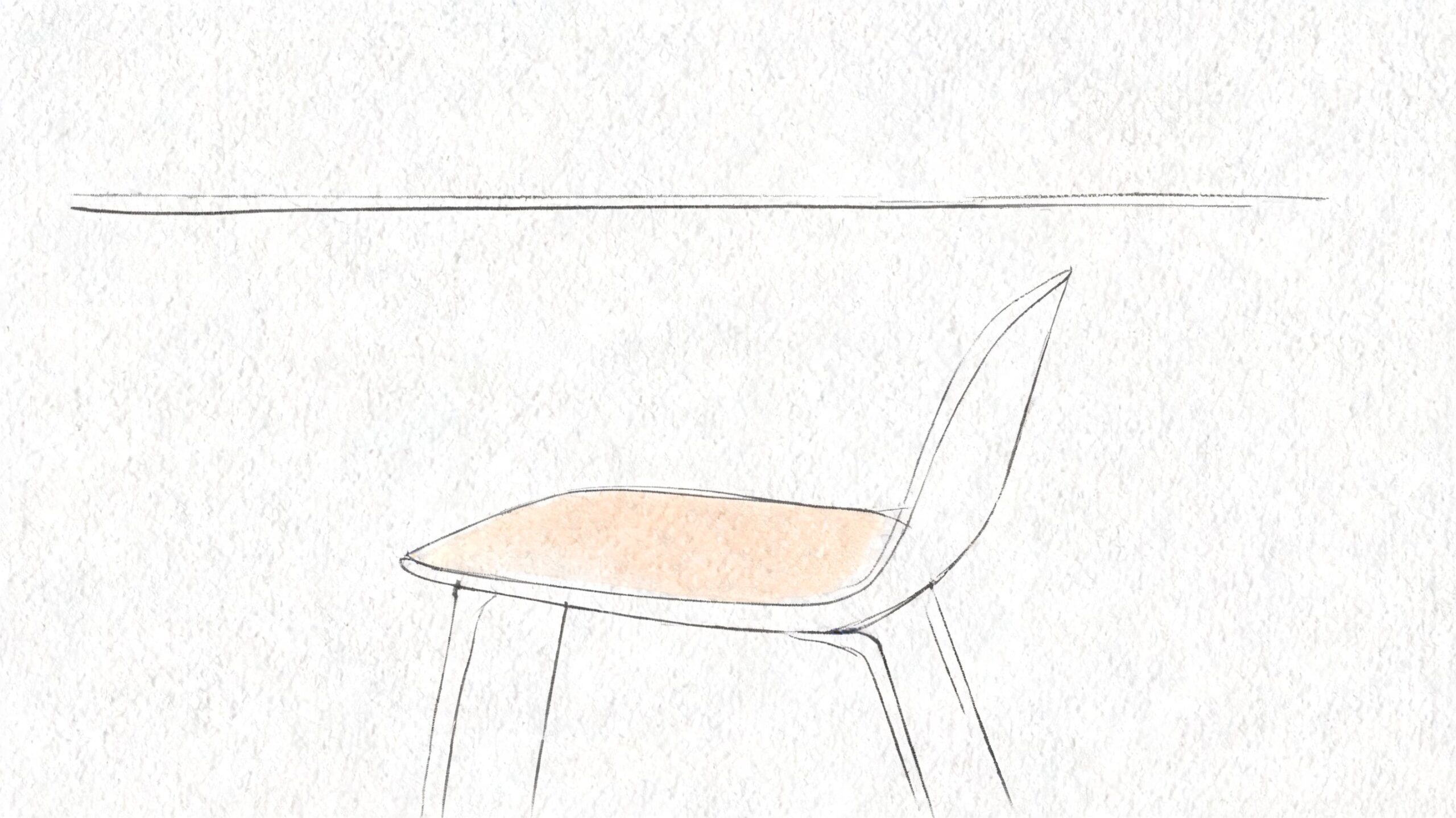
Chairs, benches, and mixed seating
If your room has to do double duty, seating deserves more thought than it typically receives.
BoConcept's guidance highlights a useful decision that many buying guides skip. In tight or changing spaces, it can make sense to choose an extendable table, benches instead of chairs, or a pedestal base to improve daily usability. It also notes that benches can slide under the table when not in use, and that convertible designs are worth considering when uses change, as explained in BoConcept's dining table buying tips.
That's especially practical when the dining area also serves as a homework spot or open floor space.
Consider these combinations:
- All chairs for households that value back support and a traditional look.
- One bench and chairs opposite for flexibility and a more relaxed feel.
- Mixed end chairs and side chairs if you want some personality without losing cohesion.
Comfort matters more than matching
Matching sets can look tidy, but they aren't automatically the right answer. What matters is whether people want to sit there for a full meal, not just whether everything came from the same page in a catalog.
A few checks help:
- Seat width should leave enough personal space between diners.
- Chair backs should support the way your family lingers.
- Bench use works best when people are comfortable sharing space and sliding in.
- Visual weight should suit the table. Heavy chairs around a heavy table can make a room feel crowded.
If you want to finish the room well, these dining room accessory ideas can help tie the seating, lighting, and storage together. The best setups usually feel collected and comfortable, not overly staged.
The Northern Advantage Finding Your Fit in Central Maine
Around here, people usually want the same few things. They want a fair price, a table that lasts, and help from someone who doesn't make the process harder than it needs to be.
That's part of why local experience still matters. A neighbor helping you furnish a home in Augusta or Skowhegan understands that many Maine households need practical furniture first. It has to fit the room, survive seasons of use, and make a house feel settled.
A local way to shop without pressure
The no-hassle showroom approach makes a difference. You can take your measurements, sit at a few options, compare wood tones in person, and think clearly. A good furniture store doesn't rush that process. It helps you narrow choices until one fits.
There's also value in working with people who know the difference between a piece that photographs well and one that holds up. Brands such as Flexsteel and Ashley are familiar names for a reason, and shoppers looking for more handcrafted looks often ask about options like Trailways Amish styles. The key is matching construction and finish to the way your household lives.
If you're torn between two tables, choose the one that suits your room on an ordinary Tuesday, not just on Thanksgiving.
Options when the floor model isn't the answer
Sometimes the right size is available, but the finish isn't. Or the base is right, but the top shape isn't what the room needs. That's where custom ordering helps. Shoppers aren't limited to what's sitting on the floor. A Custom Order program can open up more styles, finishes, and configurations when the standard option is close but not quite right.
One practical option in Central Maine is Northern Mattress & Furniture 1st, a third-generation family-owned retailer serving Augusta and Skowhegan since 1950, with custom-order options, a no-hassle showroom setting, and simple financing through the Nest Credit Card that allows pre-qualification without a credit score impact. For budget-minded households, the Price Chop promise and focus on Real Sale Prices speak to a concern most families have, which is whether the listed price reflects real value instead of a markup dressed up as a discount.
If you're furnishing on a timeline or a budget, simple financing can also make a sensible purchase easier to manage. And if you're the kind of shopper who likes to take your time, a place with complimentary coffee, bottled water, and room to think isn't a small thing. It helps you make a better decision.
If you're ready to find the right fit for your dining space, visit Northern Mattress & Furniture 1st in Augusta or Skowhegan, or browse the Style Guide for ideas on table shapes, finishes, and custom-order options that suit the way Central Maine homes are really used.