Blog
Your First Home Essentials Checklist: 2026 Expert Guide


The keys are finally in hand. The boxes are packed. Then the front door opens to a very quiet reality: an empty living room, bare windows, no plunger, no lamp by the bed, and no clear plan for what needs to happen before the first night.
That's where a solid first home essentials checklist earns its keep. For a lot of Central Maine buyers, the challenge isn't just picking a sofa or finding a table that looks good in the dining room. It's sorting urgent needs from nice-to-haves so the house works safely and comfortably right away. That matters even more now that first-time buyers account for a smaller share of the market. The National Association of Realtors reported that first-time buyers made up 24% of existing-home purchases in 2023, down from a long-run historical norm of about 33%, which helps explain why move-in lists now reach well beyond furniture into utilities, cleaning, safety, and basic maintenance according to this Angi overview.
In Central Maine, that planning matters fast. A new place can feel roomy and promising at noon, then cold, dim, and unfinished by evening if the basics aren't lined up. The good news is that this doesn't need to become a panic-buying weekend. A better approach is to set up the house in layers: safety first, sleep second, daily living third, and personal style after that.
Table of Contents
- Welcome Home to Central Maine
- Your Day One Survival Kit Before the Boxes Arrive
- The Heart of the Home Essential Living Room Furnishings
- Creating Your Sanctuary with Bedroom and Sleep Health Essentials
- Furnishing Your Gathering Spaces for Meals and Memories
- Making It Possible with Budgeting Financing and Delivery
- Turning Your New House into a Home
Welcome Home to Central Maine
In Augusta, Skowhegan, and across Central Maine, the same scene plays out every season. Someone stands in the middle of a new house with a tape measure in one hand and a phone full of shopping tabs in the other, trying to decide what has to be bought today and what can wait until next month.

That feeling is normal. A first home often comes with more setup work than people expect. Modern move-in lists have grown from simple room-by-room notes into broader inventories that cover safety devices, locks, tools, bulbs, batteries, and cleaning supplies alongside furniture and linens, as described in this new home essentials guide from PODS. That's a practical shift, not a fussy one. A home has to function before it can look finished.
Why local experience matters
Maine homes ask for practical decisions. Mud season, winter boots, wet entryways, and older room layouts all affect what belongs on a real first home essentials checklist. A glass-top coffee table might look fine in a photo. It's a poor match for a house where people are coming in with heavy bags, firewood gloves, or a dog on a snowy evening.
A third-generation, family-owned business that's been serving Central Maine since 1950 has usually seen these patterns before. That kind of local heritage matters because first-home shoppers don't need pressure. They need plain guidance on room size, durability, delivery, and what to buy first.
A good move-in plan doesn't try to finish the whole house in one weekend. It gets the house livable first, then comfortable, then personal.
The right goal for week one
The first week isn't about decorating every corner. It's about making sure the home is safe, sleep-ready, easy to clean, and comfortable enough that daily routines can start without chaos.
That's the standard worth aiming for. Not perfection. Not a magazine spread. Just a house that works from day one and grows into home at a manageable pace.
Your Day One Survival Kit Before the Boxes Arrive
The first purchases shouldn't be the fun ones. They should be the items that keep a small problem from turning into a late-night trip to the store.
Handle safety before comfort
A first-night setup starts with alarms and basic emergency gear. The National Fire Protection Association notes that smoke alarms should be installed inside every sleeping room, outside each separate sleeping area, and on every level of the home, while carbon monoxide alarms should be placed outside sleeping areas and on each level where fuel-burning appliances are present, as outlined in this Lowe's new house checklist.
That guidance matters because placement is the point. Buying detectors and leaving them in a box on the kitchen counter doesn't protect anyone. Before the bed frame is assembled, verify that alarms are installed where they belong, that the power source is correct, and that backup power is in place if needed.
The rest of the safety group is straightforward:
- Fire extinguisher: Keep one where it can be reached quickly, not buried in a utility closet.
- New door locks or rekeying plan: The first week is the right time, not “sometime later.”
- Flashlights with batteries: Better than relying on phones during an outage.
- First-aid supplies: Useful the same day a box cutter slips or someone bangs a knuckle assembling furniture.
Practical rule: If an item helps with fire, air, access, injury, or cleanup, it belongs ahead of decorative purchases.
Build a first-night utility kit
After safety, the next category is simple function. Many move-in headaches aren't major repairs. They're small disruptions. A missing screwdriver. No toilet brush. No paper towels when a shelf liner peels up or a pipe drips under the sink.
A practical utility kit should include the baseline items commonly recommended in move-in guidance, including a flashlight, spare batteries, first-aid supplies, tape measure, scissors, a basic toolkit, utility knife, plungers, and essential cleaning supplies, as described in this home essentials checklist from Redfin.
For quick scanning, this is the core list to have in the house before furniture delivery:
- Basic hand tools: Hammer, screwdrivers, pliers, tape measure, box cutter.
- Bathroom backup: One plunger for each bathroom, toilet brush, hand soap, extra toilet paper.
- Cleaning basics: Multipurpose cleaner, disinfecting wipes, paper towels, laundry detergent, trash bags.
- Floor care: Mop or cleaning pads, vacuum or broom, depending on the surfaces in the home.
- Light and power basics: Light bulbs, batteries, and at least a few easy-to-reach lamps.
What doesn't work is scattering these items across random boxes labeled “misc.” Keep them together in one tote or open-top bin and move that bin into the house last so it comes off the truck first.
The Heart of the Home Essential Living Room Furnishings
The living room is often where a first home starts to feel settled. It's also where many people make their first expensive mistake by buying for appearance before buying for use.
Start with the seat that gets used every day
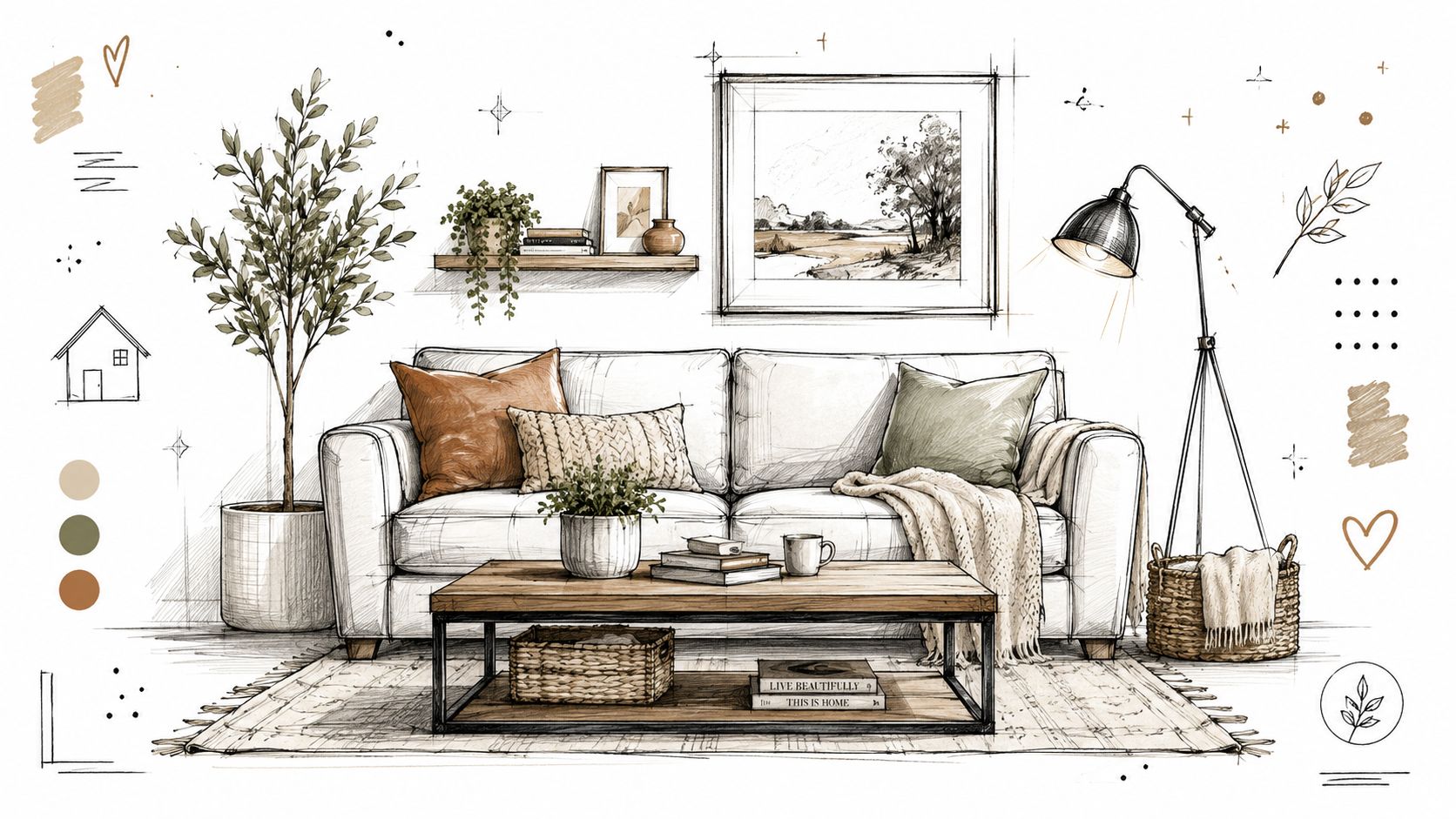
If the budget only allows one major living room purchase early on, make it the sofa. That piece carries most of the room's daily workload. People stretch out there after work, guests land there first, and pets usually claim a corner before the week is over.
That's why durability matters more than trendiness. A well-built sofa with supportive cushions, sturdy arms, and a fabric that can handle daily use will outlast the thrill of a fashionable silhouette that looks better online than it feels in person. Consequently, dependable names such as Flexsteel often enter the conversation, especially for buyers who want furniture that's meant to live through real use rather than light staging.
What works and what usually disappoints
A practical living room setup usually works better when it follows a simple hierarchy:
| Priority | Buy early | Wait if needed |
|---|---|---|
| Daily comfort | Sofa or sectional | Accent chair |
| Basic function | End table, lamp | Extra decor tables |
| Room anchor | Coffee table or ottoman | Decorative shelving |
| Warmth and finish | Rug if the room feels echoey | Wall art and accents |
Oversized sectionals are a common misstep in first homes. They can dominate older Maine living rooms, block heating vents, crowd entry paths, and make the room feel full before storage or lighting has even been solved.
A better approach is to measure for traffic first. Leave enough room for people to walk naturally from doorway to doorway, then fit seating around that path. Buyers who want help planning the room before purchasing can look at these living room furniture layout ideas to avoid forcing furniture into a space that doesn't support it.
The most successful living rooms aren't the most packed. They're the ones where the seating fits the room and the room still functions.
There's also a smart trade-off to make between stock and customization. Floor models help with speed, but they aren't the only option. If the room needs a different configuration, fabric, or scale, a Custom Order program can open up more sensible choices than settling for whatever is on display. That's especially useful in homes with narrow stairways, unusual wall lengths, or open-concept layouts that need the furniture to define the room.
Price matters too, especially for first-home buyers. A store's Price Chop approach and Real Sale Prices are useful only if they help shoppers compare real value instead of chasing fake markdown drama. In a first home, the win isn't buying the cheapest sofa. It's buying the right one once.
Creating Your Sanctuary with Bedroom and Sleep Health Essentials
A bare bedroom feels unfinished in a different way than any other room. If the kitchen is sparse, dinner can still be simple. If the living room is half-done, people can still sit. But if the bedroom isn't ready, the whole move feels off.

Sleep health comes before bedroom styling
The mattress shouldn't be treated like a line item to get through as cheaply as possible. It's the piece that affects how someone feels the next morning, how well they recover, and whether the new house feels restorative once the moving stress dies down.
That's why the better philosophy is fit, not price. A mattress that supports one sleeper well may feel completely wrong for another. Body type, sleep position, pressure sensitivity, temperature preference, and whether someone changes position often all matter more than a sale tag by itself.
Long experience continues to be essential. Northern Mattress & Furniture 1st approaches mattress shopping as a fitting process, not a race to the highest ticket, with options that include innerspring, memory foam, and hybrid models from lines such as Serta and Beautyrest.
How to think about mattress types and comfort
The easiest way to sort mattress choices is to match them to sleeping habits rather than marketing language.
- Innerspring: Often a solid fit for shoppers who like a more familiar, responsive feel and don't want to sink much into the bed.
- Memory foam: Often suits people who want closer contouring and pressure relief, especially around shoulders and hips.
- Hybrid: A good middle ground for shoppers who want support from coils with some contour from foam layers.
Firmness matters too, but there's no universal “best” firmness. Plush can feel inviting at first and still be wrong if it lets the body sag out of alignment. Firm can feel supportive and still be wrong if it creates pressure points. Medium is popular because it often lands in the middle, but even that has to match the sleeper.
A mattress is successful when the body feels supported in the sleeping position it actually uses most often, not the position tested for thirty seconds in a showroom.
For shoppers also planning the rest of the room, these affordable bedroom furniture sets can help narrow down bed, dresser, and nightstand combinations that work together visually without overcomplicating the process.
Bedroom pieces worth buying early
Not every bedroom item needs to be purchased right away. The useful sequence looks more like this:
- Mattress and foundation or bed support
- Bed frame
- Pillows and two full sets of bedding
- Nightstand and lamp
- Dresser or clothing storage
- Mirror, bench, extra accent pieces
What usually doesn't work is spending heavily on a bed frame style and leaving too little room in the budget for the actual sleep surface. A striking headboard can wait. Comfortable, consistent sleep shouldn't.
Bedroom storage should follow the same logic. If closet space is limited, buy practical storage first. That may mean a dresser with usable drawer depth, not a decorative chest that looks nice but holds very little. The room should calm the household as they unwind, not create more clutter.
Furnishing Your Gathering Spaces for Meals and Memories
Dining spaces carry more weight than people expect. They handle quick breakfasts, paperwork, holiday side dishes, school projects, and the first coffee in a quiet house before the day gets moving.
Choose the table by traffic, not just by looks
Start with the room itself. Measure not only wall-to-wall size, but also the paths people need to walk around the table. A dining area can technically hold a larger table and still feel frustrating every single day because chairs catch on walls, door swings get blocked, or someone has to turn sideways to pass through.
A few rules keep this easier:
- For tighter rooms: Round tables often soften movement and make the area feel less cramped.
- For longer rooms: Rectangular tables usually make better use of the footprint.
- For flexible households: Extension styles can help the room serve daily life without staying oversized all year.
- For busy kitchens: Chairs with easy-clean surfaces and sturdy joinery tend to age better than delicate, highly styled options.
These dining room table selection tips are helpful for narrowing down size and shape before anything gets delivered.
Why durable dining furniture pays off
Dining furniture should earn its place. That's why craftsmanship matters here in a different way than it does with decorative pieces. A dining table gets wiped, bumped, leaned on, and dragged around by chairs. It needs to handle actual family life.
Trailways Amish furniture is often part of this conversation because buyers looking for longevity usually want solid construction, dependable finishes, and styles that don't feel dated in a short time. For first-home owners, that kind of purchase can be smarter than replacing a lower-grade table once the surface wears poorly or the joints loosen.
Customization also matters in dining rooms because scale and finish can change everything. A family may love a table design but need a different size, wood tone, or chair mix to make it work in the house they bought. That's where custom ordering becomes practical rather than indulgent. It helps the room fit the household instead of asking the household to adapt to a poor fit.
Making It Possible with Budgeting Financing and Delivery
Most first-home budgets don't fail because people want too much. They fail because purchases happen out of order. A rushed weekend can burn through funds on visible pieces while the unglamorous basics are still missing.

A practical order for spending
A better budget starts by separating purchases into tiers:
- Must have now: Safety items, mattress, bed setup, basic seating, lamps, cleaning and maintenance supplies.
- Should buy soon: Dining set, dresser, additional living room tables, entryway storage.
- Can wait: Accent chairs, decor, occasional tables, wall art, extra bedroom pieces.
This approach protects cash flow and reduces regret. It also makes it easier to recognize real value. Real Sale Prices matter because first-home buyers need honest budgeting, not inflated tags that only look discounted later. A Price Chop promise is most useful when it helps shoppers compare durable, everyday pieces without playing guessing games on whether the sale is a real sale.
The budget should follow daily life. Spend first on what gets touched, used, cleaned, and slept on every day.
How financing and delivery reduce move-in friction
Financing can help when it's simple and transparent. The useful kind lets a household spread out larger purchases without turning the process into a paperwork headache. For buyers who need flexibility, the Nest Credit Card offers a way to pre-qualify without a credit score impact and manage purchases through budget-friendly monthly payments. Shoppers comparing options for staged purchases can review these monthly payment choices for furniture before deciding what to buy now and what to phase in later.
Delivery matters just as much as financing, especially in Central Maine where weather, distance, and house layouts can complicate move-in days. Professional in-home delivery saves people from wrestling a sofa through a narrow doorway, scraping a staircase, or discovering too late that the bed won't fit up the turn in the hall. Setup service also means the home becomes usable faster, with less packaging clutter and fewer assembly mistakes.
What doesn't work is assuming personal pickup is always the simpler route. For smaller items, maybe. For major furniture, it often creates more stress than savings once transport, labor, assembly, and disposal are all factored in.
Turning Your New House into a Home
A first home rarely comes together all at once. It usually happens in layers. The bed gets set up first. Then the sofa arrives. Then the table. Then, one day, the house stops feeling temporary.
That's the right pace. A good first home essentials checklist isn't about filling every room as fast as possible. It's about choosing the things that make daily life easier, safer, and more comfortable, then building outward from there with care.
In Central Maine, that steady approach tends to hold up well. Homes here are meant to be lived in. They need furniture that can handle boots by the door, busy weekends, overnight guests, and long winters when comfort matters more than show.
A local, third-generation family business that has served Augusta, Skowhegan, and the surrounding area since 1950 can be useful in that process because buyers often need more than product selection. They need help finding the right fit, understanding custom options, arranging delivery, and making budget decisions without pressure. A no-hassle showroom matters more than people think when they're furnishing an entire house and don't want every question to turn into a sales pitch.
For plenty of households, the most helpful next step isn't buying anything that day. It's walking the floor, sitting on different sofas, comparing bedroom setups, asking about custom fabrics or configurations, and getting a clearer sense of what belongs in the home now versus later. There's value in being able to browse, think, and make practical decisions at a comfortable pace. For some people, that starts with inspiration like this look at why loving your space supports everyday well-being.
If a new place in Central Maine still feels more overwhelming than exciting, a visit to Northern Mattress & Furniture 1st can make the process easier. Stop by the Augusta or Skowhegan showrooms, take a look around in a no-hassle setting, ask questions, and get a clearer sense of what fits the home, the budget, and the way the household lives. Complimentary coffee and bottled water make it easy to stay awhile and browse without pressure.