Blog
Parker Furniture & Design: A Maine Buyer’s Guide

A lot of furniture shopping in Central Maine starts the same way. A family looks around the living room after another long winter weekend and realizes the old setup isn't working anymore. The sofa feels tired, the storage is overflowing, and the room that ought to feel welcoming now feels patched together.
That's usually when Parker Furniture and design starts showing up in search results, showroom conversations, and saved photos. The appeal makes sense. Parker House pieces often land in that sweet spot where buyers want something more polished than basic entry-level furniture, but still practical enough for daily life, muddy boots by the door, and houses that need to function for real people.
The hard part isn't finding a good-looking piece. The hard part is knowing whether it will make sense after the excitement of delivery day wears off. That's where material choices, modular layouts, upholstery details, and long-term ownership questions matter most.
Table of Contents
- Making a House a Home in Central Maine
- Who Is Parker House Furniture
- Understanding Parker House Materials and Construction
- Popular Parker House Styles for Maine Living
- How to Choose the Right Furniture in Central Maine
- Investing in a Home You'll Love for Years to Come
Making a House a Home in Central Maine
Homes in Augusta, Skowhegan, and across Central Maine ask a lot from furniture. A living room has to feel comfortable on cold evenings, hold up during holiday gatherings, and still look pulled together when friends stop by. That's why many households aren't just buying furniture. They're trying to make a house feel settled.
A common scenario goes like this. Someone starts with one quick purchase to solve one problem. Then the chair doesn't match the sofa, the media stand is too small, and the room feels crowded even though it still doesn't have enough seating. Before long, the whole space feels temporary.
That's often where a more intentional approach helps. Instead of asking, “What looks nice today?” it's better to ask, “What will still work after the next move, the next family gathering, or the next layout change?” For new households especially, a practical checklist can keep the process grounded. This guide to first home furniture essentials is a useful place to start thinking about priority pieces and room function.
Why investment pieces matter here
Maine homes tend to be lived in hard. Furniture has to stand up to kids dropping into the sectional, guests staying late in the family room, and rooms that do double duty as work zones, TV spaces, and gathering spots.
That doesn't mean every piece needs to be top-end or formal. It means the main pieces should earn their keep.
- A sofa should support daily use: It needs to be comfortable on an ordinary Tuesday, not just attractive under showroom lights.
- A storage piece should solve clutter: If it can't organize cords, remotes, games, or seasonal extras, it's taking up space without helping.
- A dining or occasional piece should fit the room: Oversized furniture can make a Maine home feel tight fast, especially in older layouts.
Practical rule: Buy the pieces that carry the room first. Seating, storage, and scale matter more than chasing a perfect decorative look on day one.
Parker House gets attention because it often speaks to that middle ground. The styling feels current, the collections are coordinated, and the modular options can make difficult rooms easier to furnish. But popularity alone doesn't answer the big question. Buyers still need to know what's under the surface and whether the trade-offs fit their home.
Who Is Parker House Furniture
Parker House isn't the same thing as the historic Australian Parker furniture line that dates to 1935, when Jack Parker and Alf Dagger began making chairs and cabinets from packing pallets under the name Dagger and Parker. That earlier company later moved to a four-and-a-half-acre site in Regents Park in 1957, had grown to 80 employees by then, and adopted Formica in 1958, a notable material step in Australian furniture making, as described in this Parker furniture history overview.
For Maine shoppers, the brand seen in most current showrooms is Parker House. That distinction matters because plenty of online searches blend the names together, and that can confuse buyers who are trying to understand what they're looking at.
Sorting out the Parker name
Parker House describes itself as a wholesale, trade-focused furniture resource with a 70+ year history, as noted on the company's about page. That helps explain why the brand appears regularly in retail settings and why its collections often feel built for broad household appeal rather than one narrow design niche.
What public information doesn't always spell out is what many buyers want to know after the sale. Details about lifespan, repairability, replacement parts, and long-term ownership can be harder to pin down than styling details or room photos.
Why the brand shows up so often
Parker House has built a recognizable identity around coordinated, space-aware furniture for the parts of the home people use hardest. The brand is especially associated with living room, dining, home office, and entertainment furniture. That focus matters because many shoppers aren't trying to furnish one isolated corner. They're trying to make several connected rooms feel coherent.
A few traits explain the appeal:
- Modular thinking: Pieces are often designed to work in combinations, which helps with awkward rooms and changing layouts.
- Collection-based styling: Buyers can create a more unified look without hiring a designer or mixing many unrelated lines.
- Practical footprint choices: Space-efficient designs tend to resonate with households that need storage and flexibility.
A furniture brand can be stylish and still leave unanswered questions about long-term ownership. Smart buyers pay attention to both.
Parker Furniture and design, in the way many people search for it, usually reflects that mix of style and usability. The look attracts attention first. The value decision comes later, when a shopper starts asking how the piece is built and whether the materials fit the way the home is used.
Understanding Parker House Materials and Construction
One of the more useful things a shopper can learn about Parker House is that the construction story isn't all-solid-wood romance, and that's not automatically a bad thing. Parker House furniture often uses a combination of solid hardwoods, kiln-dried lumber, engineered woods, and high-quality veneers in modular, space-efficient pieces for living rooms, home offices, and entertainment centers, according to this Parker House materials review.
That mixed-material approach is common because each material does a different job. The question isn't whether a piece uses more than one material. The question is whether those materials are being used in the right places.
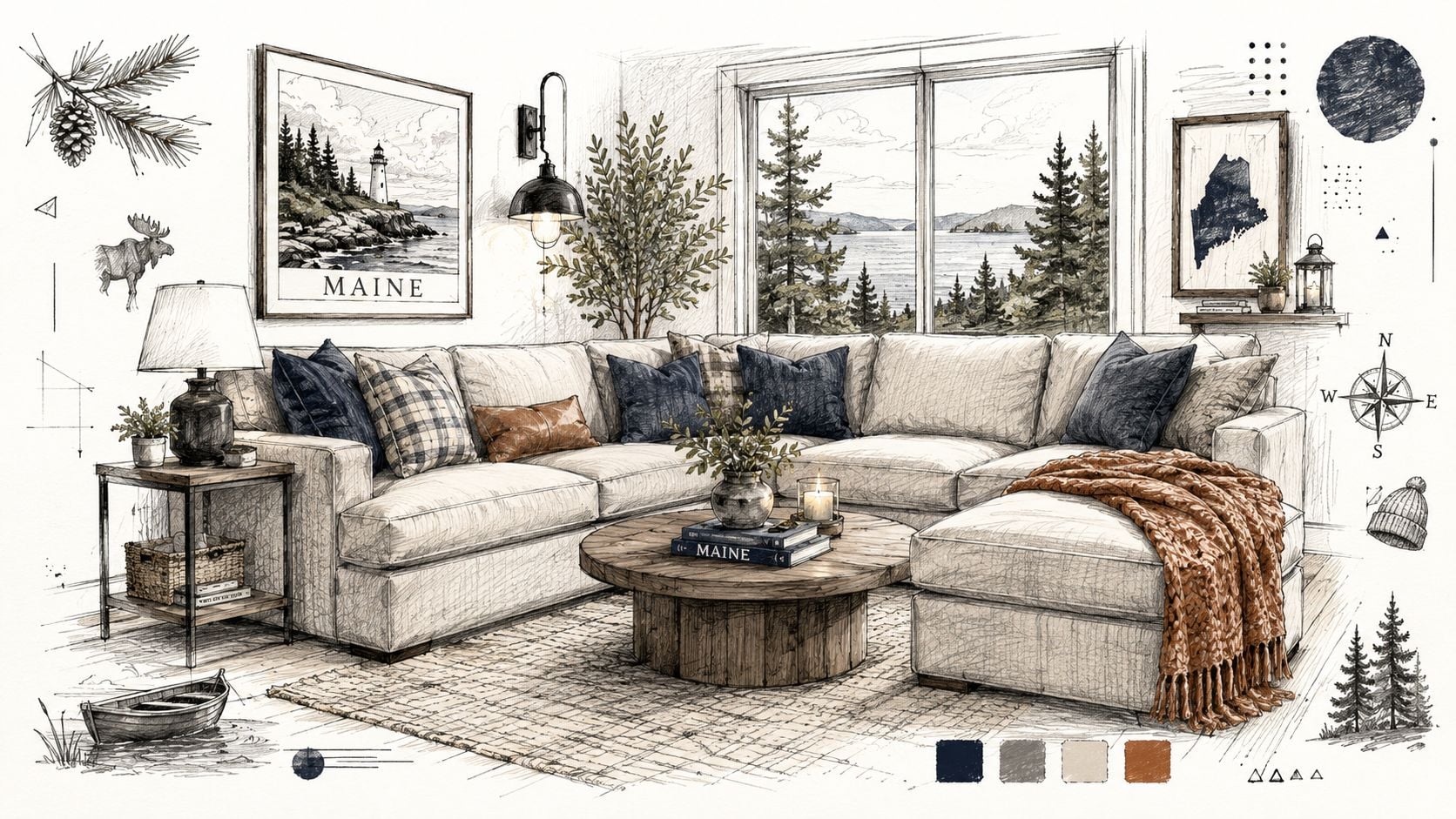
For buyers who want a broader primer on material choices before stepping into a showroom, this guide to wood furniture and long-term durability is a helpful companion.
Why mixed materials are common
Solid hardwood brings strength where frame members and stress points need it. Kiln-dried lumber matters because reducing moisture before fabrication lowers the chance of later warping and joint stress. On large casegoods, engineered wood and veneers often make practical sense because wide panels are more stable when they aren't built from solid wood alone.
That's especially relevant in pieces like entertainment walls, bookcases, and office furniture. Large flat surfaces can move over time if the construction doesn't account for seasonal changes and normal household conditions.
Here's a simple way to look at it:
| Component | What it does well | Where buyers benefit |
|---|---|---|
| Solid hardwood | Adds structural stiffness | Stress-bearing frame areas |
| Kiln-dried lumber | Reduces moisture-related movement | Better long-term fit at joints |
| Engineered wood | Improves consistency across larger panels | Casegoods and storage pieces |
| Veneers | Create a more uniform finish over stable cores | Broad visible surfaces |
What works and what to inspect closely
Mixed-material furniture usually performs best when expectations match the category. For a modular wall unit or media cabinet, stable panel construction can be a smart choice. For a heavily used seat frame, buyers should inspect how firm the structure feels and whether the piece resists twisting or creaking.
A few checks matter more than brand language:
- Open and close everything: Drawers and doors should move cleanly and line up properly.
- Check the back and underside: These areas reveal whether the piece feels thoughtfully assembled or rushed.
- Look at long spans: Shelves, tops, and wide panels should feel appropriately supported.
- Ask where the weight lands: On seating, the frame and suspension matter more than decorative details.
What works: Construction that balances stability, appearance, and room-friendly scale.
What doesn't: Buying as if every wood-look surface means the same thing.
In practical terms, Parker Furniture and design tends to make the most sense for buyers who want coordinated style and functional engineering, and who are comfortable with a real-world mix of materials rather than expecting every component to be premium solid wood throughout.
Popular Parker House Styles for Maine Living
The reason Parker House catches on in Maine homes isn't hard to see. Many collections fit how people use their rooms. Family seating needs to handle movie nights, occasional overnight guests, and lazy Sunday afternoons. Storage pieces need to tame electronics, books, and all the extras that collect around a lived-in home.
That's where the brand's more practical side shows up.

A lot of Maine households also blend traditional comfort with lighter coastal or casual finishes. For inspiration on that softer side of room planning, this overview of coastal design style gives helpful ideas without pushing a room too far into theme territory.
Sectionals that fit real routines
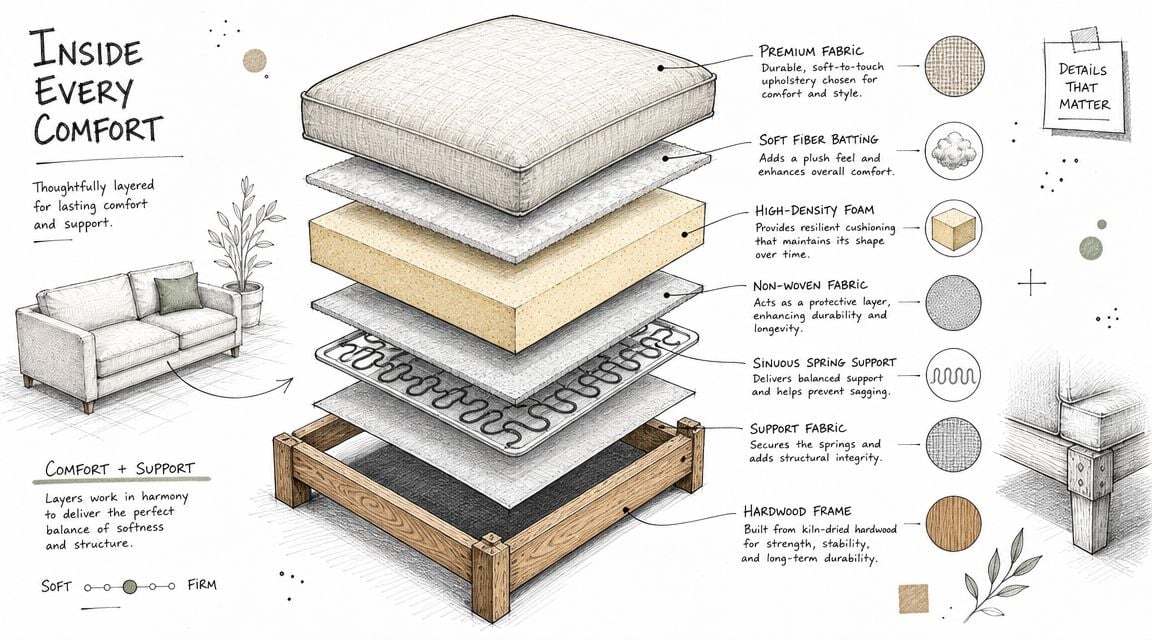
Large and modular seating tends to be one of the strongest use cases. Upholstered seating from brands like this is often built on mixed-material frames with sinuous-spring seat suspension and high-synthetic-content upholstery such as 90% polyester/10% nylon, balancing cost, durability, and load distribution, as shown in this sectional product construction listing.
That tells buyers a few useful things. Sinuous springs usually provide a more supportive seat deck than simple foam set over a rigid board. Synthetic-heavy fabrics can also make sense for active homes because they're often chosen for wear resistance and easier everyday living.
Common strengths in this category include:
- Flexible layouts: A sectional can adapt if a household moves or reworks the room.
- Family-friendly upholstery: Synthetic blends tend to be practical for regular use.
- Room-defining comfort: In open living spaces, one large seating piece can anchor the whole area.
Storage and entertainment pieces that earn their footprint
Parker House is also known for entertainment furniture, shelving systems, and home office pieces that help organize a room without making it feel overly formal. In Maine homes, that often matters more than people expect. A wall unit isn't just about the television. It becomes the place for books, baskets, framed photos, charging equipment, and the small clutter that otherwise spreads across the room.
These pieces work best when buyers stay realistic about room size and traffic flow.
A good fit usually looks like this:
- The furniture leaves breathing room: Walkways still feel natural.
- Storage matches habits: Closed storage helps if a household prefers a calmer look. Open storage works better for display and easy access.
- The scale suits the ceiling and wall width: A piece shouldn't dominate just because it looked impressive in a larger showroom.
The best-looking sectional in the store becomes a bad purchase if the room has to fight around it every day.
Parker Furniture and design usually lands well for households that want comfort with structure. It's less about showpiece furniture and more about pieces that can carry the rhythm of everyday use while still giving the room a finished look.
How to Choose the Right Furniture in Central Maine
The smartest furniture decisions in Central Maine usually happen in person. Photos can suggest style, but they won't tell a shopper whether the seat pitch feels right, whether a cabinet door shuts cleanly, or whether the fabric texture will work in a busy household.
That's why local showroom shopping still matters. Buyers can compare comfort, scale, finish quality, and configuration options with their own eyes instead of guessing from staged images.
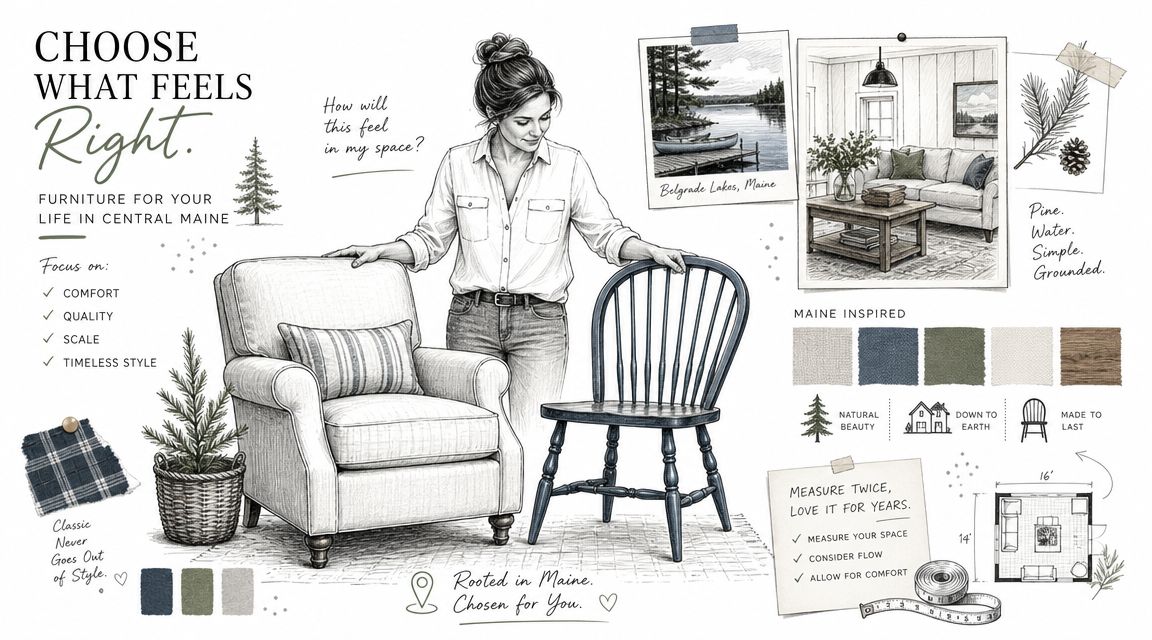
Shoppers who want a stronger decision framework before they visit can use this guide on how to shop for furniture smartly.
What to test in the showroom
A careful buyer doesn't need to become a furniture engineer. A few hands-on checks reveal a lot.
- Sit the way the piece will be used: Lean back, sit upright, and try the corner or chaise position if it's a sectional.
- Check for movement: A good piece shouldn't feel loose when weight shifts.
- Look at the finish in normal light: Some surfaces look richer or flatter depending on the lighting.
- Measure beyond width: Depth, arm height, and walkway clearance often decide whether a room feels comfortable.
A quick notebook or phone note helps. Record room measurements, desired seating count, and the one or two must-have features. That could be performance-minded fabric, hidden storage, or a reversible configuration.
When custom ordering makes more sense
Floor models are useful starting points, but they aren't the whole market. If the size is close but not right, or the silhouette works but the fabric doesn't, a custom order path may be the better move.
That's often especially helpful in older Maine homes, where room dimensions and entryways can be less forgiving than newer layouts. A buyer may love the general shape of a sectional but need a different configuration, firmer fabric choice, or a color that works better with wood floors and existing trim.
Useful times to consider custom options include:
- The layout is awkward: Modular choices can solve corners, windows, and narrow walls.
- The home already has strong finishes: Existing flooring, woodwork, or stone may call for a more selective fabric or finish.
- The main piece needs staying power: A custom choice can reduce the chance of replacing a nearly-right piece too soon.
For buyers in Augusta or Skowhegan, Northern Mattress & Furniture 1st is one local option that offers custom order access, design help, and in-person evaluation of furniture before purchase, along with a no-hassle showroom setting.
Showroom advice: If a piece only works because the photo was cropped well, it probably won't work as well in a real room.
How to keep the investment manageable
Price matters. So does honesty around price. A household doesn't need the most expensive furniture in the room. It needs furniture that fits the budget and the job.
That's where practical store policies can matter as much as the product itself.
- Real sale pricing matters: A straightforward discount structure is easier to trust than a constant cycle of inflated tags and dramatic markdown language.
- Simple financing helps with timing: The Nest Credit Card allows shoppers to pre-qualify without a credit score impact, which can help when a larger purchase needs to fit a monthly budget.
- Delivery should be part of the plan: Large modular pieces and casegoods aren't side tasks. Entryways, stair turns, and room placement need forethought.
For many households, this is also where local heritage matters. A third-generation family business that has served Central Maine since 1950 usually understands that shoppers aren't trying to win a style contest. They're trying to furnish a home sensibly, avoid costly mistakes, and find the right fit for how they live.
Investing in a Home You'll Love for Years to Come
Good furniture buying usually comes down to one simple idea. A piece needs to work after the newness fades. That means the look has to suit the room, the construction has to match the job, and the size has to make sense for the home that's being lived in.
Parker Furniture and design appeals to many buyers because it offers organized style, modular thinking, and practical household use. The trade-off is that buyers should go in with open eyes about mixed-material construction and ask better questions about long-term value, maintenance, and repair expectations.
The takeaway for Maine households
For Central Maine homes, the best results usually come from slowing the decision down just enough to inspect the details that matter.
- Choose for daily life first: Comfort, layout, storage, and durability should lead.
- Treat materials appropriately: Mixed construction can be a smart engineering choice when it's used well.
- See it in person when possible: Scale and support are much easier to judge in a showroom.
- Protect what you buy: A little routine care makes a visible difference over time, especially on wood surfaces. This guide to protecting wood furniture from scratches and stains is a practical next read.
A well-chosen sectional, media piece, or storage unit does more than fill space. It helps a room settle in. It supports family routines, makes gatherings easier, and gives the home a more finished feeling season after season.
If a household is weighing Parker House or trying to sort through other living room and home storage options, Northern Mattress & Furniture 1st offers a practical next step. Shoppers can browse the style guide online or visit the Augusta or Skowhegan showrooms to compare furniture in person, ask about custom order possibilities, and explore simple financing options without pressure.