
Blog
How to Design a Bedroom Layout: A Guide for Homeowners


A bedroom often reaches a tipping point. The bed fits, technically. The dresser is in the room. The chair from the last home got tucked into a corner. Yet every morning starts with sidestepping a drawer, squeezing past a nightstand, or wondering why the room never feels as calm as it should.
That's a familiar spot for many households in Central Maine, especially as the seasons change and the bedroom starts carrying more weight. In winter, it needs to feel warmer and more restful. In summer, it needs to breathe. In every season, it should work without making the room feel crowded or awkward.
A thoughtful layout fixes more than appearance. It shapes how the room feels to walk through, how easy it is to get dressed, and how well the space supports sleep. For Maine homeowners and renters alike, learning how to design a bedroom layout starts with a simple idea. The room should fit daily life, not force daily compromises.
Table of Contents
- Planning Your Bedroom A Maine Homeowner's Guide
- Start with a Solid Foundation Measurement and Mapping
- Placing Your Anchor The Art of Bed Placement
- Layering in Furniture and Creating Zones
- Finishing Touches Rugs Lighting and Balance
- Making Your Vision a Reality with Northern
Planning Your Bedroom A Maine Homeowner's Guide
In a lot of Maine homes, the bedroom becomes the catch-all room without anyone meaning for it to. An extra blanket lands on a chair. Boots stay near the closet. A work bag finds a permanent spot on the floor. Before long, the room still has all the right furniture, but it doesn't feel like a retreat anymore.
That's why layout deserves attention before color, bedding, or decor. Placement determines whether the room feels settled or unsettled. A well-planned bedroom lets the bed stand out, keeps storage easy to reach, and leaves enough open floor so the whole space feels calmer.
For many households in Augusta, Skowhegan, and across Central Maine, the challenge isn't a lack of style. It's not knowing where to begin. Bedrooms can be tricky because they carry two jobs at once. They need to support sleep, and they need to handle everyday routines like dressing, reading, folding laundry, or getting out the door on a cold morning.
A comfortable bedroom usually doesn't come from adding more. It comes from placing the right pieces in the right order.
A practical layout starts by treating the room like a real living space, not a showroom picture. That means working with the room's shape, the windows, the door swing, and the pieces that already matter most. Smaller rooms need this even more, and this guide to stylish solutions for small bedrooms can help when square footage is tight.
There's also a local side to this conversation. Families across Central Maine have been investing in their homes for generations, and bedroom furniture tends to stay with a household for years. A layout worth doing is one worth doing carefully, because it helps turn a house into a home that feels easier to live in every day.
Start with a Solid Foundation Measurement and Mapping

A bedroom can look roomy until the dresser drawers hit the bed or the closet door stops halfway open. That is why the measuring stage matters so much. Before anything gets pushed, lifted, or bought, it helps to map the room the same way a Mainer might study a back road before a snowstorm. You want a clear path, no surprises, and enough room to move with ease.
Why the sketch matters
A simple sketch turns guesswork into a plan. The drawing does not need to be pretty. It needs to show the room's true size, the location of doors and windows, and any fixed features that cannot be moved, such as radiators, sloped ceilings, baseboard heaters, or built-ins.
One bedroom planning guide explains that scaled drawings help homeowners test furniture placement before they move heavy pieces, especially when the room has tight corners or multiple openings, as described in this article on bedroom layout principles. That approach is useful in older Maine homes, where rooms often have quirks that do not show up in a quick glance.
Graph paper works well for this. So does a plain sheet of paper with careful notes.
The sketch is a map. Furniture measurements are the landmarks.
What to measure before moving anything
Start with the shell of the room, then measure the pieces that need to live inside it.
- Measure each wall. Write down the full length of every wall, even if the room seems close to square.
- Mark doors and windows. Include where they start and stop, plus the direction each door swings.
- Note fixed features. Baseboard heat, outlets, vents, low windows, angled ceilings, and trim can all affect placement.
- Measure furniture by width, depth, and height. A tall headboard under a window creates a different problem than a low platform bed, even if both fit the floor space.
- Check how pieces function. Dressers need drawer clearance. Nightstands need enough room to use comfortably. Closet doors need space to open fully.
If you want help with the details, this guide on how to measure furniture for your room walks through the practical numbers to record before shopping or rearranging.
The clearances that make a room feel livable
A layout is more than a list of dimensions. It also needs breathing room. Designers commonly allow enough open space for people to walk beside the bed, open drawers, and use doors without bumping into furniture. Those clearances are what make a bedroom feel settled instead of cramped.
A good test is simple.
If a layout only works on paper because nobody opens the dresser, reaches the window, or walks through carrying a laundry basket, it needs another pass.
Painter's tape can help here. Mark the outline of the bed, dresser, or chest directly on the floor and walk the room as you normally would on a winter morning. Open the door. Stand where you would get dressed. Bend as if you were pulling out a drawer. That quick trial often reveals problems a sketch can miss.
For many Central Maine households, this planning step brings peace of mind. Bedrooms are rarely one-season rooms. They need to work in muddy spring, bright summer, and heavy-blanket winter alike. Measuring first makes it easier to choose furniture that fits the room you have, and local guidance can make those custom-fit decisions feel far less overwhelming.
Placing Your Anchor The Art of Bed Placement
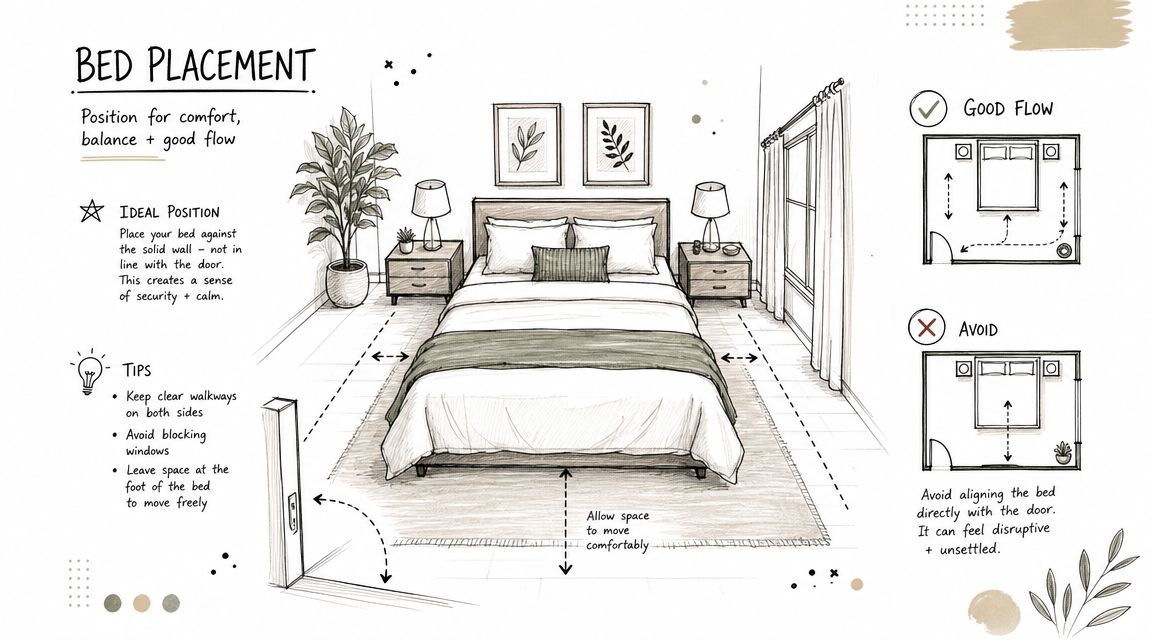
On a cold Maine morning, the bed is often the first place you feel whether a room works. Can you swing your feet out easily? Reach a nightstand without twisting? Walk to the door without squeezing past a corner? Bed placement shapes all of that.
The bed works like the woodstove in an old farmhouse. Once that central piece is in the right spot, the rest of the room starts to make sense around it. Place it well, and the bedroom feels calm and settled. Place it poorly, and even a large room can feel awkward.
How to choose the strongest wall
In many bedrooms, the best starting point is the longest solid wall. A full wall gives the bed a natural home and makes the room feel balanced as soon as you walk in. It also leaves more flexibility for nightstands, lamps, and the everyday path around the bed.
That said, older Maine homes do not always offer a perfect blank wall. Windows may sit lower than expected. Closet doors may interrupt the obvious spot. Sloped ceilings upstairs can shift where the bed feels comfortable. In those rooms, the goal is not perfection. The goal is a placement that feels steady and easy to live with through every season.
A simple comparison helps:
| Placement option | Usually works well when | Possible drawback |
|---|---|---|
| Centered on a solid wall | The room has one clear uninterrupted wall | May reduce space for a dresser or chest |
| Offset on a side wall | Doors, closets, or angles interrupt the main wall | The room can feel less balanced |
| Under or near a window | Other walls are blocked or too short | Light, drafts, and curtain use need extra care |
The question to ask is practical. Which wall gives the bed a settled position and still lets the room work for sleeping, dressing, and quiet routines?
Give the bed enough breathing room
A good bed placement should feel natural from both sides when the room allows it. That does not mean every bedroom needs perfect symmetry. It means getting in and out of bed should be easy, making the bed should not feel like a wrestling match, and one person should not have to climb over the other every night unless the room leaves no better option.
This matters even more in Maine, where winter bedding adds bulk and bedrooms often need to feel extra cozy without becoming crowded. A layout that looks fine in summer can feel tighter once heavier blankets, a thicker comforter, and closed windows come into the picture.
When a window wall is the only realistic option
Sometimes the window wall is the right answer because every other wall has a door, closet, radiator, or awkward angle. That setup can still work well. It just needs a little more judgment.
Use these checks before you commit:
- Keep the headboard in proportion so it does not crowd the window visually.
- Notice drafts and early light because comfort matters as much as appearance.
- Make sure blinds or curtains still operate easily for privacy and light control.
- Leave enough room for bedside access even if the layout is not perfectly symmetrical.
A room feels calmer when the bed looks chosen on purpose.
If you are still deciding between a queen, king, or another size, it helps to settle that first. This guide on how to choose the best bed mattress size for your home can help you match the bed to the room before you commit to a layout.
For many Maine households, this is also where local advice makes a real difference. A family-owned furniture store can help you judge whether a taller headboard, a custom-size solution, or a different bed scale will suit the room you live in, not just a showroom floor. That kind of guidance helps the bedroom feel personal, practical, and ready for daily life.
Layering in Furniture and Creating Zones
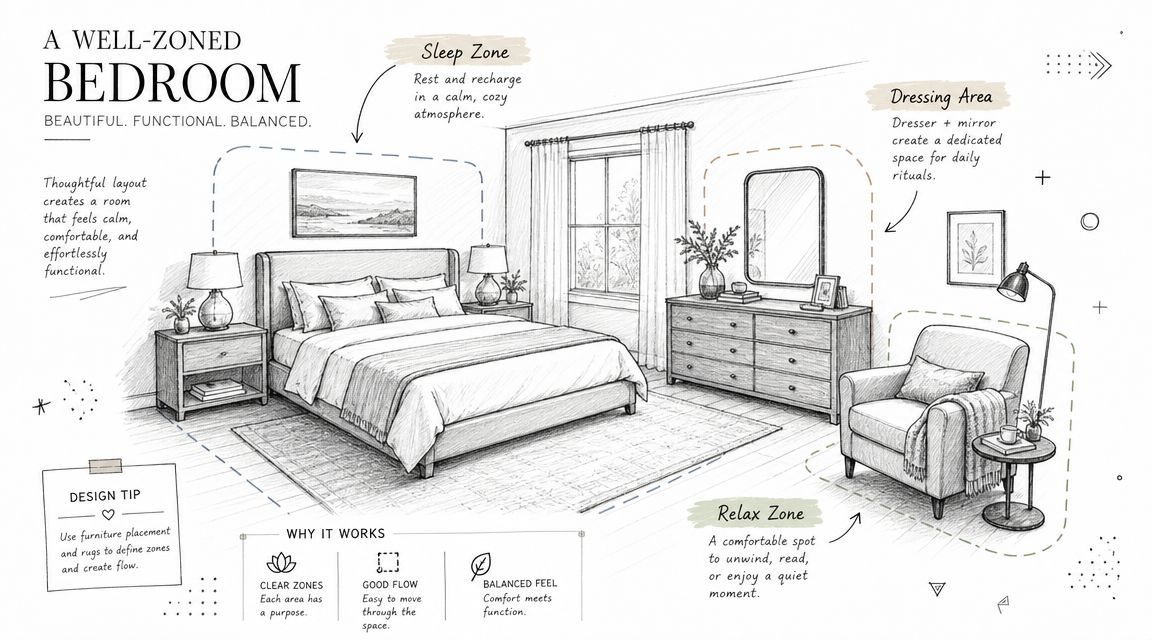
A bedroom starts to feel settled once the supporting furniture follows the way you live. The bed may be the anchor, but the dresser, bench, chair, and storage pieces shape the room's daily rhythm. In many Maine homes, that rhythm includes thick winter layers, smaller room footprints, and the need for furniture that works hard through every season.
One helpful way to plan the rest of the room is to break it into zones. A good layout works like a well-kept mudroom. Every area has a purpose, and nothing is there just to take up space. In a bedroom, that usually means a sleep zone around the bed, a dressing zone near storage, and, if the room allows, a quiet corner for reading or unwinding.
Give every piece a clear role
Start by asking one plain question. What job will this piece do every day?
A dresser should sit where drawers can open fully and getting dressed feels easy. A bench earns its place at the foot of the bed or along an open wall if it gives you a spot for putting on socks, setting out clothes, or folding laundry. A chair should create a real use area, not become a landing place for yesterday's sweater.
That simple test keeps the room from turning into a collection of nice-looking pieces that compete with one another. It also helps you buy with more confidence, especially if you are furnishing a first home, updating a camp bedroom, or trying to make an older Maine house feel more functional without crowding it.
A few placement rules make the room easier to live with:
- Put storage near the routine. Keep dressers and wardrobes close to where you get dressed, not wherever there happens to be an empty wall.
- Protect the walking path. Leave a clear route from the door to the bed, closet, and windows so the room feels easy to move through.
- Use corners with purpose. A chair and small table can make a corner feel warm and useful if the setup does not pinch the room.
- Choose pieces built for real use. Bedroom furniture should handle daily opening, closing, sitting, and seasonal rearranging.
Small rooms benefit from fewer, better choices
In a tighter bedroom, every piece has to pull its weight. That does not mean the room has to feel spare or temporary. It means choosing furniture the same way you pack for a long weekend in Down East weather. Bring what you will use, and make sure each item earns the space it takes.
Good examples include:
- Nightstands with drawers or shelves to keep surfaces calmer
- A dresser that can hold a mirror, lamp, or folded linens instead of adding another accent table
- A bench with storage or a sturdy top for seating and everyday overflow
- One comfortable chair instead of several small pieces that create visual noise
Comfort still matters here. Leave enough room to move without bumping knees on corners or squeezing past drawer fronts. If a reading chair ends up beside a drafty window or blocks the closet, the layout is asking the furniture to do the wrong job.
If you want help matching sizes, storage needs, and style into one workable plan, this guide on how to select the perfect bedroom furniture is a useful next step.
For many Maine households, local guidance can make these decisions simpler. A family-owned team that understands older homes, seasonal living, and custom furniture options can help you choose pieces that fit the room you have, not an idealized floor plan from somewhere else.
Finishing Touches Rugs Lighting and Balance
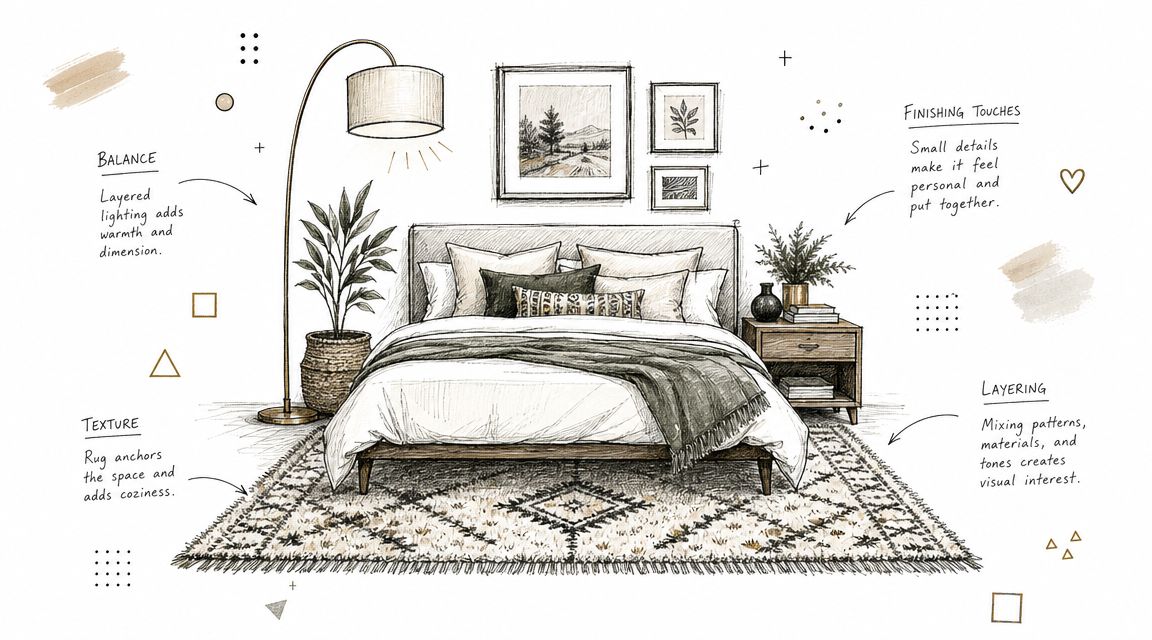
A bedroom often starts to feel finished only after the soft layers are in place. You can have the bed centered, the dresser fitted, and the walking paths clear, yet the room still feels a little adrift. Rugs, lighting, and a few balanced accents are what pull the plan together and make it feel settled, which matters in Maine homes where long evenings and changing seasons ask a room to feel comfortable year-round.
How rugs and art anchor the bed area
The bed should feel like the center of gravity in the room. A rug helps by giving the bed and nightstands one visual footprint instead of making each piece feel separate. If the rug is too small, the room can feel like a table set with a placemat that does not reach the plates.
A good rule is simple. Choose a rug large enough to extend beyond the sides and foot of the bed so your feet land on something soft when you get up. Art above the headboard should also relate to the width of the bed, with enough breathing room so it does not crowd the wall.
These benchmarks can help:
| Element | Helpful benchmark |
|---|---|
| Artwork above bed | Roughly two-thirds the width of the bed |
| Artwork height | Leave a small gap above the headboard so it feels connected, not cramped |
| Queen bed rug | Often large enough to extend past the sides and foot of the bed |
One caution is worth keeping in mind. In many older Maine bedrooms, sloped ceilings, radiators, and off-center windows can make perfect symmetry unrealistic. Aim for visual steadiness instead. If one side has a lamp and the other has a sconce, or one wall has art while another has a tall chest, the room can still feel balanced if the scale feels even.
Why layered lighting changes the whole room
Lighting works like layers of clothing in a Maine winter. One heavy coat is not enough for every part of the day, and one overhead fixture is not enough for every bedroom task.
A useful lighting plan usually includes a few different sources:
- Overhead light for general visibility
- Bedside lighting for reading and evening routines
- Soft accent light for warmth, depth, and calmer late-night use
This mix helps the room serve more than one purpose without feeling harsh. A ceiling light may help when you are folding laundry, but it is rarely the light you want before bed. Bedside lamps or sconces bring the light down where you need it, and a softer accent source keeps the room from feeling flat after sunset.
Color and texture help with balance too. Bedding, curtains, wood tones, and lamp shades should feel related, even if they do not match exactly. That is often the difference between a room that feels collected over time and one that feels scattered.
If you want ideas for pulling bedding, pillows, and bedside accents into one comfortable setup, this guide to accessorizing the bed of your dreams is a helpful place to start.
In many Maine homes, the finishing touches are also where local guidance pays off. A family-owned team can help you choose rug sizes, lamp proportions, and custom details that suit the room you live in, whether that means working around an old farmhouse wall, bright summer light, or the cozy scale of a camp bedroom.
Making Your Vision a Reality with Northern
A good layout plan often reveals what the room needs. Sometimes that confirms the furniture already in place. Sometimes it shows that the dresser is too deep, the bed needs a different size, or the room would work better with a different fabric, finish, or configuration.
That's where local support can make the process easier. In Central Maine, many shoppers want to compare options in person, ask practical questions, and see how a bedroom set might fit the room they've already mapped out. A no-hassle showroom visit can help with that, especially when the goal is finding the right fit rather than rushing into a purchase.
For households that need flexibility, Northern Mattress & Furniture 1st offers a Custom Order program with access to styles, fabrics, and configurations beyond the floor models. The store also provides simple financing through the Nest Credit Card, including pre-qualification without a credit score impact, and it promotes a Price Chop approach built around Real Sale Prices rather than markup-to-markdown pricing.
That kind of support matters most when a layout has specific needs.
When custom options make sense
Custom ordering is useful when the room plan is clear but the standard options aren't quite right.
Examples include:
- A bed style that fits the wall but needs a different fabric
- A dresser configuration that works better with the door swing
- A bedroom set that needs a different finish for the home's style
- A chair or accent piece that has to fit a narrow zone cleanly
For families investing in a longer-term setup, durable brands and made-to-fit choices can prevent a lot of frustration later.
Why in-person guidance still helps
Bedrooms are personal spaces. Sleep preferences, storage habits, and room dimensions vary too much for one-size-fits-all advice. That's why many shoppers still prefer face-to-face help from a trained design specialist who can review measurements, talk through layout concerns, and help narrow down the options.
There's also a practical comfort in a local showroom setting. Augusta and Skowhegan shoppers often appreciate being able to ask questions in a relaxed environment, with complimentary coffee and bottled water available while they look around.
For budget-conscious households, financing can keep a full bedroom plan from turning into a piecemeal project. For shoppers focused on sleep health, the better path is often fit, not price. The mattress, bedframe, and room placement should work together to support rest.
A thoughtful bedroom doesn't have to happen all at once. It just needs a clear plan, the right pieces, and guidance that respects both the home and the budget.
For readers ready to turn a paper plan into a real bedroom, Northern Mattress & Furniture 1st offers a practical next step. Visit the Augusta or Skowhegan showrooms for a no-hassle conversation, explore custom options beyond the floor, or browse the Style Guide for ideas that help make the room feel finished and lived in.