Blog
Coffee Table and End Tables A Maine Home Guide

A lot of folks start thinking about a new coffee table and end tables at the same moment. The sofa is in place. The chairs are close enough. But the room still feels unfinished, or it doesn't work the way daily life in Central Maine works. Maybe the kids need a place for games on a snowy afternoon. Maybe you need a spot for coffee, remotes, a lamp, or the stack of mail that always seems to land in the living room.
That little gap is bigger than it looks. The right tables help a room feel settled, useful, and welcoming. The wrong ones can make a room feel cramped, awkward, or harder to live in.
Around Augusta and Skowhegan, I've seen that play out in every kind of home, from older houses with cozy rooms to newer spaces that need help feeling warm. Families don't just need something that looks nice in a photo. They need tables that fit the room, hold up to daily use, and make the house feel more like home.
Table of Contents
- The Heart of Your Maine Living Room
- Finding the Perfect Fit With Sizing and Proportions
- Choosing Durable Materials for Maine Lifestyles
- Matching Table Style to Your Home's Personality
- Exploring Functional Features for Modern Living
- The Northern Advantage Making Your Vision a Reality
- Caring for Your Investment and Next Steps
The Heart of Your Maine Living Room
In a real Maine living room, the coffee table isn't just a surface. It's where mugs land after supper, where grandkids spread out cards, and where someone sets down a book and says, "I'll finish that later." End tables do quieter work, but they matter just as much. They hold the lamp by the recliner, the drink beside the sofa, and the little things you reach for without thinking.
I've always liked that these pieces have such practical roots. The history of the coffee table traces back to low tables used in the Ottoman Empire for tea and coffee ceremonies, and Europe’s coffee culture pushed the idea forward after 1652, when London’s first coffee house opened and people wanted dedicated surfaces for cups and newspapers. That history makes sense to me, because these tables have always been about gathering and everyday use.
A room that works feels different
One family might need a broad coffee table that can handle puzzles and snack plates. Another might need a pair of end tables because the room is narrow and traffic has to move cleanly around the seating. The choice isn't about following a decorating rule for the sake of it. It's about supporting the way your household lives.
A good living room table setup should feel easy to use. If you have to reach too far, squeeze past it, or worry about every little bump, it isn't the right fit yet.
That practical view is part of why so many homeowners start with living room essentials that balance comfort and function. Tables may look like finishing touches, but they often determine whether the room feels calm or cluttered.
Why people get stuck
Most confusion comes from three questions:
- Size confusion. People often choose a table that looks fine alone, but feels too small or too bulky once it's beside the sofa.
- Style pressure. Shoppers think every table has to match exactly, when a coordinated look usually feels better than a perfect set.
- Durability worries. Families want something attractive, but they also know real life includes boots, pets, kids, game nights, and long winters indoors.
That's why it helps to slow down and look at coffee table and end tables as a system, not as separate purchases. Once you do that, the choices get much clearer.
Finding the Perfect Fit With Sizing and Proportions
A table can be well made and still feel wrong the minute you start living with it. In a Central Maine home, where living rooms often have to do double duty for visiting, reading, game nights, and long winter evenings indoors, size matters just as much as style.
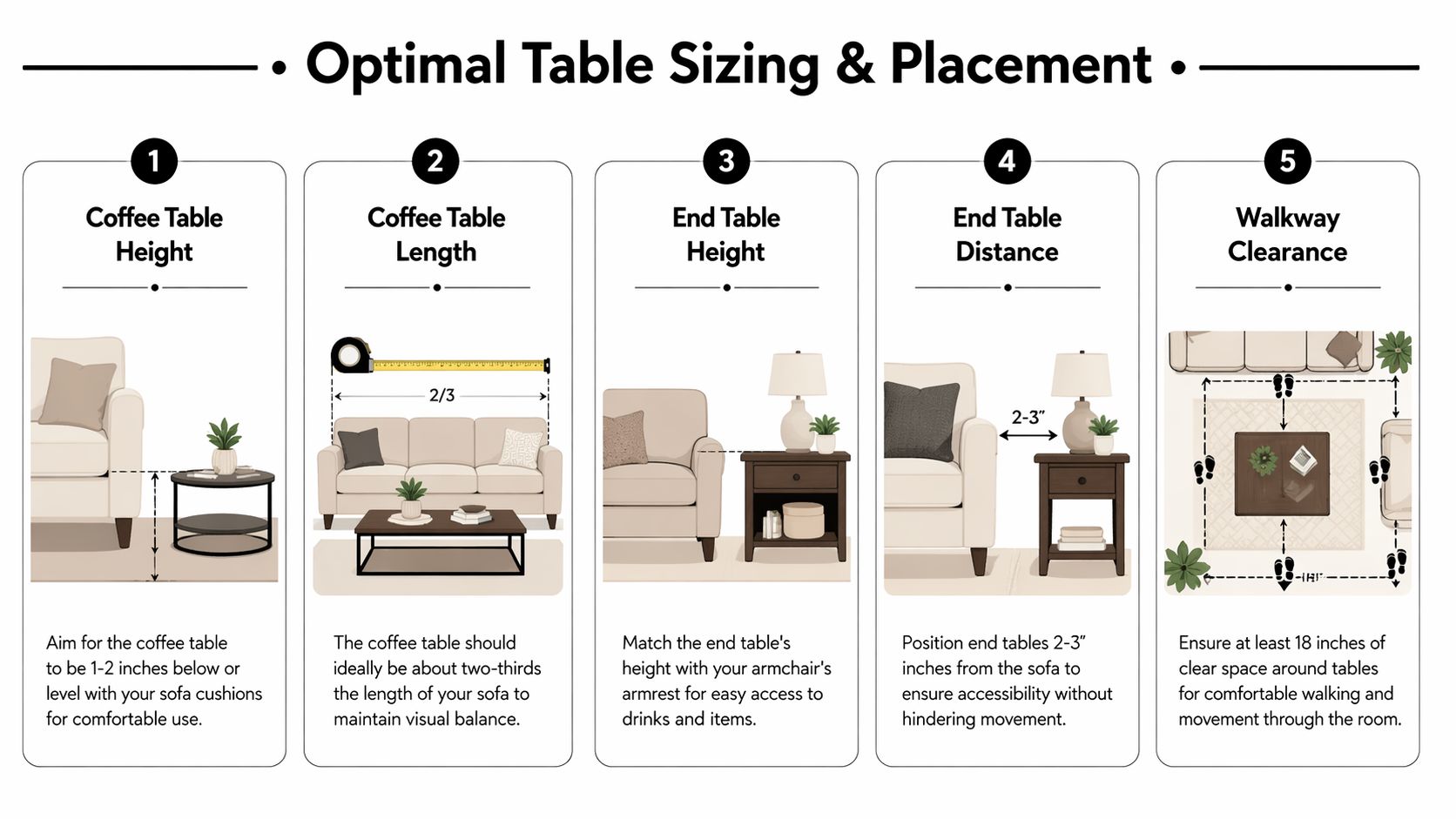
The easiest way to avoid a poor fit is to measure from the seat outward. Start with the sofa or chair your family uses most. That seat is your anchor. A coffee table should be easy to reach from it, and an end table should let you set down a drink or lamp without stretching, twisting, or worrying about knocking something over.
Here are the guidelines I give customers when they want a room to feel natural instead of cramped:
- Coffee table height should be close to the height of the sofa cushion, or a little lower.
- Coffee table length usually looks right at about two-thirds the length of the sofa.
- End table height should sit near the height of the sofa arm, so the surface is easy to use.
- Clearance around tables should leave enough room for legs, foot traffic, and everyday movement through the room.
Those rules are simple, but they solve a lot of frustration. A coffee table works like a front porch step. If it sits too high or too low, you notice it every time you use it. The same goes for end tables. If the top is below your elbow or well above the sofa arm, even setting down a mug starts to feel awkward.
Spacing is where many rooms go off track, especially in older Maine homes with narrower footprints. Leave enough room between the seating and the coffee table for comfortable reach and easy movement. Then check the paths people use, such as from the hallway to a favorite chair or from the sofa to the woodstove side of the room. A layout that looks fine in a showroom can feel tight fast in a farmhouse, cape, or apartment with real daily traffic.
Practical rule: Measure from the furniture you already own. Painter's tape on the floor still works, and it often prevents expensive sizing mistakes.
If you want help checking widths, walkways, and room shape before you shop, how to measure furniture for your room gives a clear process to follow.
Living room table sizing rules at a glance
| Table Type | Measurement Rule | Ideal Range |
|---|---|---|
| Coffee Table | Height compared with sofa cushions | Level with cushions or slightly below |
| Coffee Table | Length compared with sofa | About two-thirds of sofa length |
| End Table | Height compared with sofa arm | Close to arm height |
| End Table | Distance from sofa | A small gap for easy reach |
| Both | Clearance for movement | Enough room for comfortable traffic flow |
Small rooms need discipline. That is especially true in Central Maine, where many homes were built long before open floor plans became common. In tighter spaces, a round coffee table often softens traffic flow, and a narrower end table can give you the function you need without making the seating area feel boxed in.
It also helps to stop thinking in matching sets. A room needs balance, not extra pieces. Sometimes one coffee table and one well-placed end table serve a family better than a full set that takes up valuable floor space.
Choosing Durable Materials for Maine Lifestyles
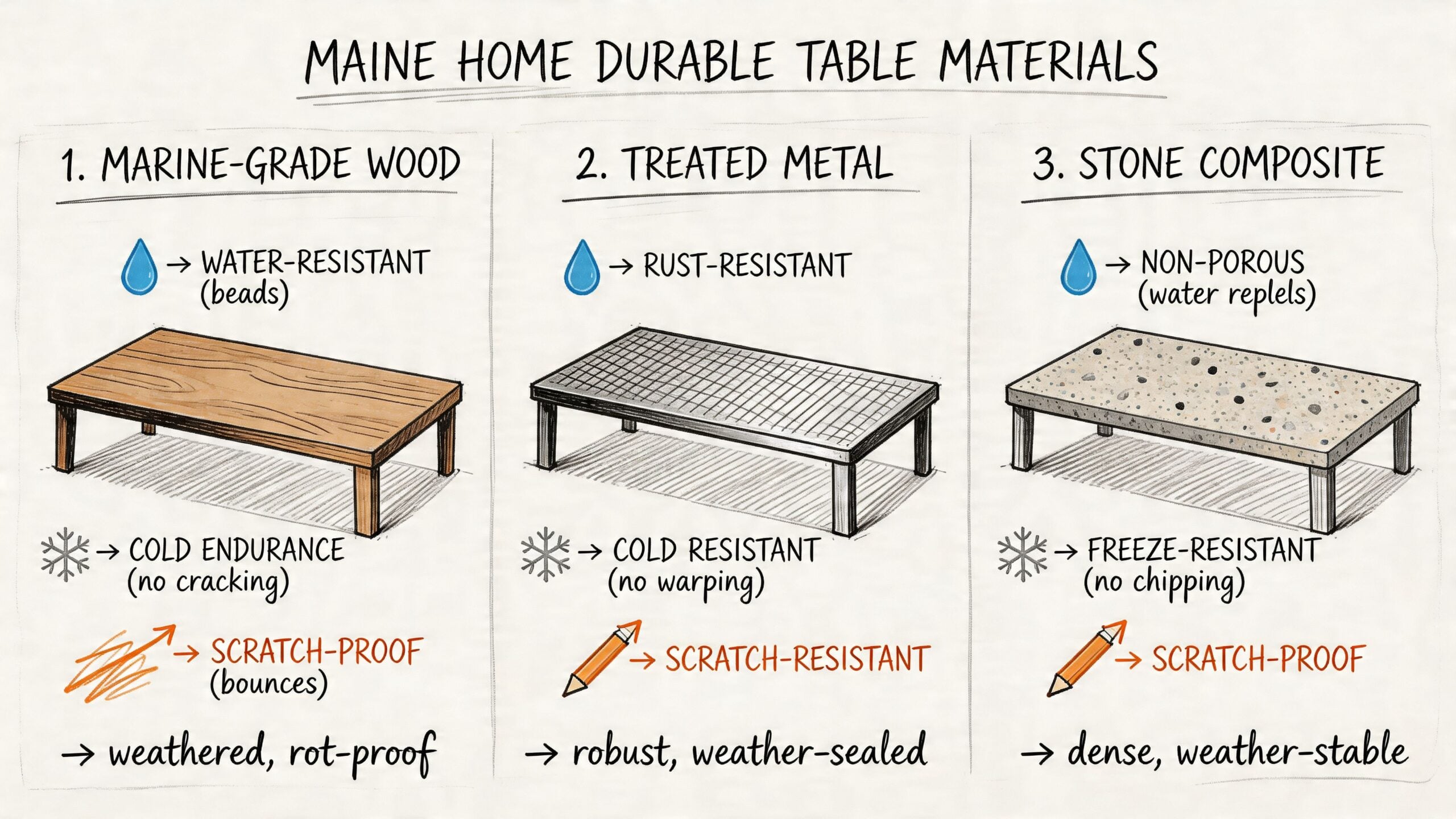
Looks matter, but durability decides whether you'll still like the table years from now. In Maine, that question gets more serious. Seasonal humidity changes, wet boots by the door, dry winter air, and heavy everyday use all put furniture to the test.
Why construction matters as much as material
People often ask which material is "best." The more accurate question is which material and construction method fit your home. According to this review of coffee table durability and center table stability, solid hardwood construction with reinforced joinery provides superior long-term durability for high-traffic living rooms. The same source notes that heavier center tables in the 40-60 lbs range achieve high stability, reducing joint stress by 30-50% in modular tests compared with lighter options, and can support a 20+ year lifespan versus laminate's 5-10 years.
That tells you something important. Durability isn't only about what the top looks like. It comes from the frame, the joinery, the weight, and how well the whole piece handles movement over time.
How common materials behave in Maine homes
Solid hardwood is still the standard I trust most for families who want long-term value. It has warmth, character, and repairability. If the construction is good, a hardwood coffee table and end tables set can handle years of daily use without feeling tired. Many homeowners also like that wood doesn't chase trends too hard. It settles into the home.
Metal works well when you want lower maintenance and a cleaner profile. Verified material guidance notes that stainless steel resists rust through a chromium oxide layer and holds up well in humid climates, while powder-coated metal can cut maintenance significantly. In a four-season state, that's worth attention if your room sees moisture, mud season traffic, or lots of open-window air in summer.
Glass has a light look that can help a small room feel more open. But it asks more of the household. Lighter glass coffee tables typically offer less stability, and the same durability guidance notes they can sacrifice toughness for appearance. In homes with active kids, large dogs, or frequent rearranging, I usually tell people to think hard before making glass the main surface.
Stone-look composites and sintered materials can make sense for people who like the visual weight of marble without as much worry over staining. Verified material data also notes that sintered stone composites can reach 7+ Mohs hardness, while glass is listed at 5.5 Mohs in the same source, which gives shoppers a practical clue about scratch resistance in busy households. That material comparison appears in this overview of coffee table material pros and cons.
Heavier, well-built tables usually feel better the first week and the tenth year. You notice that when the room is used every day, not just when it's photographed.
For readers who want to understand wood species and long-term wear in more detail, this guide on choosing the right hardwood for longevity and style is worth a look.
A durable choice often feels calmer
Durable furniture changes how a room feels. People relax around it. They use it normally. They don't treat it like a museum piece.
That's one reason brands known for sturdier living room construction, including Flexsteel, stay in the conversation for family homes. The point isn't to buy the heaviest table in the building. It's to choose one that's built to stay steady, hold up, and keep looking at home in the room year after year.
Matching Table Style to Your Home's Personality
A room doesn't need matching tables nearly as much as it needs a sense of harmony. That's where many shoppers get tangled up. They think the coffee table and end tables must come from the same collection or use the same shape, finish, and details. Usually, that makes the room feel flatter, not better.

When the room already knows what it wants
Think about the room you already have.
If your space leans modern farmhouse, a wood coffee table with visible grain and simple lines can ground the room. End tables with a lighter profile keep it from feeling too heavy.
If your home has a coastal or casual Maine cottage feel, painted finishes, softened wood tones, or a cleaner round table can make the room feel relaxed without looking theme-driven.
If you have a traditional room, you often have more freedom than you think. A classic rectangular coffee table can pair beautifully with end tables that are slightly more delicate or more detailed. The shared feeling matters more than a perfect match.
If the room feels more contemporary, mixed materials often do the work. A wood top with metal legs, or a sleek end table with a simple profile, can keep the room from looking stiff.
A simple way to avoid a mismatched look
Use this test when you're comparing pieces:
- Repeat one element. Maybe it's wood tone, line, shape, or finish.
- Vary one element. Let the end tables be lighter, rounder, or more open than the coffee table.
- Respect the sofa. Tables should support the main seating piece, not compete with it.
- Watch visual weight. A chunky sofa usually wants tables with enough presence to hold their own.
If a room feels "off," the problem often isn't color. It's usually scale or visual weight.
A styled room should still look like people live there, and a little guidance goes a long way. Many shoppers start with inspiration and then need help translating it into pieces that fit their exact room. That's why resources like this guide to styling a coffee table without overdoing it can be useful once the larger furniture decisions are made.
Custom orders also matter here. Floor models can get you close, but not every room wants the standard finish or the exact size on display. Sometimes the right answer is a similar silhouette in a warmer wood tone, or the same general shape with different details so it better suits your home.
Exploring Functional Features for Modern Living
Saturday evening in Central Maine often asks a lot from one room. The kids spread out a board game, someone balances a plate during the game, the dog circles the sofa, and by Sunday morning that same coffee table may be holding a laptop and a mug while the snow comes down outside. In homes like that, tables are working furniture.
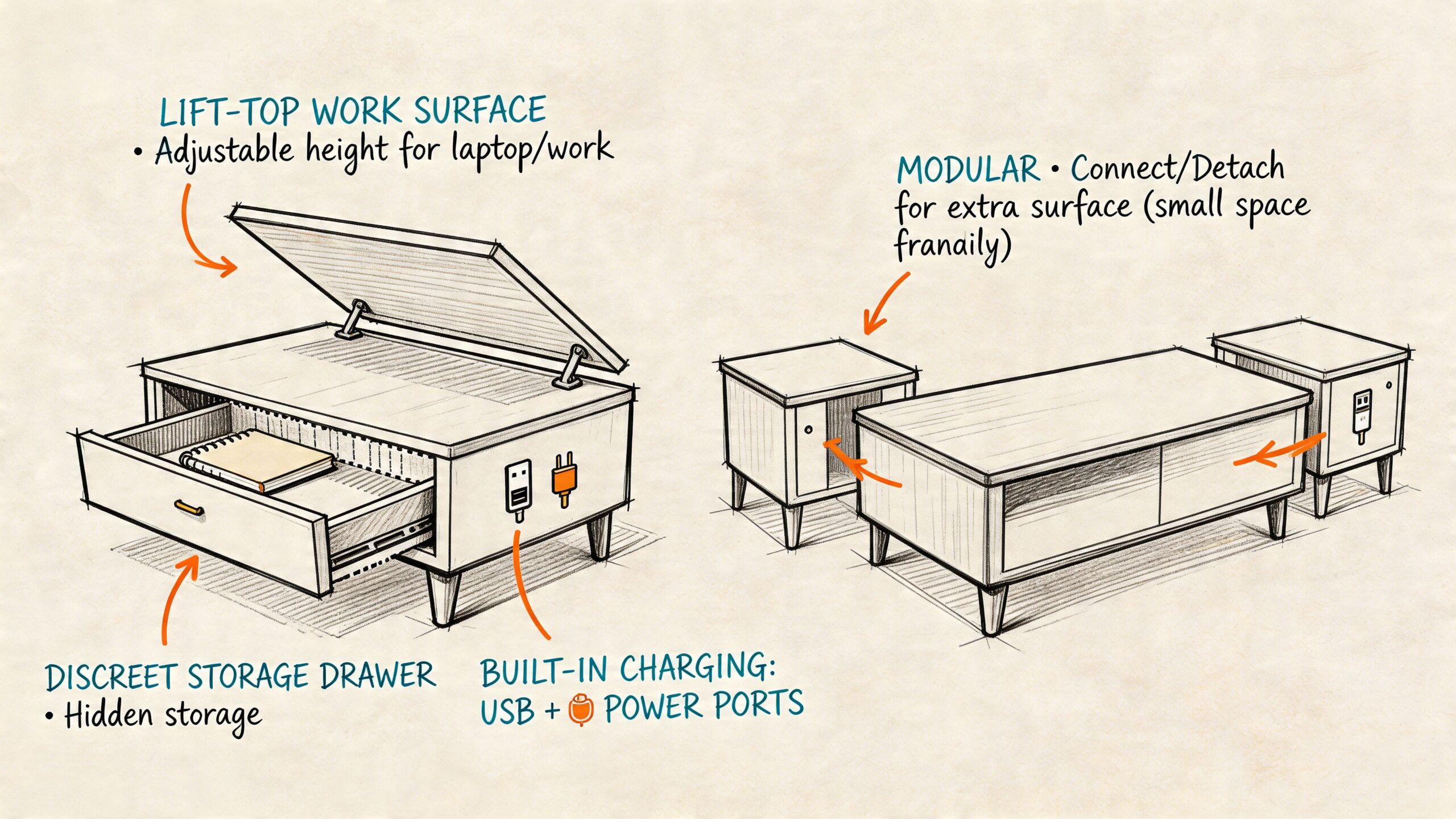
A good coffee table or end table should earn its floor space. That matters even more in Central Maine, where many living rooms pull double duty. A smaller cape, an apartment in town, or a camp-inspired home with one main gathering area often needs the same few pieces to handle relaxing, storage, snacks, hobbies, and occasional work.
Small rooms work better with tables that solve problems
In a tight room, every piece needs a job. Sometimes two jobs.
A lift-top coffee table works like a helper that steps in when you need it. Closed, it keeps the room calm. Open, it brings the surface up to a better height for a laptop, paperwork, or a quick supper in front of the game. If you do not have a separate office or formal dining space, that one feature can make daily life easier.
Storage matters for the same reason. Drawers and lower shelves give everyday items a home before they take over the room. Remotes, chargers, coasters, coloring books, and card decks all seem small on their own. Spread across one tabletop, they make the whole room feel crowded.
Nesting tables solve a different problem. They are a bit like stackable mixing bowls in a kitchen. You keep them compact most of the time, then pull them apart when guests come by or when two people need a place to set down a drink. In smaller Maine homes, that flexibility is often more useful than one large fixed piece.
Features worth paying for
The best functional details are the ones you will use every week, not the ones that only sound clever in a showroom.
- Lift-top surfaces help with casual meals, puzzles, laptops, and writing.
- Shelves and drawers keep clutter close by but out of sight.
- Nesting end tables give you extra surface area without permanently using more floor space.
- Open-frame tables keep a compact room from feeling boxed in, especially beside fuller sofas or recliners.
- Multipurpose designs help one living room serve adults, kids, and guests without constant rearranging.
One point often gets missed. Extra function should not make a table awkward. A lift-top should open smoothly. A drawer should glide without sticking. A nesting set should be easy to pull apart and tuck back in. If the feature is clumsy, people stop using it.
For homeowners sorting through practical options, this guide to choosing multi-functional furniture for modern homes gives a helpful next layer of detail.
The right table in a compact room often saves you from buying another piece later.
That is the true test. If a coffee table can store blankets, hold drinks, open up for work, and still leave enough room to walk comfortably through the space, it is doing exactly what modern living in Maine asks of it.
The Northern Advantage Making Your Vision a Reality
The challenge isn't a deficit of taste. Individuals struggle because they're trying to balance size, durability, style, budget, and layout all at once. That's a lot to juggle when you're standing in a showroom or scrolling online after work.
What helps shoppers most
The most useful shopping support usually comes down to a few things:
- A chance to compare construction. Looking at joinery, weight, finish, and drawer quality in person helps people understand what they're paying for.
- Help with customization. Sometimes the table shape is right, but the finish isn't. Sometimes the room needs a different size or a companion piece that isn't on the floor.
- Clear pricing. People want real sale prices, not a game of markups and markdowns.
- Financing that removes pressure. A household budget is real, and shoppers shouldn't have to guess what payment flexibility looks like.
For some families, that's where Northern Mattress & Furniture 1st becomes part of the process. The store's custom order program gives shoppers access to styles, fabrics, and configurations beyond the floor models, including options from brands such as Flexsteel, Ashley, and Trailways Amish. For budgeting, the Nest Credit Card allows customers to pre-qualify with no credit score impact, which can make planning easier for larger home purchases.
A more comfortable way to shop
Furniture shopping goes better when it doesn't feel like a contest. A no-hassle environment matters, especially when you're making decisions that affect your home for years. Being able to walk a showroom, ask practical questions, sit with the options a bit, and not feel pushed is a big part of finding the right fit.
That local piece matters too. A family business that has served Central Maine since 1950 has usually seen the same questions come up again and again. Older homes. Tight stairwells. Mud season. Kids. Pets. Budget limits. Pieces that need to last.
In places like Augusta and Skowhegan, the shopping experience also tends to be more human when there are small comforts built in. Complimentary coffee, bottled water, and real conversation might sound simple, but they make it easier to think clearly and make good decisions.
Caring for Your Investment and Next Steps
Well-chosen tables can stay useful for a long time. That's part of their appeal. The history of tables in furniture design shows how end tables evolved from heavy, immovable court cupboards in the 14th century into the versatile accents we use today. That long history is a good reminder that these pieces aren't just decorative. They're lasting parts of the home.
Simple care habits that make a difference
A few habits help coffee table and end tables age well:
- For wood. Use coasters, wipe spills promptly, and keep the surface clean with a soft cloth so grit doesn't wear the finish.
- For metal. Dust regularly and dry the surface if it gets damp, especially near entries, windows, or spots that see seasonal moisture.
- For glass. Clean with a soft cloth and pay attention to chips or stress points around edges and corners.
- For mixed-material tables. Follow the needs of the most sensitive material, which is often the top or the finish rather than the base.
- For any table with storage. Don't overload drawers or shelves just because the space is there. Good function lasts longer when the piece isn't strained.
The short version is simple. Measure carefully. Choose materials and construction that suit real life. Pick a style that supports the room you already have, not just a trend you're seeing this month.
If you want a second opinion, that's often where the best decisions get made. A little guidance up front can save a lot of rearranging later.
If you're comparing coffee table and end tables for your home, visit Northern Mattress & Furniture 1st to browse ideas, explore custom options, or stop by the Augusta or Skowhegan showrooms for a low-pressure look at what fits your space and budget.