Blog
Mango Wood Tables: A Buyer’s Guide for Your Maine Home


A lot of Maine households reach the same point at once. The old table has one wobbly leg, the finish has worn thin, and the room still doesn't feel settled. They want solid wood, something with character, and a piece that can handle weeknight meals, homework, and holiday traffic without looking tired after one season.
That's where mango wood tables tend to catch attention. They offer a mix many shoppers are after: real wood, interesting grain, approachable style, and a practical story behind the material. For families in Central Maine, that matters. A table isn't just décor. It's one of the hardest-working pieces in the house.
This guide walks through what mango wood is, how it performs, what to watch for, and how to choose a table that fits daily life instead of just fitting the trend.
Table of Contents
- What Is Mango Wood and Why Is It So Popular
- The Practical Benefits and Considerations of Mango Wood
- Popular Styles and Finishes for Mango Wood Tables
- How to Choose the Right Mango Wood Table for Your Space
- Bringing Home the Perfect Table The Northern Advantage
- Caring for Your Mango Wood Table
- Invest in a Piece That Becomes Part of Your Story
What Is Mango Wood and Why Is It So Popular
On a February evening in Central Maine, the table usually ends up doing a little bit of everything. Supper plates land first. Then homework folders, a half-finished puzzle, and somebody's coffee mug. A table in that kind of home needs to feel steady, look welcoming, and still make sense years from now. That practical mix is a big reason mango wood keeps showing up in furniture conversations.
A hardwood with a different origin story
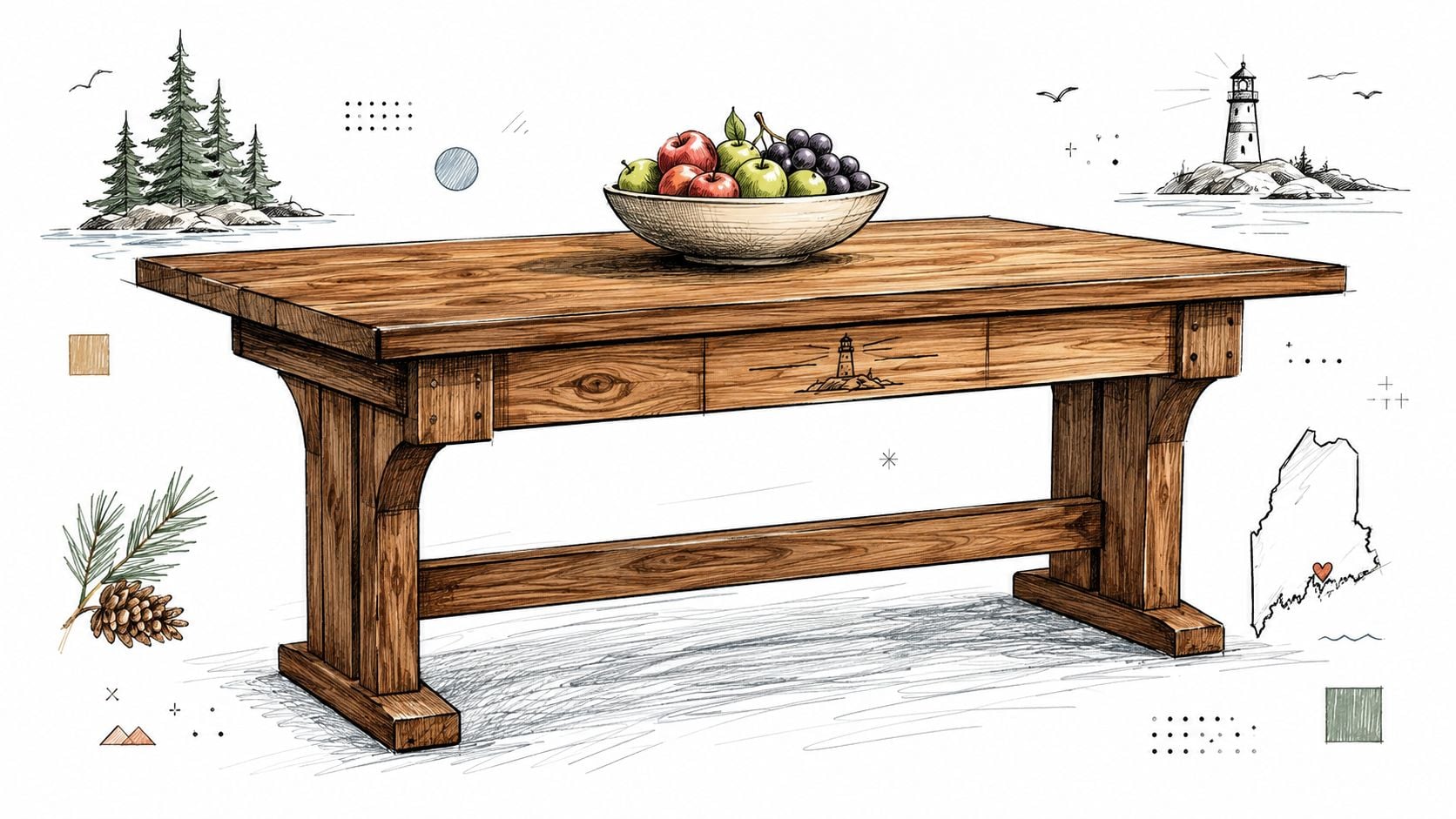
Mango wood comes from the Mangifera indica tree, a fruit-bearing tree native to tropical Asia. What makes it different from many furniture woods is the path it takes into the home. According to Wood Database's mango wood profile, mango trees are commonly harvested for lumber after their main fruit-producing years, often around 15 to 20 years. For families who want solid wood with a sensible backstory, that makes the material easier to understand. The tree serves one purpose first, then another.
That “fruit tree” label throws some shoppers off. It can sound like the wood would be soft, lightweight, or short-lived.
In furniture terms, mango wood behaves more like the hardwood category buyers already know and trust. The same source lists an average dried weight of 42.1 lb/ft^3 (675 kg/m^3), a Janka hardness of 1,070 lbf, and a modulus of rupture of 12,830 lbf/in^2 (88.5 MPa). Plainly put, those numbers place it in a useful middle ground for household furniture. It is not a delicate novelty wood. It is a real working material for tables, cabinets, and everyday pieces.
If you want a clearer sense of how wood species affect long-term use in a home, this guide on choosing the right hardwood for longevity and style helps connect wood characteristics to daily life.
Practical rule: A good table wood needs a believable life story and the strength to earn its place in the room. Mango wood appeals to buyers because it offers both.
Why buyers keep coming back to it
Popularity usually starts with what people notice at a glance, then holds up because of how the piece fits real life. Mango wood has warmth without looking fussy. Its grain often moves in visible, natural patterns, and the color variation keeps a tabletop from feeling flat or factory-perfect. In a Maine home, that matters. A table tends to look better when it has a little character before life adds more.
It also hits a sweet spot that many families are looking for. They want solid wood furniture that feels substantial and distinctive, but still sensible as a long-term purchase. Mango wood often answers that need well, especially for buyers furnishing a first home, replacing a worn-out dining set, or choosing one table they hope to keep through several seasons of life.
A few qualities explain why it stays in demand:
- Visible personality: Mango wood usually shows natural shifts in grain and tone, so each table feels a little individual.
- A welcoming look: It blends easily into relaxed homes, whether the room leans rustic, modern, farmhouse, or mixed.
- A practical story: Buyers quickly understand that the wood comes from trees first grown for fruit, then used for furniture later.
- Long-view value: For households that want solid wood without chasing formality or trends, mango wood often feels like money spent wisely.
That last point matters here in Central Maine. A good family table should be able to move from an apartment in Bangor to a farmhouse outside Newport, then later into a smaller downsized home and still look like it belongs. Mango wood has that kind of flexibility. It offers warmth, durability, and enough visual interest to stay relevant as a family's rooms, routines, and needs change.
The Practical Benefits and Considerations of Mango Wood
A wood can sound great on paper and still be wrong for a household. What matters is how it behaves once plates, school bags, craft supplies, and coffee mugs start landing on it every day.
Where mango wood tables shine
One of mango wood's strongest practical advantages is balance. As noted in this mango wood furniture guide, its Janka hardness sits around 1,100 lbf, with a narrow range around that level depending on the source. That means it's hard enough for general furniture use, but still easier to cut, shape, and carve than denser hardwoods.
That balance affects shoppers more than they might think. A workable hardwood can show up in more shapes, edge details, base designs, and surface treatments. That's part of why mango wood tables appear in such a wide range of looks. For readers weighing table types in general, this guide on how to choose a dining room table gives a useful framework.
Here's what that means in daily life:
- Good durability for normal use: It can handle the rhythm of meals, gatherings, and daily traffic.
- More design variety: Because it's workable, manufacturers can produce everything from simple slab-style tops to turned legs and carved details.
- Value-minded appeal: Industry descriptions often frame mango wood as more affordable than premium hardwoods such as teak, while still delivering long-lasting table performance.
- Visual individuality: The grain and color variation help each table feel a little less generic.
The most appealing furniture materials usually don't excel in just one direction. They solve several household problems at once.
What deserves a closer look before buying
A balanced guide should say this clearly. Not every mango wood table on the floor is equally good. The wood may be solid, but the finish, construction, and overall build still make the difference between a lasting piece and a disappointing one.
Two considerations come up often.
First, surface protection matters. If the finish is thin or poorly applied, a table can become more vulnerable to moisture marks, wear, and early aging. Second, variation is part of the look. Some shoppers love that. Others expect a more even color and don't realize mango wood often includes shifts in tone and grain from one board to the next.
A smart buyer should check:
- Finish quality: Does the top feel well sealed and smooth, not dry or chalky?
- Color expectations: Is the natural variation appealing, or would a more uniform wood be a better fit?
- Construction details: Does the base feel stable when lightly tested?
- Lifestyle match: Will this table live in a sunny breakfast nook, a formal dining room, or a high-traffic family space?
For many Maine families, those aren't drawbacks. They're just buying facts. A table with character and honest variation can be exactly the right choice, as long as the household knows what it's bringing home.
Popular Styles and Finishes for Mango Wood Tables
Some woods push a room in one design direction. Mango wood doesn't. That's part of its appeal. The same material can feel rustic in one home, clean-lined in another, and traditional in a third.
How mango wood changes from room to room
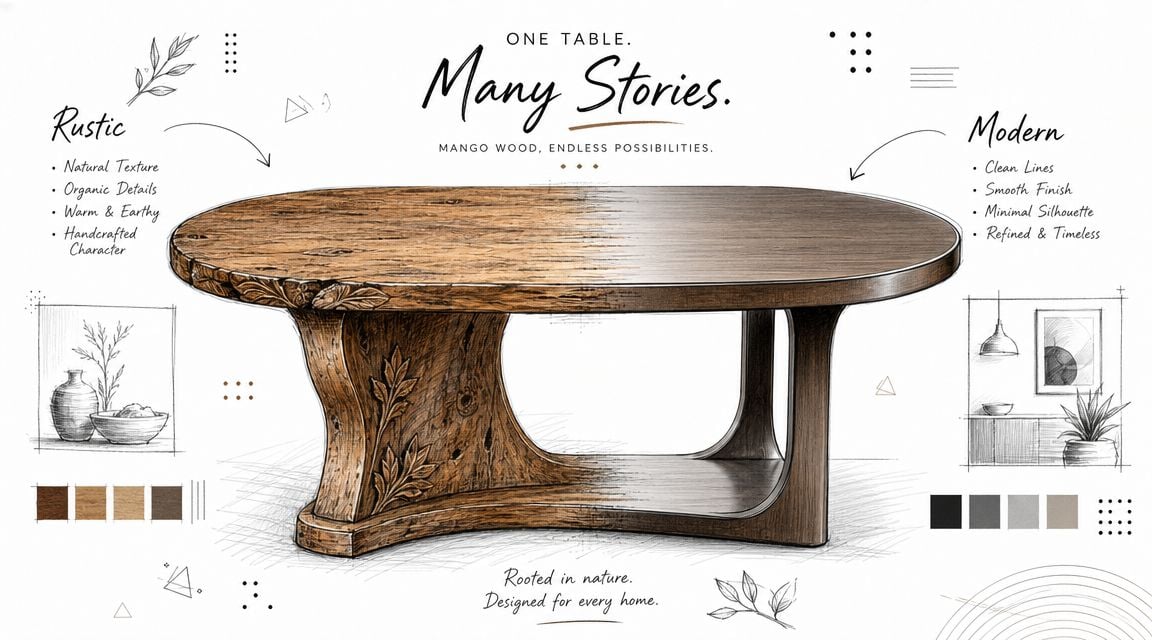
In a farmhouse dining room, a mango wood table often looks best with a thick top, visible grain, and a grounded base. It gives the room a gathered, welcoming feel. The wood's natural movement keeps that style from feeling too staged.
In a more modern setting, the same wood can be used in a sleeker profile. Think a coffee table with straighter lines, a lighter visual footprint, and a finish that lets the grain show without making the piece feel heavy. Readers sorting through visual preferences may find this overview of dining room styles for different homes helpful when narrowing the look.
Console tables are another strong fit. In an entryway, mango wood adds warmth right away. In a hallway or behind a sofa, it can soften a room full of painted walls, metal lighting, and upholstered seating.
Three common directions show up again and again:
- Rustic and relaxed: More texture, visible knots or streaking, and a hand-finished look.
- Modern and simple: Cleaner silhouettes with the wood itself doing most of the visual work.
- Collected and transitional: A mix of wood warmth and familiar shapes that bridge old and new pieces.
What finishes do to the mood of the piece
Finish changes everything. The wood species stays the same, but the room reads it differently.
A natural or lightly sealed finish tends to highlight the golden-brown base tone and the wood's variation. That works well in homes that want brightness and a casual feel. A darker stain can pull the same table toward a more traditional mood and help it sit comfortably near older case goods or deeper upholstery colors.
Some buyers prefer a distressed or rubbed look. In the right room, that can make mango wood tables feel lived-in from day one. Painted accents or mixed finishes can also help the piece blend with coastal, cottage, or farmhouse interiors without losing the warmth of real wood.
A finish shouldn't just match the table. It should match the pace and personality of the room around it.
How to Choose the Right Mango Wood Table for Your Space
Most table-buying mistakes happen before anyone talks about wood species. They happen when a piece is too large, too small, too dark, too delicate, or wrong for how the room is used.
Start with the room, not the table
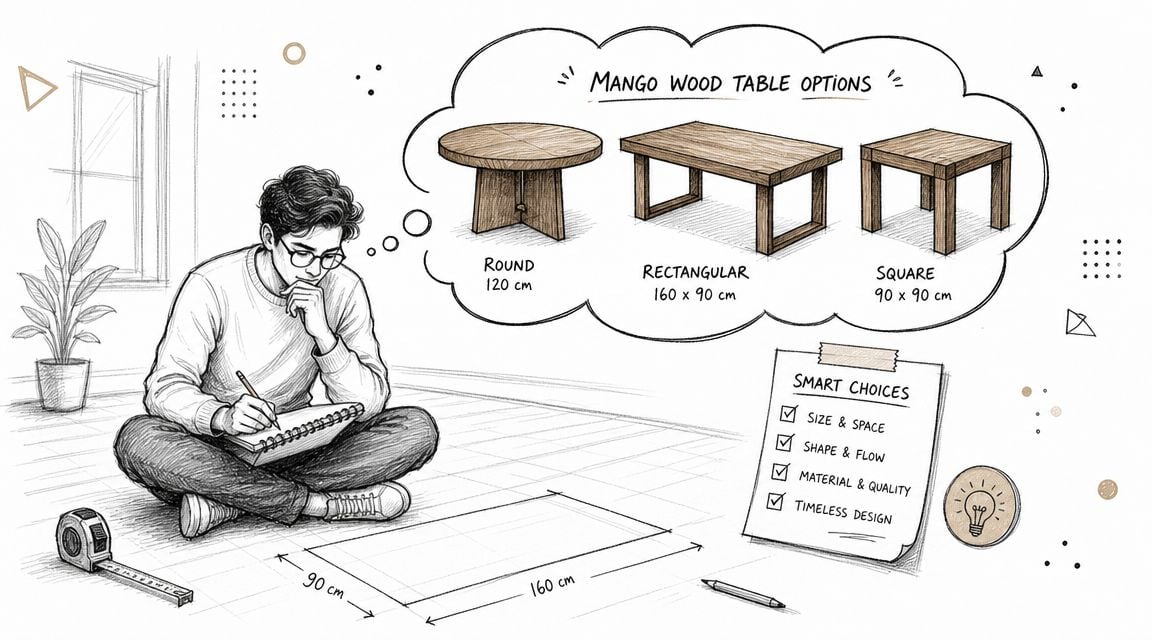
The best approach is simple. Measure first, then shop. A handsome table that crowds the walkway will never feel right, no matter how pretty the grain is. This measuring guide for furniture fit and room planning can help shoppers avoid that common mistake.
Shape comes next. A round table can soften a smaller room and improve flow. A rectangular table often suits longer spaces and larger gatherings. A square table works best where the room is fairly balanced and the seating plan is more intimate.
A quick decision checklist helps:
- Room size: Does the table leave comfortable space to move around it?
- Daily use: Is this for everyday family meals, occasional entertaining, or display?
- Traffic pattern: Will people pass through the space often?
- Chair pairing: Do the table base and chair legs work together without crowding knees?
Look closely at finish and construction
There's one sustainability point buyers should keep in mind that often gets glossed over. According to this practical guide to choosing a mango wood dining table, the quality of the finish is as important as the origin of the wood. Since mango wood is harvested after its 15-year maturity, its long life as furniture depends heavily on proper sealing and sound construction.
That's a useful test because it moves the conversation beyond vague “eco-friendly” language. A table only becomes a responsible long-term choice if it stays in service and holds up well.
Buyers should inspect a few things up close:
| What to check | Why it matters at home |
|---|---|
| Surface seal | Better protection against everyday wear and moisture |
| Edge detail | A sharper edge may feel more formal, a softened edge more family-friendly |
| Base stability | Reduces wobble during meals, homework, and regular use |
| Color variation | Helps decide whether the table will coordinate with existing furniture |
Shoppers don't need a perfect table. They need the right-size table with the right finish for the way the household lives.
Bringing Home the Perfect Table The Northern Advantage
A Central Maine family often reaches the same point in the process. They have narrowed it down to mango wood, they know the general size they need, and then questions start. Will this table look too orange against the floor? Will it still feel comfortable once four or six chairs are tucked in? Will it serve weekday dinners just as well as a holiday gathering?
Those questions are easier to answer in person because a table is not just a measurement on a tag. It is a working part of the house, much like a mudroom bench or a kitchen counter. You use it every day, and small differences in color, scale, and finish can change how the whole room feels.
Why local guidance still matters
For shoppers in Augusta, Skowhegan, and nearby towns, local showroom help still solves problems that online descriptions cannot. Wood tone reads differently under real light. A table that looks roomy in a photo can feel tight once chairs are added. And a finish that seems polished on a screen may look either warm or flat once it is beside your flooring and cabinets.
A family-owned business that has served Central Maine since 1950 understands that furniture choices affect daily life. Parents are thinking about homework, quick breakfasts, and whether a surface will still look good after years of regular use. Retirees may be thinking about easy movement around the table and whether this purchase will carry them a long time. Young couples are often trying to buy once and buy well.
Practical ways to make the decision easier
The best buying help usually comes down to ordinary household concerns, answered clearly.
- If the floor model is close, but not quite right: A custom order program gives shoppers more styles, finishes, fabrics, and configurations, so the table fits the home instead of becoming a compromise.
- If the budget matters as much as the look: Clear sale pricing helps families judge value accurately and compare options without guessing what the final number will really be.
- If timing matters: Simple financing can make a larger purchase easier to manage. The Nest Credit Card also lets shoppers pre-qualify with no credit score impact.
- If the shopping experience matters: A no-pressure showroom, plus small comforts like coffee and bottled water, gives people room to slow down, compare, and choose carefully.
Northern Mattress & Furniture 1st is a third-generation Central Maine retailer with showrooms in Augusta and Skowhegan, along with a custom order program, Price Chop real sale pricing, and simple financing through the Nest Credit Card.
That kind of support matters with mango wood because the smart choice is rarely just "Do I like this table?" A better question is "Will this table still make sense for our family three, five, or ten years from now?" Mango wood can be a wise long-term investment for a Central Maine home, but only if the size, finish, and construction match the way the household lives.
For families who want that purchase to last, it also helps to understand a few simple ways to protect wood furniture from scratches and stains before the table ever comes through the door.
Caring for Your Mango Wood Table
A solid wood table doesn't need fussy treatment, but it does need consistent habits. That's especially true for a dining surface that sees daily use.
Simple habits that protect the finish
Most care starts with restraint. A soft cloth for regular dusting, a lightly damp cloth for routine cleanup, and a dry wipe afterward will handle most messes just fine. Harsh cleaners usually create more trouble than they solve.
The finish does most of the protective work, so daily habits should help preserve it.
- Use coasters and placemats: They reduce direct contact with moisture, heat, and food residue.
- Wipe spills promptly: Liquids left to sit can work against the finish over time.
- Avoid abrasive pads: They can dull or scratch the sealed surface.
- Be careful with sunlight: Strong direct light can gradually affect the appearance of wood and finish.
For broader wood-care guidance, this article on protecting wood furniture from scratches and stains is a helpful companion.
What to do when life leaves a mark
Small signs of use don't always mean damage. A faint surface scuff may live in the finish rather than in the wood itself. That's an important distinction, because many households panic too early and reach for the wrong product.
A better approach is to slow down and assess the mark first.
- Light smudges or residue: Clean gently with a soft cloth.
- Minor surface scratches: Watch whether they catch a fingernail or just affect the sheen.
- Sticky spots: Use a damp cloth sparingly, then dry the area right away.
- General dullness: A wood-safe polish suitable for the existing finish may help restore some luster.
A mango wood table earns its keep over time. A few signs of family life aren't failure. They're often just evidence that the piece is being used the way a real household uses furniture.
Invest in a Piece That Becomes Part of Your Story
The best mango wood tables don't succeed because they sound trendy. They succeed because they answer practical needs. They bring real wood into the home, offer dependable everyday durability, and add warmth that doesn't feel overdone.
That's why they make sense for so many Central Maine homes. A good table has to bridge beauty and use. It has to work for the rushed breakfast, the long Sunday meal, the puzzle spread across the top, and the extra chair pulled in when company arrives. Mango wood can do that while still feeling distinctive.
For households in Augusta, Skowhegan, and across Central Maine, the smartest furniture choices are usually the ones that still feel right years later. Not because they were flashy. Because they were well chosen.
For anyone still weighing styles, finishes, or room fit, Northern Mattress & Furniture 1st offers a low-pressure next step. Shoppers can visit the Augusta or Skowhegan showrooms, browse style ideas, ask practical questions, and explore options that help turn a house into a home.