Blog
Your Guide to Flexsteel Sofa Beds in Maine

If you're shopping for a sofa bed in Central Maine, there's a good chance you're trying to solve a very practical problem. You want a living room that works every day, but you also want a comfortable place for family to sleep when they visit. In a lot of Maine homes, especially older capes, farmhouses, and smaller in-town layouts, a dedicated guest room just isn't in the cards.
That's where flexsteel sofa beds start to make sense. They give you a real seating piece for daily life and a sleeping space when you need one, without asking you to give up an entire room. For many families, that's not just convenient. It helps make the house feel more welcoming.
In Augusta, Skowhegan, and across Central Maine, we've seen the same pattern for years. People aren't looking for a gimmick. They're looking for furniture that fits the room, holds up through four seasons, and still feels good after the excitement of delivery day wears off.
Table of Contents
- Welcome Home A Flexsteel Sofa Bed
- The Flexsteel Difference Built to Last Generations
- Choosing Your Comfort Mattress and Mechanism Options
- Beyond a Guest Bed Power Reclining and Lumbar Support
- Styling for Your Maine Home Sizing and Fabric Choices
- The Northern Advantage Customizing Your Perfect Sofa Bed
- An Investment in Comfort and Hospitality
Welcome Home A Flexsteel Sofa Bed
A sofa bed often enters the conversation when life changes a little. Maybe the kids are older and friends start staying over. Maybe the grandkids visit more often. Maybe you're working with a bonus room, attic space, or den that has to do double duty.
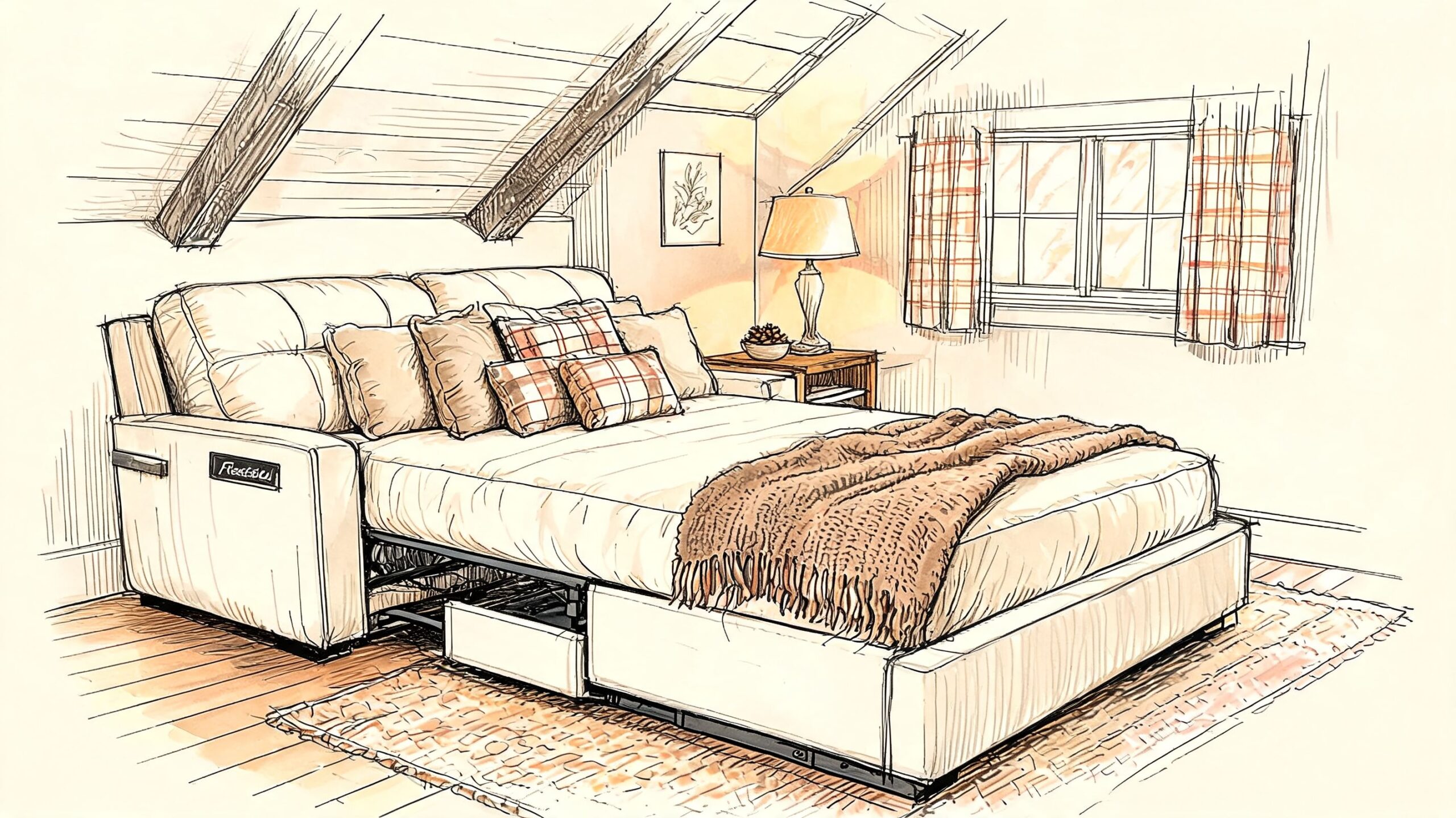
In Maine, that kind of flexibility matters. A room might be the TV room in January, a reading room in March, and guest space during summer visits. The right sofa bed lets one room handle all of it without feeling like a compromise.
A familiar Central Maine setup
Think of a family with an older home near Augusta. The upstairs bedrooms are already spoken for, and the downstairs office has become the overflow room when company comes. They need seating that looks right every day, but they also want guests to feel cared for.
That is where a well-made sleeper earns its keep.
- For everyday living: it gives you a proper sofa for reading, relaxing, and movie nights.
- For overnight guests: it opens into a bed without dragging in an air mattress.
- For small homes: it helps you use square footage wisely.
A good sofa bed shouldn't feel like a backup plan. It should feel like part of the home.
People sometimes worry that all sleeper sofas are bulky, stiff, or awkward to use. That's understandable. A lot of shoppers remember older models that were heavy, lumpy, and nobody wanted to sleep on them twice. Modern flexsteel sofa beds are part of a very different conversation. The better models are built around the idea that both jobs matter. Sitting matters. Sleeping matters too.
What most shoppers are really deciding
Usually, the question isn't, "Should I get a sofa bed?" It's this:
| What you're asking | What it really means |
|---|---|
| Will it fit my room? | You need smart sizing and maybe custom options |
| Will guests sleep well on it? | Mattress and mechanism matter more than appearance alone |
| Will it hold up? | Construction quality decides long-term value |
That shift helps. It moves the decision away from short-term price shopping and toward finding the right fit for your home, your layout, and the way your family lives.
The Flexsteel Difference Built to Last Generations
A sofa bed lives a harder life than almost any other seat in the house. In a Maine home, it may handle muddy spring evenings, long winter movie nights, summer visitors from away, and holiday sleeping duty in one year. That kind of use tests what is under the cushions far more than what is on top.
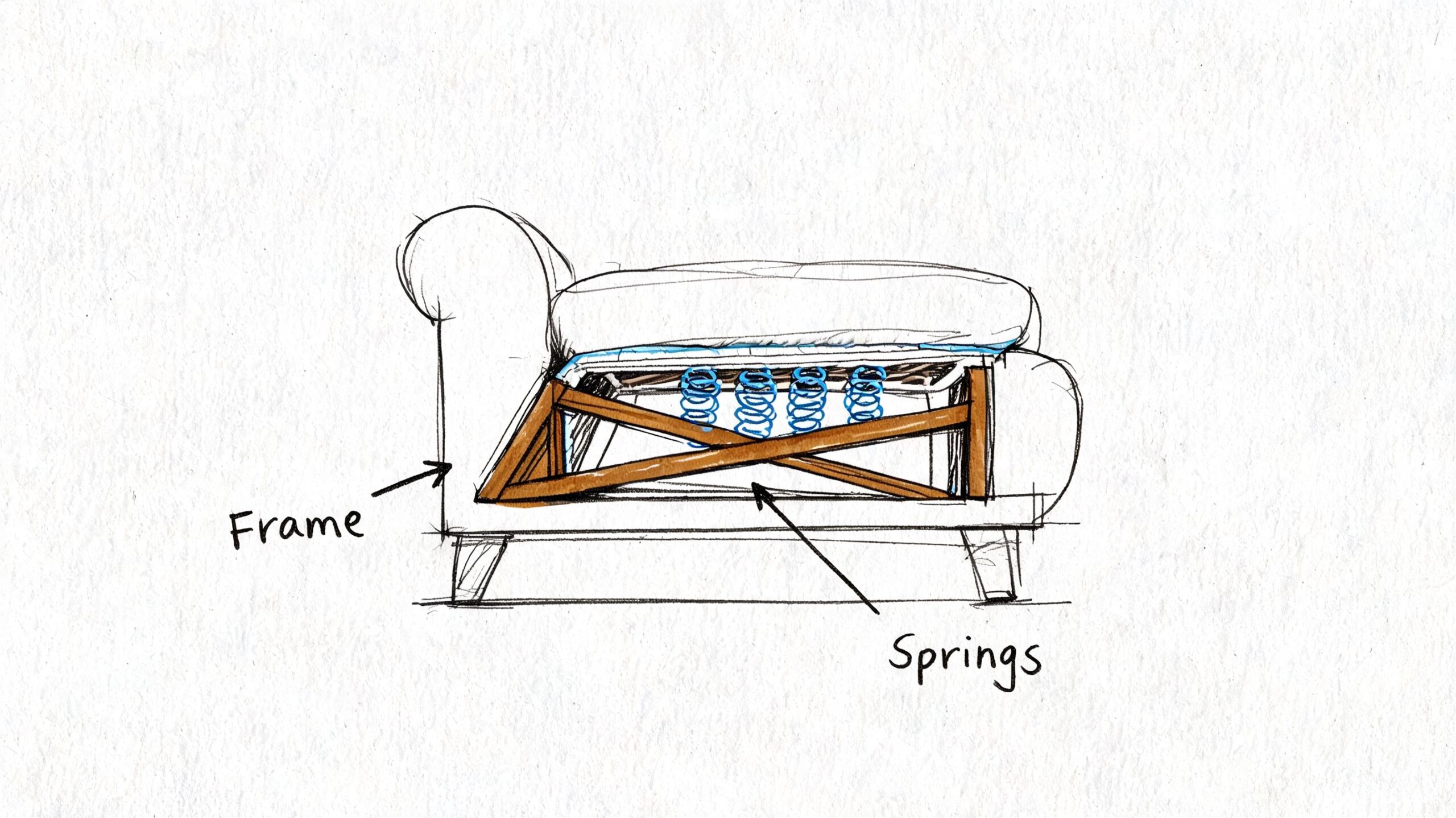
Flexsteel has long been known for its Blue Steel Spring construction and its focus on long-term durability. For a shopper, that matters because the support system is the part you feel year after year, even though you rarely see it.
Why the spring matters
The easiest way to understand it is to compare a sofa bed to a camp cot versus a proper bed frame. If the foundation is weak, the comfort above it can only do so much. Cushions may look full on the showroom floor, but daily use quickly reveals whether the seat has steady support underneath.
That support affects several practical things:
- How the seat keeps its shape: good suspension helps the sofa feel more even instead of developing favorite spots that sink first.
- How the piece handles repeated use: opening for guests and closing again puts extra strain on the frame and seat support.
- How comfortable it feels in real life: reading, napping, and sitting through a two-hour snowstorm power outage all ask something different from the same piece of furniture.
In older Maine homes, this matters even more. Rooms are often narrower, floors may be a little uneven, and furniture tends to stay in service for a long time. A sleeper that is built well usually adapts better to that kind of everyday living than one chosen only for looks.
How to judge long term value without getting lost in sales talk
Many shoppers test a sofa bed for thirty seconds and focus on the fabric or the first soft sit. A better method is slower and simpler.
Start with these questions:
What supports the seat every day?
Fabric wears in plain sight. The suspension system decides how the piece ages.How is the frame built for repeated use?
A sleeper has moving parts and a heavier job than a standard sofa.Does the construction fit your timeline for the room?
If this piece is going in a family room, office, or camp where guests stay often, buy for the next decade, not the next season.
Practical rule: The hidden parts usually decide whether a sofa bed still feels good after several Maine winters.
That is one reason Flexsteel often stays on the shortlist for families who want furniture that lasts. The brand has been around a long time, and that history gives buyers a useful clue. It does not guarantee that every model is perfect, but it does suggest a company that has spent years refining how furniture holds up.
If you want a closer look at how the brand is built and what to compare before you buy, this Flexsteel furniture review with construction details and buying tips is a helpful next read.
Choosing Your Comfort Mattress and Mechanism Options
A February snowstorm rolls in, the driveway fills up with family, and someone ends up staying the night in the den. That is when a sofa bed proves what it is really made of. In many Maine homes, the question is not only whether the sofa looks good in the room. The question is whether guests can sleep well, whether you can open it without scraping an old wood floor or bumping a narrow doorway, and whether it still works properly after years of use.

The easiest way to choose is to treat the sleeper as two pieces of furniture in one. You are buying a sofa for daily sitting and a bed for real overnight rest. If either half falls short, the whole piece feels disappointing.
Start with how the bed will actually be used
A guest room sleeper for holiday visits needs something different from a sofa bed in a camp, office, or family room that gets regular overnight use. That is why mattress choice matters.
Flexsteel offers the Splendid Comfort mattress as a standard option on some sleeper models, with Memory Flex available on custom orders. The difference is easiest to understand in everyday terms:
| Option | Best fit for | What to expect |
|---|---|---|
| Splendid Comfort | Occasional guest use | A practical choice for a room that hosts visitors now and then |
| Memory Flex | More frequent overnight use or couples | More contouring comfort and better isolation of movement across the bed |
If your guests are older parents, a grown child coming home for a week, or friends staying through a long weekend, the upgraded mattress can be worth a close look. If the sleeper will be used a few times a year, the standard option may serve the room well and keep the budget in line.
A helpful rule is simple. Match the mattress to the guest, not to the sales tag.
That same approach applies to any sleep surface. If you want a clearer sense of what firmness and feel suit different sleepers, this guide to choosing the right mattress for your sleeping style gives a good foundation.
The mechanism matters every time you open it
The mechanism works like the hinge on a well-built storm door. You may not talk about it much, but you notice right away when it sticks, wobbles, or feels flimsy.
Flexsteel sleeper models such as the Serendipity Fabric Sleeper (5552-44) use a tubular steel mechanism, and that is a useful benchmark when you are comparing options in person. The opening system should feel controlled and secure, not awkward or delicate. In an older Maine home, that matters even more because many rooms do not offer much spare clearance. You want a sleeper that opens predictably so setup does not turn into a furniture shuffle every time company stays over.
When you test one on a showroom floor, pay attention to three things:
- How easily it opens and closes. You should not have to yank, twist, or wrestle with it.
- How stable it feels when fully open. The bed should feel planted, not shaky.
- How manageable it is in your actual room. Measure for length when opened, and think about traffic flow, radiators, side tables, and tight corners.
That last point gets missed all the time. A sofa bed can fit the wall perfectly and still be wrong for the room once the bed is open. In many older Maine houses, layout is half the battle.
Custom choices often make more sense than a quick big-box buy
This is one place where local customization has real value. A big-box store may offer a sleeper in one mattress feel, one fabric, and one size, and that can leave you trying to force the room to accept the furniture. A custom order gives you more freedom to fit the sleeper to the home and the way your family uses it.
That matters in four-season living. Mud season, summer guests, leaf-peeping weekends, and winter holidays all ask different things from a room. A sleeper that opens easily, fits the space, and gives guests a decent night of rest earns its keep year after year.
For Maine families, the best choice is usually the one that balances three things well. A mattress suited to real overnight use, a mechanism that feels dependable in your hands, and dimensions that work in the home you have.
Beyond a Guest Bed Power Reclining and Lumbar Support
Some of today's flexsteel sofa beds do more than convert into a bed. They also serve as a daily comfort seat, which matters if the sofa lives in the room you use most.
That changes the buying decision. You aren't only shopping for guests anymore. You're choosing a place where someone may read every evening, recover after a long workday, or settle in during winter when the living room becomes the center of the house.
Who benefits most from power features
Power headrests and lumbar support aren't just bells and whistles for many households. They can make the sofa easier to enjoy for longer stretches of time.
The Zofa Shell power sleep sofa (1080-63P5C) is one example. Its product listing notes a product weight of 158.31 kg, seat height of 50.8 cm, and arm height of 63.5 cm, and says the sofa's power system allows independent adjustments including lumbar activation that can increase lordotic curve support by 15 to 20 degrees, reducing lower back strain, according to the Zofa power sleep sofa product page.
That sounds technical, so here's the everyday translation. A power lumbar feature helps you fine-tune support where many people get tired first. The power headrest can also make a difference when you're reading, watching television, or trying to relax without piling up throw pillows behind your back.
What to test in person
If you're considering a power sleeper, don't just press the buttons once and call it done. Sit in it the way you would use it at home.
Try this:
- Recline in stages: notice whether the movement feels smooth and steady.
- Test the headrest position: see if it supports your neck when you're upright and when you're leaned back.
- Use the lumbar adjustment slowly: stop when your lower back feels supported, not pushed forward too much.
For shoppers comparing functions, a focused recliner buying guide can help you separate features that matter from features you'll never use.
Power sleepers make especially good sense in homes where one piece has to cover several needs. They can be the daily seat, the evening recliner, and the overnight bed. That's a lot to ask of one piece of furniture, so the controls should feel intuitive and the support should feel natural from the start.
Styling for Your Maine Home Sizing and Fabric Choices
The practical side of sofa bed shopping doesn't end with comfort. A sleeper has to fit your room, your doorway, and your life. In Maine, that can be a bigger deal than people expect.
Older homes often come with narrow stairs, tighter entries, and rooms that weren't designed around modern furniture sizes. Newer apartments bring their own challenge. Open spaces can still have awkward wall lengths or traffic paths that make one sofa size work and another feel oversized.
Measure the room before you fall in love
This step sounds basic, but it's where many mistakes begin. Don't measure only the wall where the sofa will sit. Measure the path in too.
Use this checklist before you order:
- Room width: know how much wall space you have once side tables or radiators are considered.
- Depth when open: remember that a sleeper needs space in front when converted to a bed.
- Entry path: check hallways, stair turns, doorways, and low ceiling spots.
- Traffic flow: leave enough space to move around the room without squeezing.
Bring a notepad with doorway widths, stair turns, and room dimensions. It saves a lot of second-guessing later.
A sofa can fit the room on paper and still be wrong for the way the room works. In a den or office, for example, the open bed might block a closet or pinch off the route to a bathroom. That's why floor-space planning matters just as much as overall sofa length.
Choose fabric for real life
Fabric selection is where your home habits matter more than trends. If you have kids, pets, or a room that sees daily use, choose with wear in mind first and color second.
Consider this simple perspective:
| Lifestyle need | Helpful fabric direction |
|---|---|
| Kids and snacks in the living room | Look for easier-clean, more forgiving upholstery |
| Pets on the cushions | Choose texture and durability with claws and fur in mind |
| Humid summer rooms | Consider breathable fabrics |
| Formal room with lighter use | You can prioritize appearance a bit more |
A lot of shoppers get overwhelmed by swatches because every option looks small and abstract in the store. The easiest way to narrow the field is to ask what the room has to survive. Mud season. Wet dogs. Afternoon sun. Holiday company. Those are better guides than chasing a color trend.
If pets are part of the household, this guide to the best fabric for couches with pets can help you think through texture and durability in a practical way.
A well-chosen sleeper should blend into the room when it's closed and perform when it's opened. That's the balance you're after.
The Northern Advantage Customizing Your Perfect Sofa Bed
For many Maine shoppers, the hardest part isn't deciding they want a sleeper. It's finding one that fits a specific room and still looks right with the rest of the home.
That's where customization becomes useful. Not fancy for the sake of fancy. Useful.
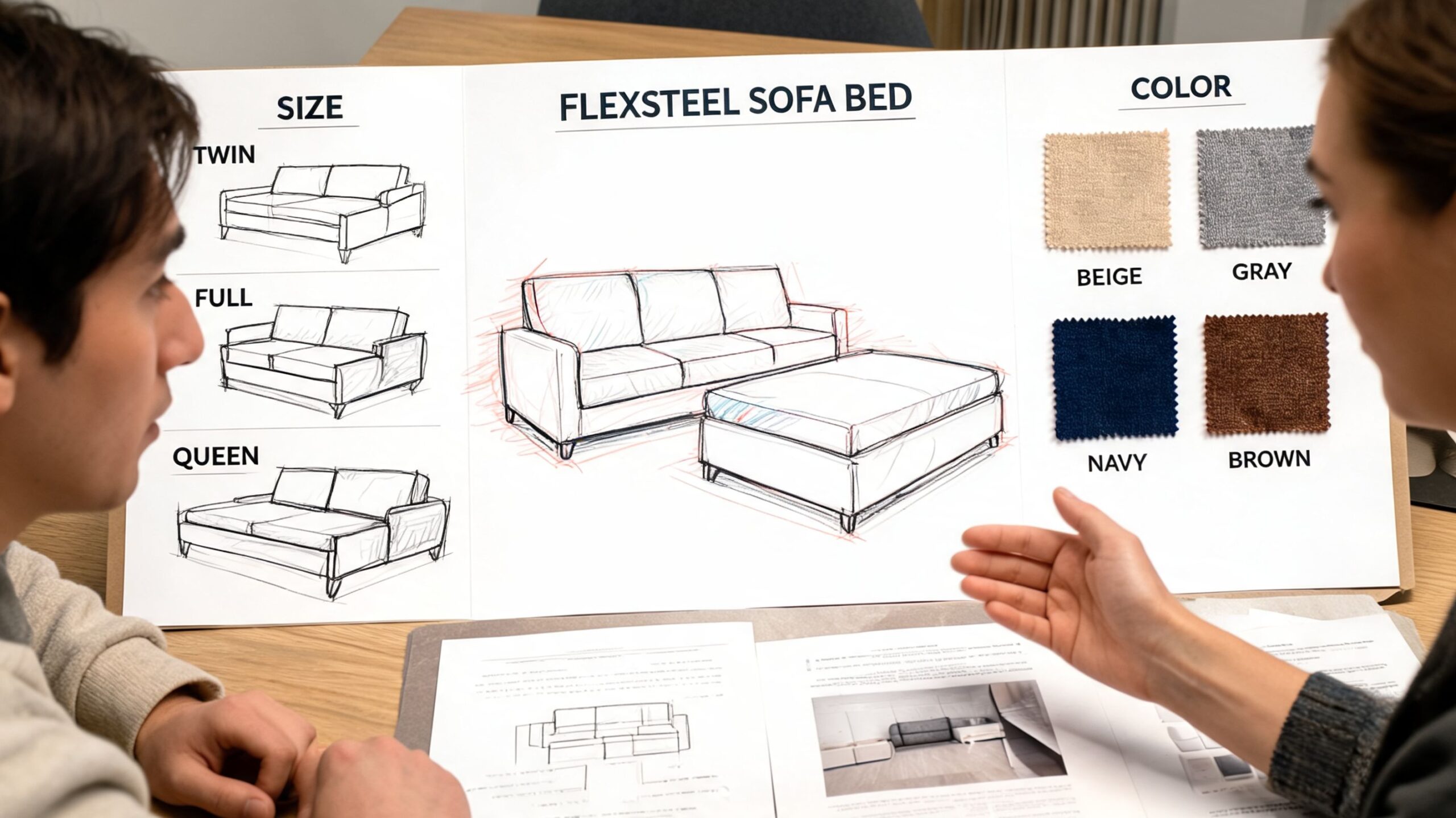
Why customization matters in Maine homes
A floor model gives you a starting point. It doesn't always give you the final answer. You may like the sofa but need a different fabric, a better scale for a smaller room, or a configuration that works with a non-standard layout.
Shoppers often run into 10 to 16 week waits and 25 to 40 percent upcharges for custom furniture, while Northern's partnership helps streamline that process, according to this Flexsteel Serendipity retail listing. That matters if you're trying to plan around a move, a renovation, or an upcoming season of houseguests.
This is one place where Northern Mattress & Furniture 1st can be part of the solution. The store's custom order program allows shoppers to move beyond floor samples for different styles, fabrics, and configurations, and its Nest Credit Card option allows pre-qualification without a credit score impact.
How to keep a custom order manageable
Customization gets easier when you make decisions in the right order.
Start with size and room function
Get the dimensions and layout constraints settled first.Choose the comfort setup next
Decide whether the sleeper is mainly for occasional guests or more regular use.Finish with fabric and color
Once the structure is right, the visual decisions become less overwhelming.
Worth remembering: The right custom order solves a problem. It isn't just adding options.
If you'd like a clearer sense of how the process works, this guide on custom furniture made simple breaks it down in a practical way.
For shoppers in Central Maine, custom ordering can be the difference between "close enough" and "fits the house." In older homes especially, that difference is worth paying attention to. Good furniture should work with the space you have, not the space you wish you had.
An Investment in Comfort and Hospitality
A February weekend in Maine can change your plans fast. The kids' friends stay over after a snowstorm, relatives decide not to drive home on icy roads, or a summer guest room gets pulled into winter storage and the living room has to do two jobs at once. In a lot of older homes, that kind of flexibility is not a luxury. It is part of making the house work year-round.
A flexsteel sofa bed earns its keep in exactly that kind of home. It gives you comfortable seating every day and a real sleeping space when you need one, without asking for a separate guest room that many Maine houses lack. For families trying to make the most of a farmhouse, cape, camp, or in-town New England layout, that matters.
Long-term value is the central consideration here. A lower price can look appealing at first, but a sofa bed gets opened, closed, sat on, and lived with through every season. Springs, fabric, cushions, and the sleeper mechanism all have to hold up. In Maine, furniture also has to live through dry winter heat, damp shoulder seasons, and busy holiday traffic. A good sleeper should feel like part of the household, not a temporary fix.
That is why it helps to ask a few plain, practical questions before you choose:
- How often will someone sleep on it?
- Will it sit in the main living room, a den, or a camp guest space?
- Do you need dimensions that work with a narrow doorway, tight stair turn, or smaller older room?
- Would a custom fabric or configuration serve your family better than a close-enough big-box option?
- Are you buying something to get through a season, or something you want to rely on for years?
Those answers usually point you in the right direction faster than the sale tag does.
For many Central Maine shoppers, that process is easier in person. If you'd like help comparing flexsteel sofa beds in person, you can browse ideas at Northern Mattress & Furniture 1st or visit the Augusta or Skowhegan showrooms. It's a no-hassle setting, with complimentary coffee and bottled water, where you can check comfort, size, and fabric options at your own pace.