Blog
Breathe Easier: Find Your Hypoallergenic Mattress

A lot of Central Maine households know the pattern. Spring brings pollen through cracked windows. Fall stirs up damp air and leaf mold. Winter shuts the house tight, and the bedroom starts holding onto dust a little more than anyone likes. Then someone wakes up stuffy, sneezing, or rubbing tired eyes and wonders whether the mattress is helping sleep or making the room harder to live in.
That's where the idea of a hypoallergenic mattress gets useful, but only if it's explained plainly. A healthier bed isn't just about buying something with a nice label. It's about lowering the things that collect in the sleep space, choosing materials that don't invite as much buildup, and creating a bedroom that supports better breathing night after night.
In Central Maine, that matters because the bedroom does double duty. It's where people recover from long workdays, cold mornings, muddy seasons, and busy family routines. A mattress is part of that recovery. The right fit can support comfort, cleaner sleep surroundings, and a home that feels easier to settle into.
Table of Contents
- Breathing Easier in Your Central Maine Home
- Understanding What Hypoallergenic Really Means
- How Mattress Materials Affect Allergies
- Why Certifications Matter for Your Health
- Creating a Complete Allergen-Control System
- Finding the Right Hypoallergenic Mattress in Augusta and Skowhegan
- Your Hypoallergenic Mattress Questions Answered
Breathing Easier in Your Central Maine Home
A parent in Augusta wipes spring pollen off a child's shoes, starts the bedtime routine, and still hears the same stuffy breathing an hour later. By February in Skowhegan, another family has the windows shut tight, the heat running, and a bedroom that feels dry, dusty, and heavy by the end of the week.
That pattern is common in Central Maine because outdoor triggers do not stay outdoors for long. Pollen comes in on coats and pet fur. Dust settles into fabric. Winter means homes stay closed up longer, and summer humidity can give moisture more time to linger in the bedroom.
The bed sits right in the middle of that system.
According to the American Academy of Allergy, Asthma & Immunology's guidance on dust mites, dust mites are a common source of allergy symptoms, and bedding often becomes a major collecting point because mites do well in warm areas where skin flakes build up. In plain terms, a mattress can act a bit like a sponge inside the room. It may not cause the problem by itself, but it can hold onto the things that keep a sensitive sleeper uncomfortable night after night.
A mattress is part of the room, not separate from it
Plenty of shoppers look at a mattress as one decision and bedroom cleanliness as another. In real homes, those two pieces work together. If the room gathers dust, dander, or moisture, the mattress and bedding gather it too.
That is why a healthier sleep setup starts with a simple question. What keeps settling where this person sleeps every night?
For one household, the main issue may be a pet that naps on the bed. For another, it may be old carpeting, damp summer air, or a mattress that has had years to collect particles below the surface. A better mattress can help, but it works best as the foundation of a healthy sleep system, along with washable bedding, a good protector, and regular care. Simple habits like rotation, surface cleaning, and moisture control make a real difference over time, which is why these mattress maintenance and cleaning tips for a cleaner sleep surface matter.
The goal is better rest at home
Central Maine shoppers usually are not chasing a label for its own sake. They want to wake up less congested, sleep more comfortably through the night, and make the bedroom feel cleaner and calmer.
The right choice depends on the home. Sometimes that means replacing an older mattress that traps irritants more easily. Sometimes it means improving the whole setup around the mattress so the room supports cleaner sleep from top to bottom.
Either way, the goal stays the same. Build a bedroom that helps your body settle down and breathe easier.
Understanding What Hypoallergenic Really Means
A lot of Central Maine shoppers hear the word hypoallergenic and picture a mattress that blocks every allergy problem. In real homes, that is not how it works. The term usually points to a mattress designed to limit common triggers such as dust, moisture buildup, and irritating emissions, while fitting into a cleaner bedroom routine.

The simplest way to read the label is this. “Hypoallergenic” describes a direction, not a guarantee. A better-built mattress can give dust, dander, and dampness fewer places to settle, much like a tightly closed food container keeps pantry air out better than a paper bag. It helps reduce exposure. It does not make a bedroom maintenance-free.
That distinction matters in this part of Maine. Winter homes stay closed up for months. Spring mud season adds moisture. Summer humidity can linger in bedrooms that do not get much airflow. If a mattress uses materials and covers that handle those conditions better, the whole sleep setup tends to stay fresher and easier to care for.
What the label does, and does not, tell you
The word itself is only a starting point.
A mattress may be called hypoallergenic because its materials are denser, less absorbent, lower in odor, or paired with a cover that helps block particles from sinking in. But the label alone does not explain which of those features you are getting. That is why two mattresses with the same claim can perform very differently in the same home.
Shoppers often run into confusion in three places:
- They trust the headline instead of the build. The useful questions are what the core is made from, what sits on top of it, and whether the cover can help reduce buildup.
- They focus on one layer. The cover, quilting, foam, latex, and protector all affect how clean the bed stays over time.
- They expect the mattress to do the whole job. A healthier bed works best as one part of a full sleep system that includes washable bedding, moisture control, and regular cleaning.
Practical rule: Judge a hypoallergenic mattress by its materials, cover, and care needs, not by the tag alone.
What “hypoallergenic” looks like in everyday use
In practical terms, a mattress earns that description when its construction helps with a few specific problems people deal with night after night.
- Less hospitable to common buildup: Some materials and covers are less likely to hold onto dust mites, mold, and mildew.
- Lower irritation potential: Low-emission components can be a better fit for people who notice strong smells or feel sensitive to certain chemical odors.
- Better compatibility with protective layers: A mattress should work well with a zippered encasement or washable protector so the surface stays easier to manage.
That last point gets overlooked. A good mattress for allergy-sensitive sleep should not fight against the rest of your routine. It should fit cleanly into it.
For example, a family comparing foam and spring construction may be focused on comfort first, which is understandable. Comfort still matters. But it helps to compare how each build may behave inside a healthier bedroom setup too. This guide to innerspring vs memory foam mattress options can help frame those differences.
The main takeaway is simple. “Hypoallergenic” is most useful when you read it as part of a bigger picture. You are not only choosing a mattress. You are choosing how the bed will handle dust, moisture, odors, and day-to-day care in your home.
How Mattress Materials Affect Allergies
A mattress works a bit like the soil in a garden. Some materials give dust, moisture, and everyday debris more places to settle. Others create a tighter, cleaner surface that is easier to keep under control. In Central Maine, where spring pollen, damp weather, and wintertime closed windows can all add pressure to indoor air, that difference matters.
Comfort still counts. A mattress that helps with allergen control but leaves your shoulders sore or your lower back stiff usually will not stay in your room for long. The healthier choice is the one that supports your body and fits into a cleaner sleep setup at home.
Mattress Material Comparison for Allergy Sufferers
| Material | Allergen Resistance | Feel & Support | Best For |
|---|---|---|---|
| Natural latex | Commonly described as less hospitable to dust mites and mold than many traditional fiber-heavy materials | Buoyant, responsive, supportive | Shoppers who want a cleaner-feeling build and a springier surface |
| Memory foam | Dense construction can leave fewer inviting spaces for common buildup than older, more fibrous designs | Close contouring, pressure relief, quieter motion feel | People who want a more cushioned, close-to-the-body feel |
| Hybrid or modern innerspring | Depends heavily on the comfort layers, cover, and protector used | Balanced support, easier movement, familiar mattress feel | Sleepers who want structure and airflow with updated comfort layers |
For readers comparing support styles as well as materials, this guide on innerspring vs memory foam mattress options helps explain how those comfort differences play out in real bedrooms.
Latex and why many allergy-sensitive shoppers start there
Latex often gets the first look from households trying to cut down on dust mite and moisture concerns. The reason is simple. It is usually a denser, less fibrous material, so it does not behave like older pillow-top builds with thick layers that can hold more debris over time.
Technically strong hypoallergenic designs often pair natural latex with certified textile barriers such as organic cotton or wool. That combination can help create a sleep surface that stays less welcoming to common triggers while still feeling breathable and supportive.
For a lot of Maine homes, latex fits the broader goal of a healthy sleep system. You are not only choosing the mattress core. You are choosing a material that works well with a washable protector, steady bedroom ventilation, and regular cleaning around the bed.
Memory foam and dense synthetic builds
Memory foam helps in a different way. Its appeal usually comes from density. A dense foam layer can limit the open pockets and loose fill that tend to collect more dust and skin flakes in older mattress styles.
The trade-off is heat. Some sleepers notice that memory foam holds more warmth, and extra warmth can mean more sweating. In a room that already runs humid, that can add moisture to the sleep environment. That does not rule foam out. It means the surrounding setup matters more, including breathable bedding, a good protector, and decent air movement in the bedroom.
People sometimes get stuck on this point. They ask, “Is foam bad for allergies?” Usually the better question is, “How will this foam mattress behave in my room, with my bedding, and with my cleaning habits?” That approach leads to better choices.
Hybrid and innerspring options with modern construction
Coils alone do not make a mattress a poor fit for allergy-sensitive sleep. The upper layers matter more. A modern hybrid with pocketed coils and a tighter comfort system can feel much different from an older mattress with thick, loose fiber padding near the surface.
That matters for two reasons. First, many sleepers prefer the easier movement and steadier support of a hybrid or innerspring design. Second, good airflow through the mattress can help a bed stay drier, especially during humid spells or in rooms that tend to feel stuffy.
A few questions help separate a cleaner build from one that may collect more buildup over time:
- What materials are in the top layers? Dense foam and latex usually behave differently from thick fibrous padding.
- How washable is the sleep setup? A mattress should pair well with a removable or washable protector.
- How much moisture control does the room have? Dehumidifiers, air circulation, and regular sheet washing all affect how the mattress performs in everyday use.
The right material is the one that lowers allergen pressure and still feels good night after night. In many Central Maine homes, that answer comes from the full system around the bed, not from one label on the showroom tag.
Why Certifications Matter for Your Health
In a Central Maine bedroom, a mattress can look clean, feel comfortable, and still leave a sleeper waking up with a stuffy nose or an irritated throat. That is why certifications matter. They give you a way to check what was tested in the materials, instead of relying on a showroom tag that sounds reassuring but says very little.
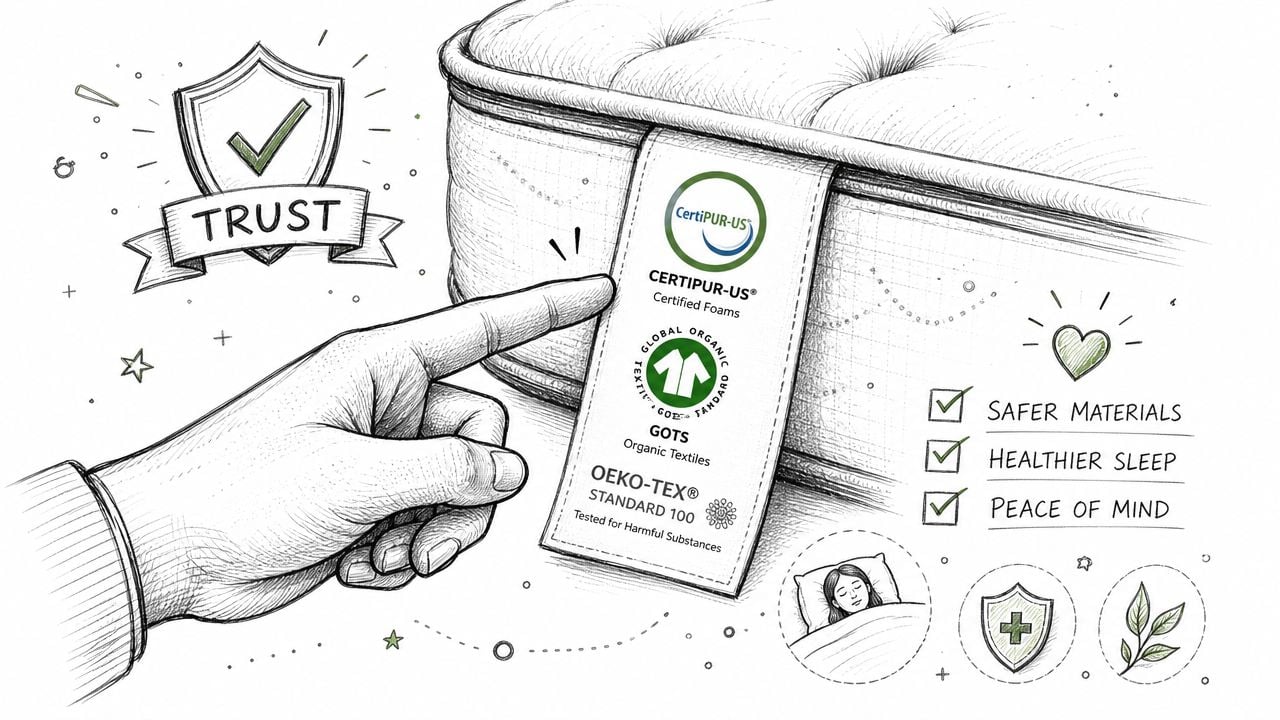
For allergy-sensitive households, that extra clarity helps. Reactions often come from several small stressors working together, such as lingering odors, chemical sensitivity, moisture in the room, and everyday allergen buildup. A certification does not promise a perfect mattress for every person, but it does help narrow the field to products with clearer standards and better disclosure.
What a certification actually tells you
A certification works like an inspection sticker on a truck. It does not tell you whether the ride feels right for your back, but it does tell you someone checked specific parts of the build.
Here is what shoppers usually want to confirm:
- Foam standards: CertiPUR-US is commonly used to evaluate certain foam components for emissions and material content.
- Textile standards: OEKO-TEX and GOTS can help you look more closely at fabrics, fibers, and how those materials were processed.
- Clear disclosure: A healthier mattress choice usually comes with a straightforward materials list, not just a polished product name or a vague claim about being "clean."
That matters even more if you are trying to build a healthier sleep system, not just replace one item. In many Maine homes, bedroom air quality, washable layers, and moisture control all interact with the mattress. Choosing better-documented materials gives you a stronger base to build on.
For a broader look at how mattress quality connects to long-term wellness, this article on why investing in a high-quality mattress is essential for your long-term health offers helpful context.
Labels that deserve a closer look
A label is only useful if you know how to read it. One common point of confusion is whether the certification applies to the whole mattress or only one part of it.
A simple store conversation can clear that up. Ask these questions:
- Which layer is certified? One certified foam layer is different from a mattress with multiple clearly documented components.
- What is in the cover? Cotton, wool, and synthetic blends each have different care needs and different effects on heat and moisture.
- Were both textiles and emissions considered? Some products are clearer on one point than the other.
A good rule is simple. Trust specific material disclosure more than broad comfort language.
That habit helps you avoid paying extra for a label that does not explain much. It also helps you choose a mattress that fits the health habits in your home, especially during muddy spring months, humid summer stretches, and long heating seasons when bedroom air can get dry and irritating.
Creating a Complete Allergen-Control System
A family in Central Maine can buy a better mattress and still wake up stuffy if the rest of the room keeps feeding the same problem. Dust in old pillows, damp summer air, pet dander on blankets, and a mattress surface with no barrier all work together. Cleaner sleep usually comes from treating the bedroom like a working system, much like keeping mud out of the house takes more than a good doormat.
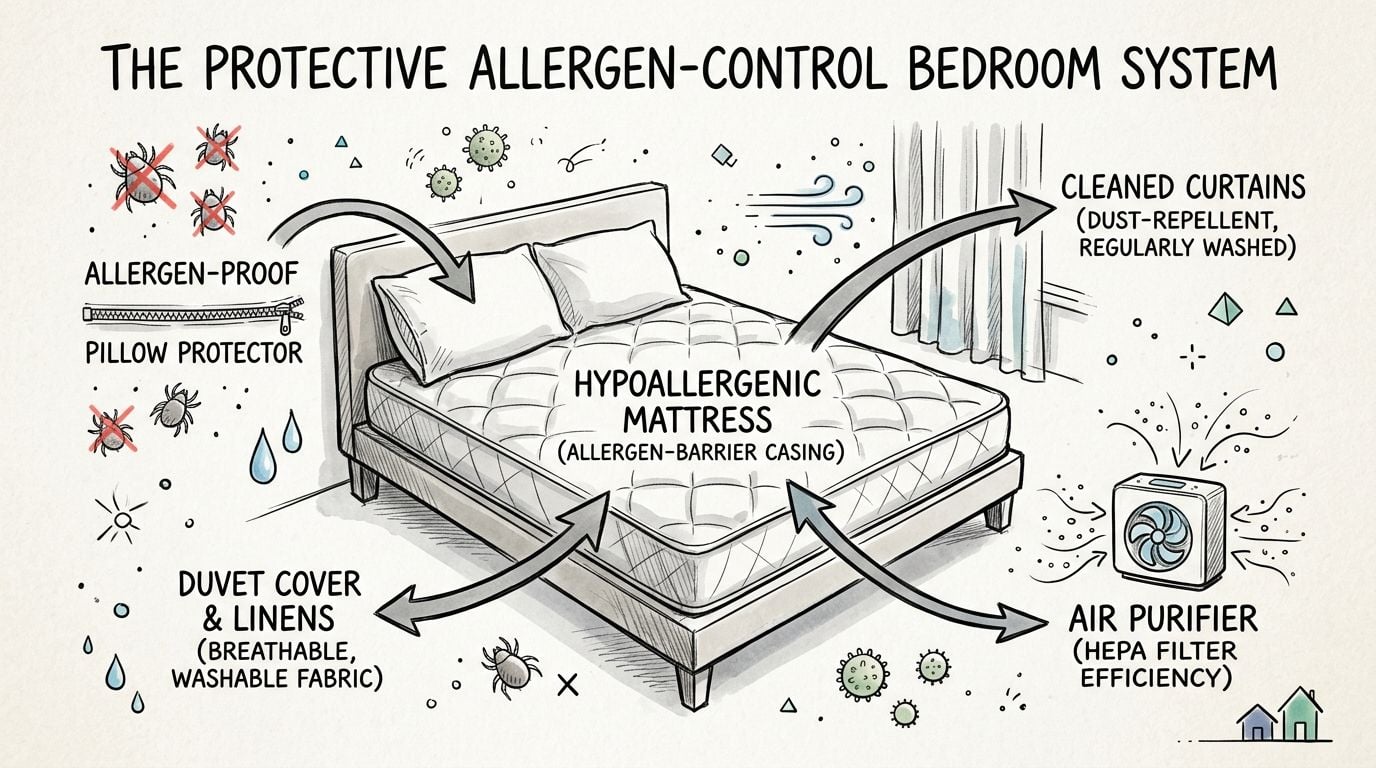
That matters in this part of Maine. Spring pollen, humid stretches in summer, and long heating seasons can all change how a bedroom feels and how much irritation builds up over time. A hypoallergenic mattress helps most when it is part of a broader routine that keeps allergens from settling in and staying there.
The mattress sets the foundation
A mattress is the largest surface in the sleep space, so it shapes the starting point. After that, the layers above and around it do a lot of the daily work.
A practical allergen-control setup often includes:
- A full mattress encasement: A zippered cover that surrounds the entire mattress, not just the top. Allergy experts generally recommend fully enclosed barriers because they do a better job limiting dust mite exposure than loose covers.
- A washable mattress protector: This catches sweat, skin cells, and everyday spills before they reach the encasement or mattress. For households trying to build a cleaner bed one step at a time, this guide to the benefits of a mattress protector is a useful place to start.
- Washable bedding: Sheets, pillowcases, and blankets are the parts closest to your nose and skin, so regular laundering matters.
- Pillow protection: An old pillow can hold onto dust and dander even if the mattress underneath is well covered.
The goal is simple. Put a barrier where allergens collect, then make the outer layers easy to wash.
Build habits your household will actually keep
The best sleep system is not the fanciest one. It is the one your household can maintain through busy school weeks, muddy spring days, and cold winter months when windows stay shut.
A manageable routine usually looks like this:
- Wash sheets and pillowcases regularly: Consistency matters more than perfection.
- Keep bedroom humidity in check: Damp rooms give allergens more staying power, while very dry rooms can irritate the nose and throat.
- Vacuum and dust around the bed: Dust near the bed still ends up in the bed.
- Limit extra fabric clutter: Piles of clothes, spare blankets, and stuffed items can trap dust close to the sleep area.
- Be realistic about pets: If a dog or cat sleeps on the bed, that changes the allergen load every night.
For renters, students, and young families, this can be good news. If the current mattress still supports the body well, better covers, cleaner bedding habits, and a tidier room may bring more relief than replacing everything at once.
That is the heart of a healthy sleep system. The mattress matters, but the room around it decides how well that mattress can do its job.
Finding the Right Hypoallergenic Mattress in Augusta and Skowhegan
A family in Central Maine can do everything right with sheets, covers, and cleaning, then still wake up stuffy because the mattress itself is the weak spot. That is why mattress shopping for allergies feels different from ordinary comfort shopping. The goal is not only to find a bed that feels good for ten minutes in a showroom. The goal is to choose a mattress that fits the sleeper and supports a healthier bedroom over time.
In Augusta and Skowhegan, that choice often comes down to real-life details. A sleeper who runs warm may react differently to certain foam builds than someone in a cooler, drier room. A household dealing with spring pollen, muddy pets, or long winters with the windows shut needs a mattress that works well within the whole sleep system, not in isolation.
Fit first, then materials and budget
Support comes first because a mattress that aggravates the back or shoulders rarely stays in use happily, even if the materials sound cleaner on paper. After that, look at what is closest to the body and what is easiest to maintain. A good hypoallergenic choice should feel right at night and make sense for the room it lives in.
A practical store conversation should cover a few plain questions:
- How does the sleeper rest most nights: Side, back, stomach, or a mix of positions.
- What surface feels comfortable: Plush, medium, or firm.
- Does the sleeper hold heat: Some materials trap more warmth than others.
- What is the bedroom like: Dry, damp, tidy, cluttered, pet-friendly, or hard to keep up with.
- Will the mattress be used with a zippered encasement or protector: That affects how the full setup performs at home.
That kind of fitting process works like choosing winter boots in Maine. The right pair has to fit the person, suit the conditions, and hold up in daily use. A mattress works the same way.
Why local testing helps
Trying beds in person helps clear up confusion that online filters often miss. Two mattresses may both be labeled hypoallergenic, yet one may feel too hot, too firm, or too soft for the sleeper who will use it every night. Comfort, support, and material tolerance all have to line up.
Northern Mattress & Furniture 1st offers shoppers in Augusta and Skowhegan a consultative fitting process, along with mattress choices from major brands and options beyond the floor through its Custom Order program. That matters for households trying to balance cleaner materials, body support, and a price that fits the month-to-month budget.
The company has served Central Maine since 1950, and that long local history shows in the way many shoppers prefer to buy. They want a real conversation, time to lie down and compare, and clear answers about what is inside the mattress. They also want a store that understands the homes around here, from older houses that can run damp in spring to tightly closed bedrooms in the middle of winter.
For some households, financing also shapes the decision. The Nest Credit Card gives shoppers a way to pre-qualify without a credit score impact, which can help a family choose the right fit instead of rushing into the cheapest option that feels acceptable for the moment.
If you want to compare comfort levels in person and ask detailed questions about materials and bedroom fit, the Augusta mattress showroom is a practical place to start.
Your Hypoallergenic Mattress Questions Answered
Even after a shopper learns the basics, a few practical questions usually remain. These are the ones heard most often in mattress stores and around kitchen tables.
Is a mattress cover enough
Sometimes yes, sometimes no.
If the current mattress still supports the body well and the main problem is allergen control, a full zippered encasement may be a smart first step. That's especially true for renters, students, guest rooms, or budget-conscious households. If the mattress is sagging, holding odors, or no longer sleeping comfortably, then a new mattress plus a barrier system may make more sense.
Does firmness affect allergies
Not directly in the way many people assume.
A firmer mattress isn't automatically more hypoallergenic, and a plush one isn't automatically worse. What matters more is the construction, the surface materials, and whether the bed is protected and maintained well. Firmness is still important, but mainly for spinal support and comfort.
What should a shopper ask in the store
A few simple questions can cut through confusion fast:
- What is the core made from
- What is in the cover and quilting
- Are the foams or textiles certified
- Will this mattress work well with a zippered encasement or protector
- Does this feel right for the way the sleeper sleeps
Can an older mattress still be part of a healthier bedroom
It can, if it's still structurally sound.
Some households get meaningful improvement by sealing an older mattress inside a proper encasement and improving laundry and ventilation habits. Others find that their older bed has collected too much wear, moisture history, or discomfort to remain worth keeping. The deciding factor is usually the mattress's condition, not just its age.
How should a shopper think about value
Value comes from the whole sleep setup, not just the sticker.
A lower-priced mattress that fits the sleeper, uses transparent materials, and gets paired with a strong protector may do more for sleep health than a more expensive bed chosen only because it sounded premium. That's one reason experienced sales teams often guide shoppers toward the right fit instead of the highest ticket.
A healthier bedroom doesn't have to start with guesswork. Northern Mattress & Furniture 1st gives Central Maine shoppers a practical place to compare mattress types, ask detailed questions about materials and fit, and explore options in Augusta or Skowhegan without a high-pressure sales experience.