Blog
Maine Bunk Beds: A Buyer’s Guide for Your Home

A lot of Maine families reach the same point. One bedroom has to do more than one job. It might need to sleep siblings, make room for visiting grandkids, or turn a camp bedroom into a space that works for weekends and holidays without feeling crowded the rest of the year.
That's where bunk beds keep earning their place. They aren't a passing fad. They're one of those practical furniture ideas that stick around because they solve a real problem. In Central Maine, that problem often shows up in older farmhouses, capes, camps, and rentals where every square foot matters and room layouts don't always cooperate.
Families shopping for Maine bunk beds usually aren't just asking, “Which one looks nice?” They're asking better questions. Will it fit under a lower ceiling? Will the ladder crowd the doorway? Will the top bunk feel safe? Will this still work when the kids get older?
Those are the right questions. Since 1950, third-generation furniture folks in places like Augusta, Skowhegan, and the rest of Central Maine have helped neighbors think through choices like these with a long view in mind. A bunk bed isn't just about adding sleep space. It's about making a house feel organized, comfortable, and ready for the people who use it every day.
Table of Contents
- Making Space for Family in Your Maine Home
- Understanding Bunk Bed Types and Materials
- Bunk Bed Safety and Mattress Sizing
- Measuring for Real Maine Rooms and Low Ceilings
- The Northern Advantage Custom Orders and Simple Financing
- Your Bunk Bed Questions Answered
Making Space for Family in Your Maine Home
In many Maine homes, a bunk bed starts as a practical fix and ends up becoming part of family life. A small upstairs bedroom in Augusta suddenly needs to work for two children. A spare room in Skowhegan has to handle cousins during school breaks. A camp bedroom near the lake needs to sleep more people without giving up the little bit of walking space the room has.
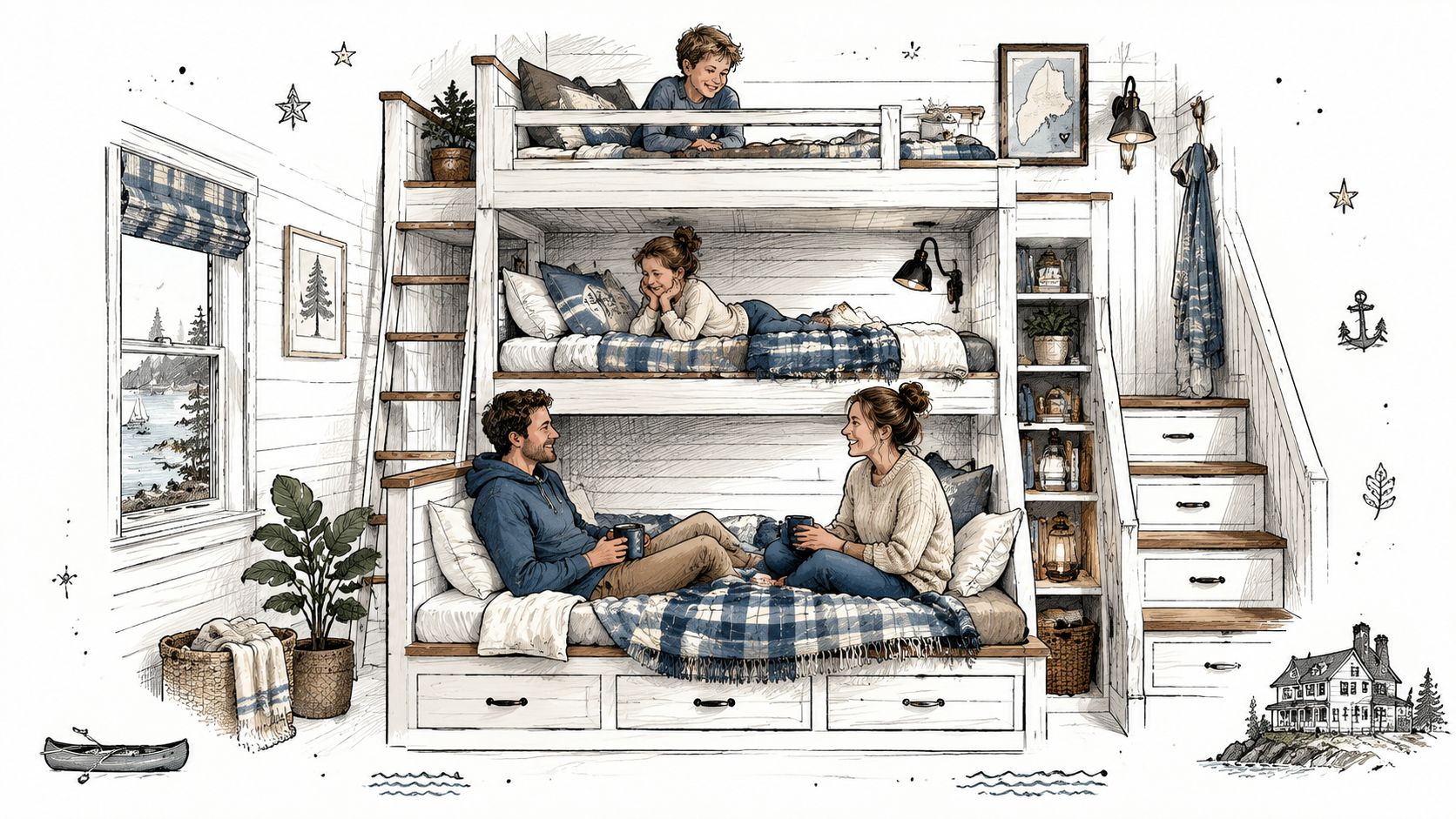
That's why bunk beds have stayed so useful. They help one room do more, and they do it without asking a family to add square footage. For homes where space is already spoken for, that's often the difference between a room that feels pinched and one that feels purposeful.
A familiar Maine scenario
A growing family might start with two separate beds and find that the floor disappears fast. The dresser feels too close. The toy basket lands in the doorway. There's no place left for a child to sit and read, let alone play.
A bunk bed changes the room's rhythm. One footprint handles two sleepers, and the freed-up floor space can go back to the family. That's why many shoppers start by looking at beds for small spaces that fit tighter room layouts.
In Maine homes, good furniture often isn't the piece that fills a room. It's the piece that gives the room back to the people living in it.
More than a kids' furniture category
Bunk beds also aren't just for young children. They make sense in guest rooms, seasonal homes, and shared rooms where flexibility matters. One family may need sleeping space for siblings now and visiting relatives later. Another may want a setup that keeps a room usable all year, instead of turning it into wall-to-wall beds.
That long-term thinking matters. The best bunk bed choice usually isn't the flashiest one. It's the one that fits the room, suits the people using it, and still feels like part of the home after the novelty wears off.
Understanding Bunk Bed Types and Materials
Bunk beds come in a few main forms, and the differences matter more than many shoppers expect. The right choice depends on who's sleeping there, how the room is used, and whether the bed needs to blend in like permanent furniture or function more like a flexible sleeping station.
Why bunk beds have lasted
The idea behind bunk beds is old because the problem is old. The earliest documented use is often traced to sailors aboard ships in the 15th century, where stacking sleepers vertically saved scarce floor space. That same principle later moved into barracks, dorms, and homes, which is why bunk beds still stand as a basic space-saving furniture solution today, as noted in this history of bunk beds from ships to homes.
That bit of history helps explain something useful. A bunk bed works best when a family treats it as a solution to a room-planning problem, not just as a style choice.
Bunk Bed Types at a Glance
| Type | Best For | Key Consideration |
|---|---|---|
| Twin-over-twin | Two children sharing one room | Usually the simplest fit for smaller bedrooms |
| Twin-over-full | A shared room with an older child or mixed ages | Takes more visual and floor space |
| Loft bed | One sleeper who also needs study or storage space below | Works better when the room needs open floor area than extra sleeping space |
| Bunk with trundle | Occasional guests or sleepovers | Needs room for the trundle to pull out |
| Bunk with stairs | Families who want easier upper-bunk access | Stairs can take up more room than a ladder |
Wood or metal
Material changes the feel of the whole room. It also changes how the bed ages.
Wood bunk beds often feel warmer and more at home in Maine houses, camps, and traditional bedrooms. They tend to pair well with other case goods and can look less temporary over time. For families thinking about long-term durability and furniture that fits the rest of the home, it helps to understand how wood species affect longevity and style.
Metal bunk beds can make sense when a family wants a lighter visual profile. They often suit simpler rooms and can feel less bulky in tight quarters. The tradeoff is that some shoppers find metal frames less furniture-like and more utilitarian.
Practical rule: If the bunk bed will stay in place for years and needs to feel like part of the home, wood usually makes more sense. If the priority is a lighter-looking frame in a simple room, metal may be worth considering.
A good way to decide is to look past the sleeping surfaces and consider the whole room. If the bunk bed is going beside a wood dresser, a nightstand, and painted trim in an older Maine home, wood often looks more settled. If the room is spare and multipurpose, a metal frame may keep things visually lighter.
Bunk Bed Safety and Mattress Sizing
Most confusion around bunk beds starts after the frame is chosen. Families focus on the look, the finish, or the ladder style, then discover that mattress choice affects safety just as much as the bed itself.
The safety rules that matter most
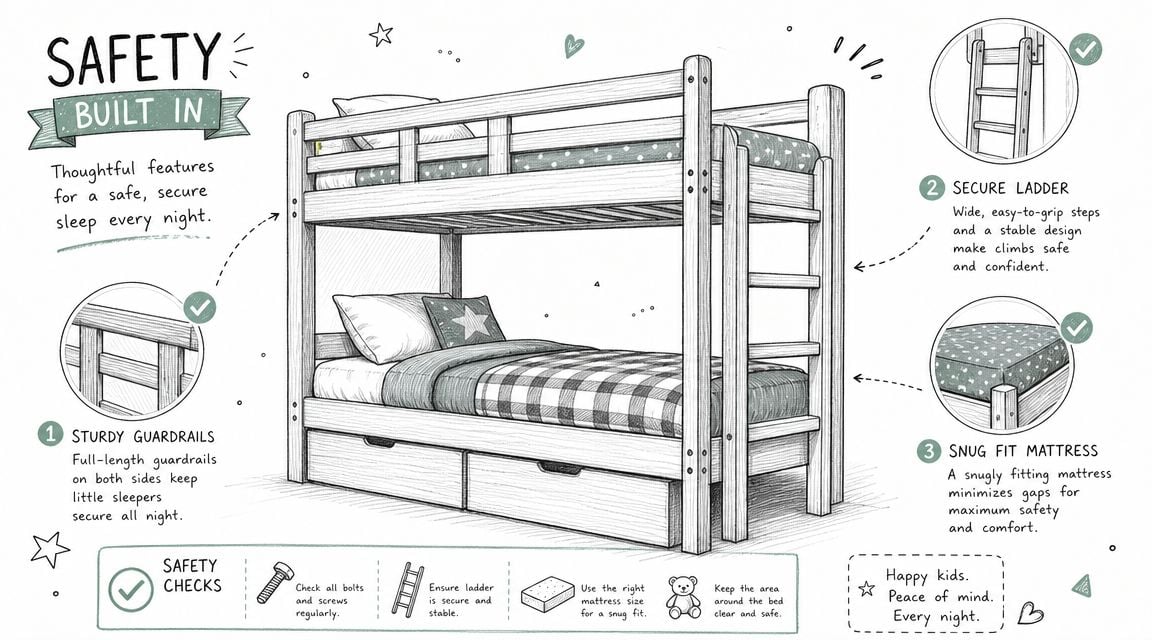
Two guidelines deserve immediate attention. No child under age 6 should sleep in the top bunk, and guardrails should extend at least 5 inches above the top surface of the mattress, according to this bunk bed safety guidance.
Those numbers matter because the mattress can undermine the protection built into the frame. If the mattress sits too high, the exposed rail gets too low. The bed may still look fine at a glance, but the safety margin shrinks.
Families also tend to underestimate how much climbing style matters. A top bunk is safest when the child using it is old enough to climb steadily, understands that the bunk isn't a play platform, and uses the ladder the same way every time.
Why mattress height changes everything
A bunk bed needs the right fit, not only the cheapest or thickest mattress available. That matters most on the upper bunk, where a plush, tall mattress can create a problem instead of comfort.
Here's the simple way to approach it:
- Top bunk mattresses should stay lower in profile so the guardrail remains meaningfully exposed.
- More mattress isn't always better if the extra height reduces rail protection.
- Support still matters because a child has to sleep well, not just fit into the frame.
For many families, that leads to practical add-ons like a bunkie board foundation made for lower-profile support. It can help preserve a safer overall setup without adding unnecessary height.
The safest bunk setup usually looks a little simpler than people first imagine. Lower mattress height, visible guardrail, steady ladder access, and age-appropriate use tend to matter more than extra pillow-top softness.
A short safety check before purchase
Before bringing any bunk bed home, it helps to confirm these points:
- Who will use the top bunk: If the intended sleeper is under the recommended age, the setup isn't right yet.
- How tall the mattress will sit: The guardrail has to remain high enough above the mattress surface.
- How the child gets in and out: Ladder placement should feel natural, not awkward or blocked by other furniture.
- What the room allows: Ceiling height and overhead clearance affect comfort every day, not just on delivery day.
That last point deserves its own close look, especially in older Maine homes.
Measuring for Real Maine Rooms and Low Ceilings
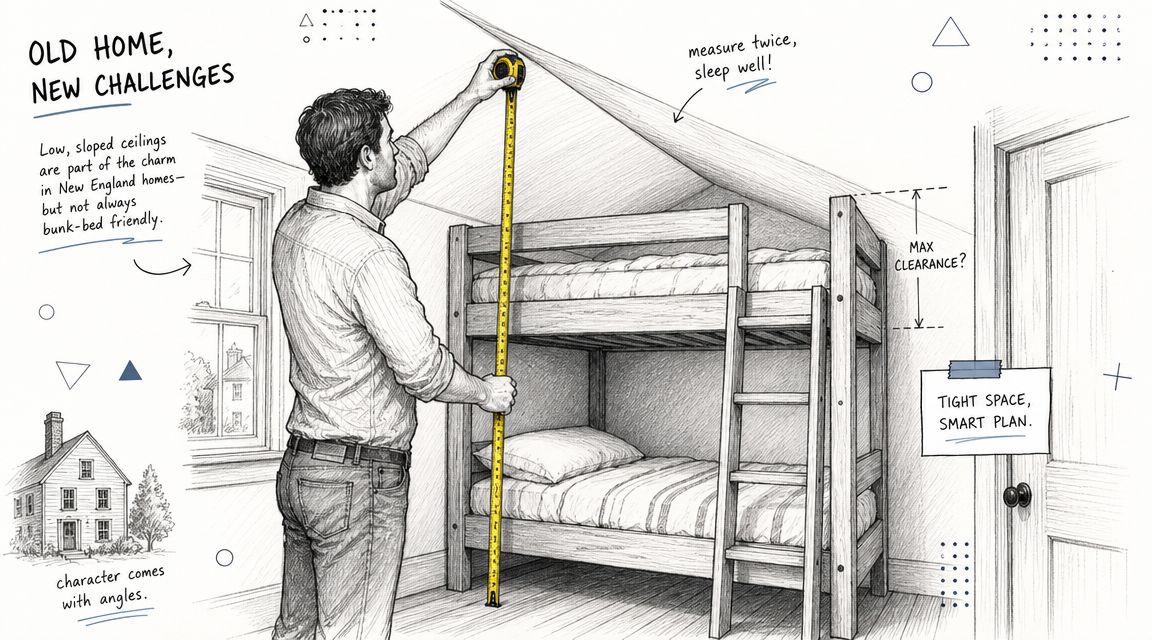
Many Maine bunk beds succeed or fail, but not in the catalog or on the sales floor. Instead, their true test comes in the actual room, especially in older houses where ceilings dip, walls jog, and every inch has to be respected.
Start with the ceiling not the floor
It's common to measure wall length first. That's helpful, but it's not the first make-or-break dimension with a bunk bed.
For safe and comfortable use, it's smart to plan for 30 to 36 inches of headroom between the top mattress and the ceiling. Many standard bunk beds stand 65 to 72 inches tall, which means an 8-foot ceiling, or 96 inches, is the practical minimum for most models, based on these bunk bed dimension guidelines.
That doesn't mean every room under that height is impossible. It means a family should stop guessing and start measuring carefully. In older homes, especially upstairs rooms and finished attic spaces, “close enough” usually isn't enough.
A simple measuring checklist
A straightforward measuring routine helps avoid expensive mistakes. Many families benefit from using a furniture measuring guide that covers room access and placement, then adding these bunk-specific checks:
- Measure ceiling height in more than one spot. Older rooms can be uneven. A room may read one way in the center and another near the wall.
- Measure where the top sleeper's head will be. In sloped-ceiling rooms, that's often more important than the tallest point in the room.
- Account for the mattress, not just the frame. The frame height alone doesn't tell the full story.
- Check window trim, radiators, and door swing. A bunk bed can technically fit and still function poorly.
- Look at ladder clearance. If the ladder opens into a traffic path, the room may feel cramped every day.
A bunk bed that fits on paper can still feel wrong in a real room if the ladder pinches the walkway or the top bunk sits too close to the ceiling.
When standard sizes don't make sense
Older Maine homes often have one of three trouble spots. The first is lower ceilings. The second is sloped ceilings near kneewalls or attic rooms. The third is tight floorplans where a standard frame leaves poor walking space.
In those cases, shoppers usually have three realistic options:
- Choose a lower-profile bunk design. This can preserve comfort overhead where a taller frame won't.
- Use a low-profile upper mattress. That helps maintain needed clearance and exposed rail height.
- Consider a loft instead of a full bunk. If only one sleeper needs the room, open space below may solve more problems.
A good room plan also looks beyond fit on day one. Children grow. Bedding changes. Rooms pick up storage furniture over time. If the bunk bed barely clears the room now, it rarely feels better later.
The Northern Advantage Custom Orders and Simple Financing
The hardest bunk bed rooms are often the most common ones in Maine. A standard-size frame may look perfectly reasonable until it has to fit under a sloped ceiling, work around an old baseboard heater, or leave enough room to open a closet door.
Custom orders solve real room problems
That's one reason custom-built and custom-ordered bunk beds keep coming up in serious conversations. The challenge of fitting bunk beds into older homes with non-standard room sizes is a real pain point, and it has pushed more families toward custom-made options because standard frames often don't work well with lower or sloped ceilings, as noted in this discussion of bunk beds for non-standard rooms.
Custom ordering isn't about making furniture fancy. It's about making furniture workable. A family may need a lower overall height, a different ladder orientation, a staircase layout that respects the room, or a finish that helps the piece blend with the rest of the home instead of dominating it.
For shoppers who need those options, Northern Mattress & Furniture 1st's custom order process gives a way to explore styles, configurations, and room-specific adjustments beyond what's sitting on the floor. That's especially useful when the room itself is the main challenge.
Budget matters too
The right bunk bed still has to fit the household budget. That's where practical financing can matter just as much as practical design.
A few considerations usually help families make a sound decision:
- Real sale pricing matters: A Price Chop promise and real sale prices help families compare actual value, not inflated tags that only look discounted.
- Financing can reduce pressure: The Nest Credit Card lets shoppers pre-qualify without a credit score impact, which can make planning easier before committing.
- Durability is part of affordability: A sturdier bed that fits the room well may save a family from replacing a poor-fit solution later.
There's also a quality-of-life piece that gets overlooked. Shopping is easier when the process stays low-pressure. A no-hassle showroom, clear guidance, and a place to sit down with a coffee or bottled water while talking through dimensions can make a complicated decision feel manageable.
Good financing doesn't make the wrong bed right. It simply gives families breathing room to choose the bed that actually fits their home.
Your Bunk Bed Questions Answered
Should families assemble a bunk bed themselves
It depends on the bed, the room, and the installer's comfort level. A simple frame in a square room may be manageable for a handy household. A heavier wood bunk, stair unit, or awkward upstairs room usually calls for more caution.
The biggest risk in self-assembly isn't usually one dramatic mistake. It's the small errors. A rail installed backward, hardware left slightly loose, or the bed placed before final tightening can all create problems later. If a family chooses self-assembly, slow and careful is the right pace.
How should a wood bunk bed be maintained
A wood bunk bed lasts better when families treat it like real furniture, not temporary equipment. That means checking hardware from time to time, keeping the ladder and rails snug, and wiping the finish with gentle care rather than harsh cleaners.
It also helps to teach children how the bed should be used. Climbing belongs on the ladder. Bedding should stay neat enough that feet don't catch on it while going up or down. A well-made wood bunk can become part of the room for years when the bed is used the way it was designed.
When is a loft bed the better choice
A loft bed often makes more sense when the room has one sleeper but multiple jobs. The space below can handle a desk, storage, or open floor area that a standard bed would consume.
A traditional bunk is usually the better answer when the main problem is sleeping more than one person in the same room. A loft is more of a room-efficiency tool for one person. A bunk is a sleeping-capacity tool for two or more.
What should shoppers bring to the store
A written room measurement is the minimum. Better still is a rough sketch that shows windows, doors, trim, baseboard heaters, and where the bunk bed would sit. Ceiling notes matter too, especially in older homes or upper-floor rooms.
Photos help. So does knowing who will use the bed now, and who may use it later. The more clearly a family can describe the room, the easier it is to find the right fit instead of settling for a near miss.
Families comparing Maine bunk beds don't need pressure. They need clear answers, careful measuring, and options that fit real homes. Northern Mattress & Furniture 1st offers a practical next step for shoppers in Central Maine who want to visit Augusta or Skowhegan showrooms, browse room ideas, talk through custom orders, or look into simple financing before making a decision.