Blog
Build Your Own Sectional Couch: A Maine Home Guide


A lot of folks start shopping for a sectional after the same aggravating moment. The old sofa never sat quite right in the room, the new one you liked online looks perfect until you check the dimensions, and suddenly you're standing in your living room wondering whether the issue is the couch or the house.
That happens all the time in Central Maine homes. Older layouts in Augusta, Skowhegan, and the surrounding towns often have tight corners, shorter walls, radiator locations you have to work around, and entryways that don't forgive bad planning. A standard sectional can be close, but close isn't the same as right when you're investing in the piece that anchors the whole room.
The good news is that build your own sectional couch doesn't have to mean sawhorses in the garage and a weekend full of plywood dust. For most households, it means choosing the right modules, the right arm style, the right fabric, and the right footprint so the finished sectional fits your home and your life.
Table of Contents
- From Awkward Spaces to a Perfect Fit
- Planning Your Sectional with Confidence
- The Three Paths to a New Sectional
- Choosing Your Sectional Building Blocks
- The Northern Advantage A Local Partner for Your Project
- Your Custom Sectional Questions Answered
From Awkward Spaces to a Perfect Fit
One of the most common living room problems is an "almost" sofa. It's almost the right width. Almost leaves enough walking room. Almost works with the window, the lamp, and the coffee table. Then you live with it for a year and realize the room still feels off.
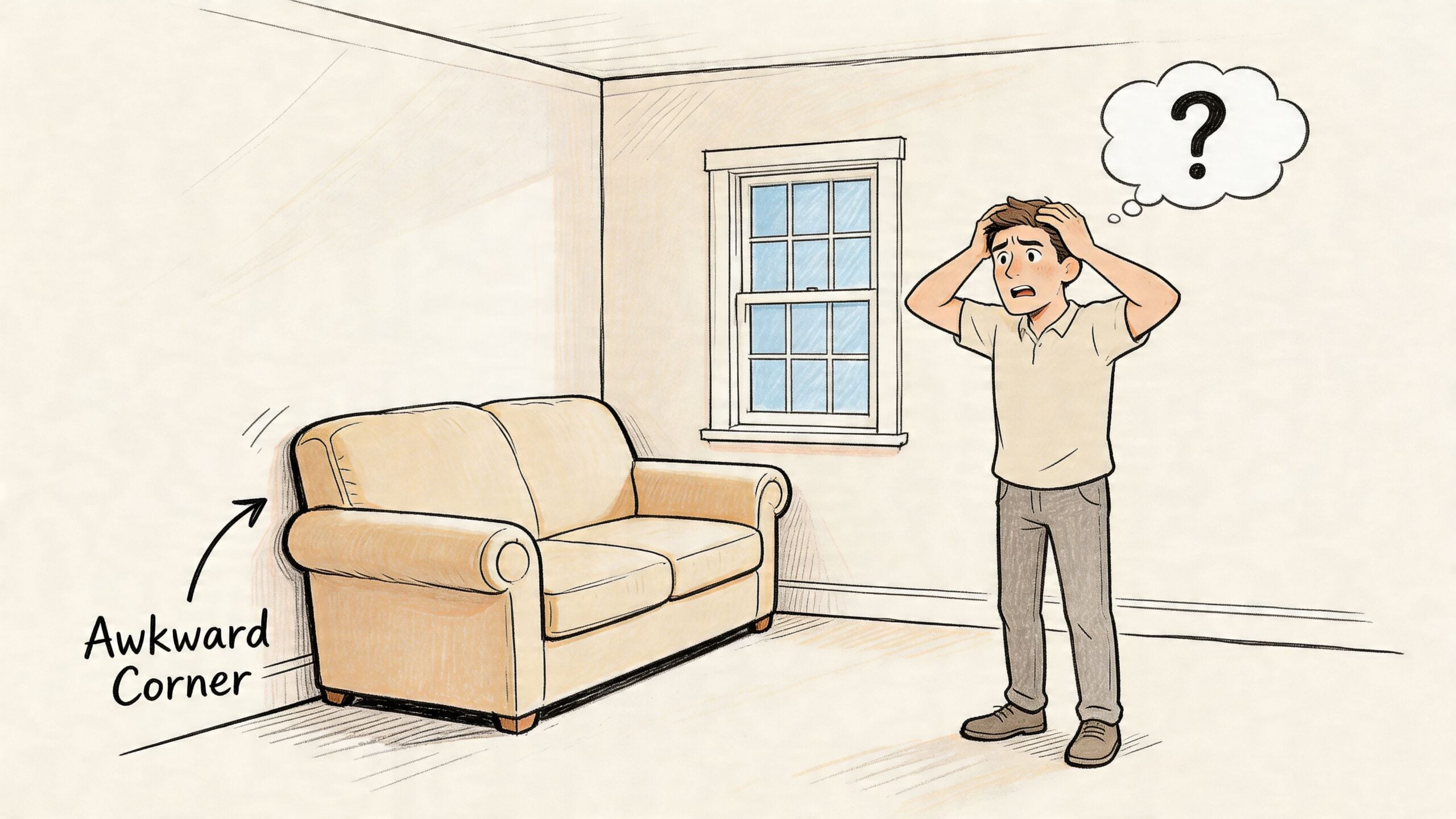
That frustration is a big reason more homeowners have moved toward customizable sectionals. The North American modular sofa market is projected to grow from $5.7 billion in 2025 to $17.9 billion by 2033, a projection that reflects stronger demand for furniture that adapts to real homes rather than forcing homeowners to adapt to fixed sizes, according to Willis Furniture's modular sofa market overview.
Why standard sizing falls short
A living room isn't just a box with four walls. In a Maine house, you might be dealing with:
- An offset doorway that cuts into one seating wall
- A wood stove, baseboard heat, or radiator that steals usable depth
- A narrow front entry or stair turn that changes what can even get inside
- A family room that does double duty for TV, guests, homework, and winter lounging
A sectional has to do more than fill space. It has to shape the room without choking it.
Practical rule: If a sofa only works when every other piece in the room gets pushed into compromise, it isn't the right fit.
What build your own really means now
Years ago, "build your own sectional couch" sounded like a DIY project. Today, for most shoppers, it means guided customization. You choose the layout, depth, arm style, seat count, chaise placement, and upholstery so the sectional lands where it should from the start.
That matters because a sectional isn't a side table you can casually swap out. It becomes the spot where people gather, nap, watch the game, open presents, and ride out snowstorms. When it's sized right, the room feels calm. When it's wrong, the room never settles.
If you're not sure where to begin, start with the room itself. A simple measuring plan makes the whole process easier, and this guide on how to measure furniture before you buy is a smart first step before you fall in love with any particular style.
Planning Your Sectional with Confidence
Before you pick a fabric or decide on a chaise, measure everything that can cause trouble. Not just the wall. Everything.
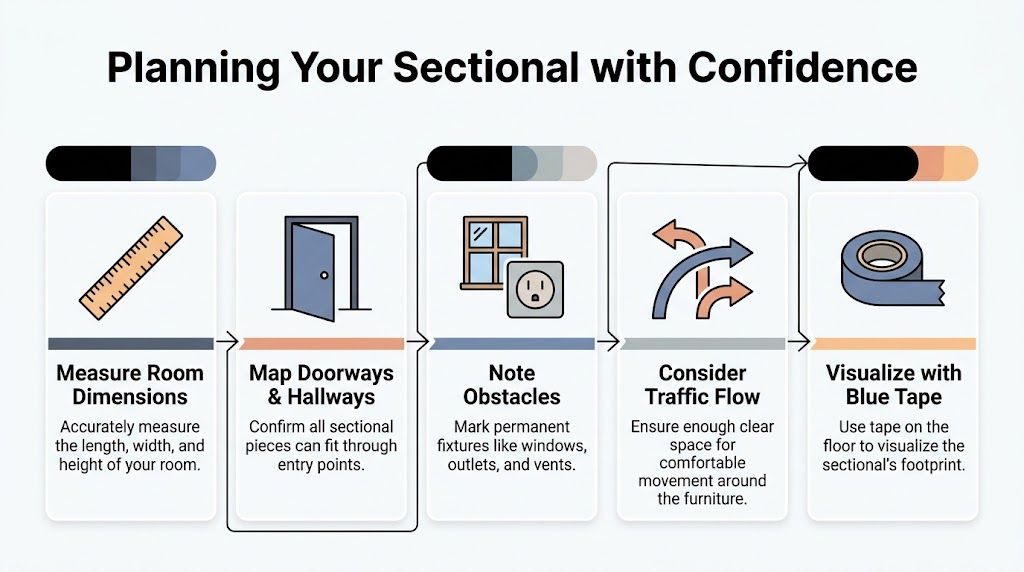
Poor planning doesn't just make a room feel cramped. It can stop a sectional from being delivered properly in the first place. This modular assembly reference on YouTube notes that precise measurement of room dimensions, doorways, and hallways is essential, and that delivery failures can happen in up to 30% of cases when those details are missed. The same source also notes that professionals use post-assembly sit tests to confirm ergonomics, which can cut revision rates.
The measurements that matter most
Take a pad, a tape measure, and your phone. Write it down and take pictures.
Overall room length and width
Measure the full room first, then measure the actual zone where the sectional will live. Open concept homes can fool you if you only go by the full room size.Doorway width and height
Measure the front door, interior doors, stair landings, and any narrow hall sections. A sectional that fits the room but can't make the turn at the staircase is still the wrong sectional.Wall interruptions
Mark windows, vents, outlets, radiators, trim depth, and heat sources. These details often decide where an arm can sit and where it can't.Traffic lanes
Leave comfortable walking space around the sectional. You shouldn't have to turn sideways to get from the living room to the kitchen.
A simple room-mapping method
Blue painter's tape works because it forces honesty. Tape the sectional footprint on the floor. Then walk it.
- Mark the longest side first so you can see how much wall the sectional will really consume.
- Add the return, chaise, or corner piece.
- Set in the coffee table, at least mentally, so you don't create a room where nobody can sit down comfortably.
- Walk your normal routes. Front door to couch. Couch to kitchen. Hallway to recliner.
- Sit in a nearby chair and look at the taped footprint from across the room.
Measure for the room you actually live in, not the empty one you imagine on shopping day.
If the taped shape makes the room feel blocked, trust that feeling. It won't improve after the furniture arrives.
Don't forget comfort, not just fit
A sectional can be the right width and still feel wrong because the seat depth or arm height doesn't suit how you sit. Some people lounge. Some sit upright. Some need room for kids and pets to pile in during a movie.
That's why it helps to review practical buying criteria before you order. This article on what to look for when buying a sofa does a good job of framing the comfort and construction questions that matter after the tape measure work is done.
The Three Paths to a New Sectional
People say "build your own sectional couch" and mean three different things. That matters, because each path asks for a different mix of money, time, patience, and compromise.
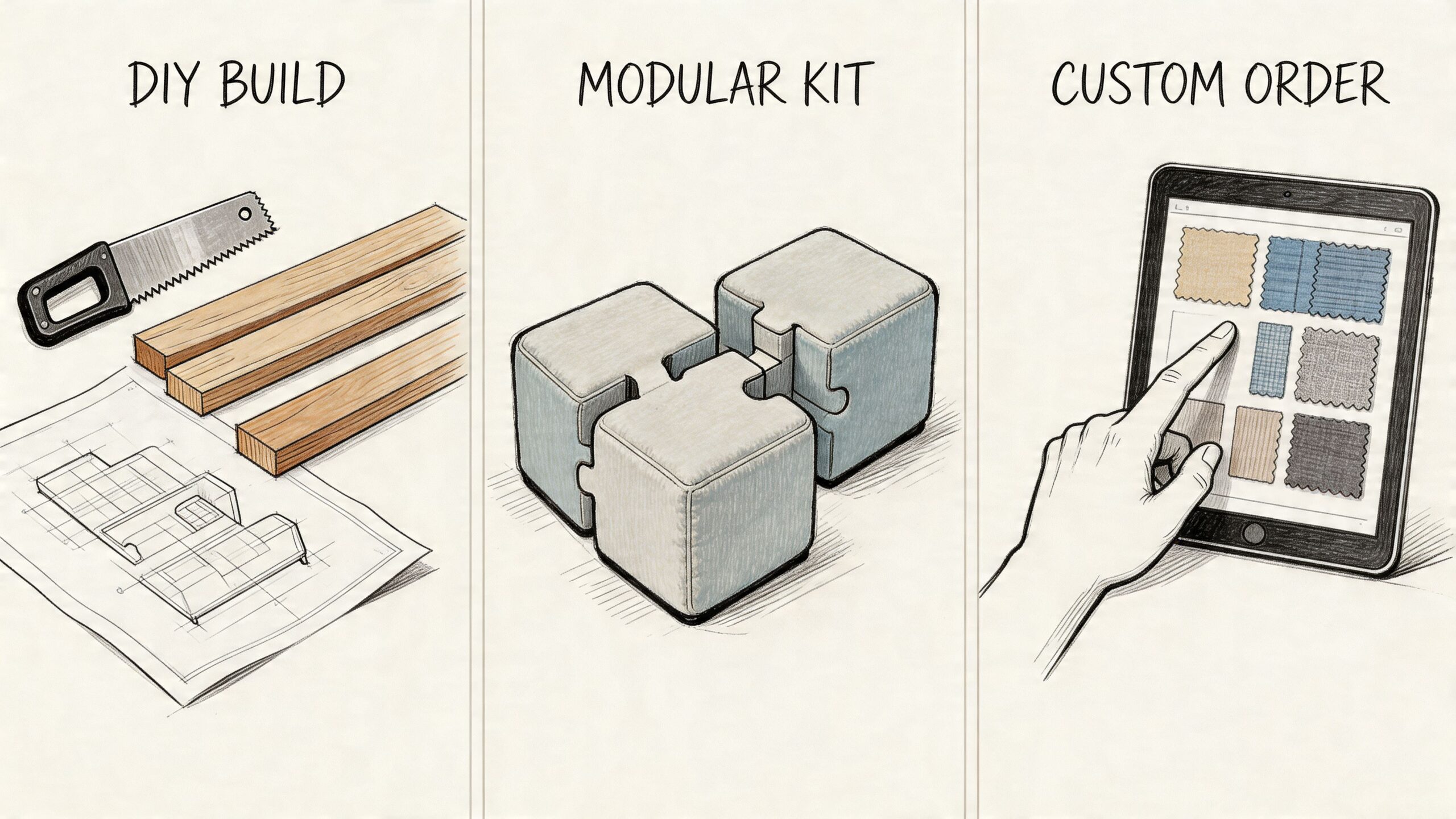
One path is a true shop project. One is a retail purchase. The third is the one that fits real homes best. You choose from proven modular pieces, set the size and layout to suit your room, and let the factory do the hard part right.
A side-by-side look
| Path | What works | What usually doesn't |
|---|---|---|
| True DIY build | Full control over dimensions and materials | Heavy labor, tool requirements, measuring risk, upholstery complexity |
| Off-the-shelf sectional | Fastest path, easy to try in person | Fixed sizing, limited layout options, more compromise in awkward rooms |
| Custom modular order | Personalized fit, guided choices, cleaner balance of comfort and practicality | Requires planning and patience while the order is built |
Path one, true DIY
A real DIY sectional is furniture making, not casual weekend tinkering. The frame has to stay square, carry weight without racking, and support cushions well enough to feel good after years of use. Then you still have to handle foam, fabric, sewing, and finish work.
I've seen plenty of homemade pieces that looked decent from ten feet away and felt rough the first night somebody sat down for a movie. That is the trade-off. Full control sounds appealing, but mistakes show up in comfort, not just appearance.
DIY makes sense for experienced woodworkers, upholsterers, or people who already have a shop and enjoy exacting work. For a typical household, it often turns into a long project with uncertain results.
A homemade sectional saves money only when the tools, skills, and time are already in place.
Path two, off the floor
A standard sectional can still be the right answer. If the size is right, the seat feels good, and the room is straightforward, buying from the floor is simple and fast.
The trouble starts in older homes, narrow rooms, open-concept spaces, and houses with radiators, trim details, or traffic paths that steal a few inches where you need them most. In those rooms, a stock sectional often fits on paper but feels wrong once it is living in the space.
That is how people end up settling. Too deep. Too long. Too bulky on one side. Fine in the showroom, frustrating at home.
Path three, custom modular
Custom modular ordering gives you the practical middle ground. You are not building the frame yourself, but you are still building your sectional in the way that matters most. You choose the pieces, orientation, scale, fabric, and comfort level for the room you have.
That is a very different thing from true DIY. It is guided customization, not a woodworking project.
For many Maine homes, that approach holds up better over time because it cuts down on the two problems I see most often. Poor fit and false economy. Spending less on a sectional that blocks a walkway or wears out early usually costs more in the long run.
A good custom program also gives you room to make smart trade-offs. Add seating without adding visual bulk. Choose a chaise only if it earns the floor space. Keep the layout flexible if you may move in a few years. If you want a plainspoken look at how that process works, this guide to custom furniture made simple lays it out clearly.
Choosing Your Sectional Building Blocks
The room plan gives you the outline. The building blocks decide whether the sectional lives well day to day.
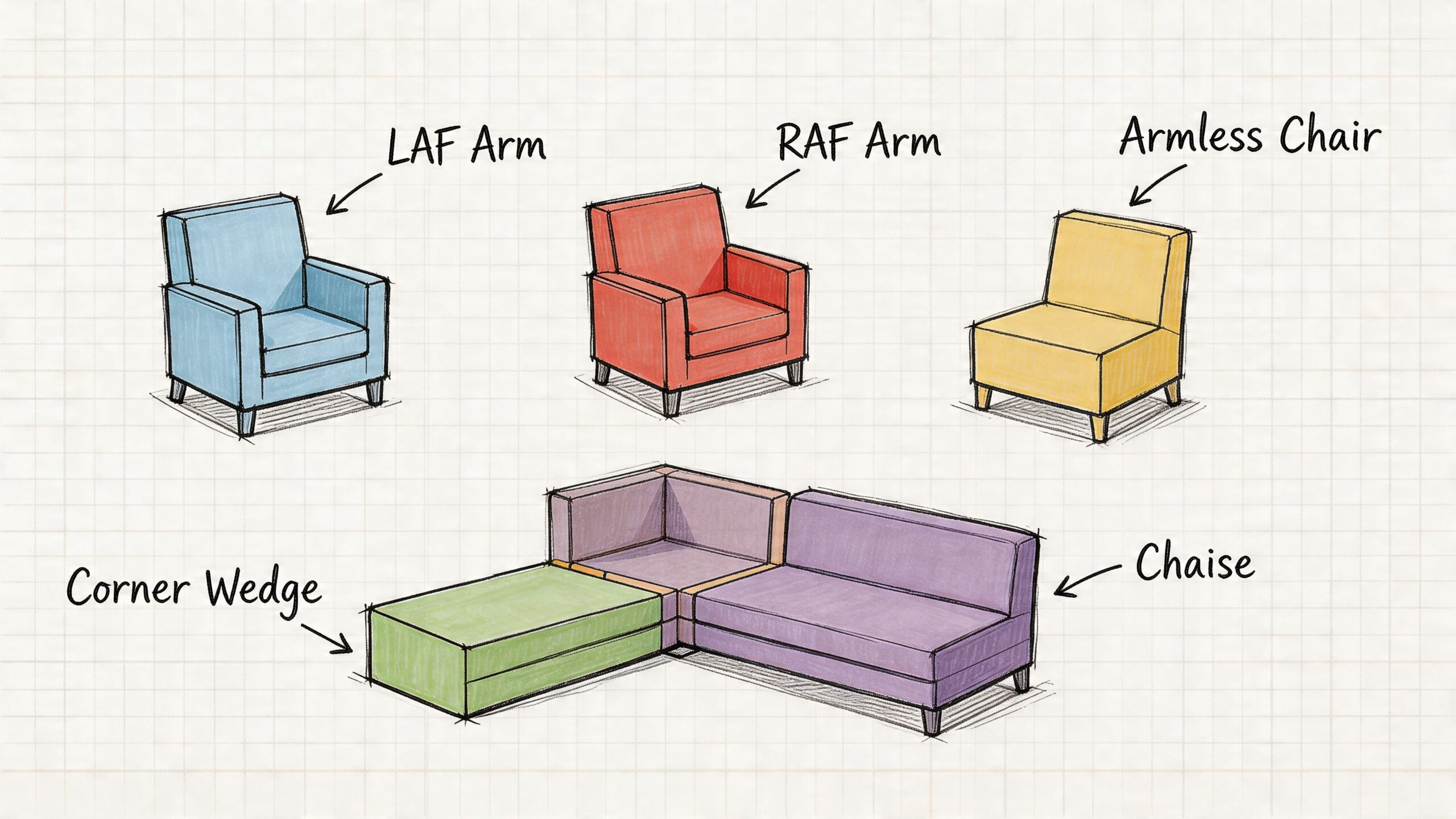
A lot of shoppers hear "build your own sectional" and picture tools, plans, and a long weekend in the garage. In practice, the smarter route is choosing from proven modular pieces and ordering a layout that fits your room. You still build it in the ways that matter. Size, orientation, seat count, fabric, and comfort. The frame construction stays in factory hands, which is usually the better trade if you want durability and a cleaner finish.
The basic pieces
A custom sectional goes together from a short list of parts. Once you know what each one does, the whole process gets much easier.
LAF and RAF
These mean left-arm facing and right-arm facing. The direction is based on how the piece looks when you're standing in front of it and facing it. Get this wrong, and a layout that looked perfect on paper can turn the wrong way in the room.Armless chair
This is the piece I use to solve a lot of fit problems. It adds seating length without the extra width and visual weight of another arm.Corner wedge
This creates the turn in an L-shape or a larger wraparound sectional. It helps a layout hold a conversation area, but it also takes up more floor space than some people expect.Chaise
A chaise is great for putting your feet up, reading, or movie nights. It also commits a stretch of floor to one person lounging instead of several people sitting, so it needs to make sense for how the room is used.Console
Some modular programs offer a center console with storage or cupholders. Handy in a basement or TV room. Usually less suited to a formal living room or a softer traditional style.
Common layouts that work well
The best layout depends on how people move through the room, not just how many seats you want.
| Layout | Best use |
|---|---|
| L-shape | Good for corners and everyday family seating |
| Sofa with chaise | Good when you want lounge comfort without a full sectional footprint |
| U-shape | Better for larger rooms or homes where the living room is the main gathering space |
| Long modular run | Useful for open rooms that need a clear anchor wall |
One caution from years on the showroom floor. Bigger is not always better. A long run of seats can look generous, but if it pinches a walkway, crowds a radiator, or forces everyone to sit too far from the coffee table, the room stops working.
Fabric and feel for Maine living
Custom ordering proves its worth. The Living Designs Furniture source noted earlier points to the key advantage. People tend to be happier with a sectional when they can choose the configuration and fabric instead of settling for a stock floor plan. That tracks with what I see. A sectional that fits the house and the household usually stays satisfying longer.
For upholstery, practical choices beat flashy ones.
- Tighter weaves usually stand up better in busy homes.
- Mid-tone colors hide day-to-day use better than very light solids.
- Textured fabrics often disguise cushion marks, pet hair, and light wear.
- Supportive cushions matter more over time than the soft first sit in a showroom.
If you want to sort through performance questions before you start ordering swatches, this guide to upholstery materials and how they perform is worth reading.
The best custom sectional choices are usually the plain sensible ones. Add the piece that fixes the room. Skip the feature that only looked good under showroom lights. Pick the fabric you will still respect after a wet March, a dog that claims the corner seat, and a house full of people at Christmas.
The Northern Advantage A Local Partner for Your Project
A custom sectional project goes better when somebody helps you pressure-test the decisions before the order is placed. That's especially true when the room has quirks, the layout matters, and you want the piece to last.
In Central Maine, that kind of help still matters. A third-generation, family-owned business that's been part of the area since 1950 brings a different kind of perspective to furniture shopping. The conversation tends to be less about chasing trends and more about finding the right fit for the house, the family, and the budget.
What practical support should look like
The best custom-order experience is straightforward. You sit down with room measurements, look at style options, sort through fabrics, and narrow the sectional into something that makes sense for your home.
That guided process is especially helpful when you're comparing reputable lines such as Flexsteel or looking beyond floor models. Instead of settling for whatever happens to be in stock, you can choose the configuration, color, and details that work in your living room.
A good local partner should also make the shopping side easier, not more stressful:
- No-hassle showroom help so you can ask questions without getting pushed
- Custom Order options so you're not boxed in by what's on display
- Real Sale Prices and the Price Chop approach so value feels transparent
- Simple Financing through the Nest Credit Card, including pre-qualification without credit score impact
- In-home delivery because a sectional isn't something one wants to wrestle through the front door themselves
Why local matters on a purchase like this
Furniture is personal, but sectionals are also logistical. They affect traffic flow, delivery planning, comfort, and how the room functions every day. That's where local experience helps.
A team that knows Central Maine homes, from older in-town layouts to newer open plans, can often spot the issues that don't show up on a product tag. If you'd like a clearer sense of what that kind of service looks like, Northern Mattress & Furniture 1st's local advantage lays it out plainly.
Your Custom Sectional Questions Answered
How do modular sectional pieces connect
Most modular sectionals use built-in connectors designed to keep pieces aligned during everyday use. Some systems lock more firmly than others, and some rely partly on weight and fit, but a properly designed modular sectional should feel secure in normal household use.
If you have kids who launch themselves onto furniture or dogs that use the chaise as a runway, ask specifically how the collection connects. That's a practical question, not a picky one.
Can you add pieces later or change the layout
Often, yes. That's one of the strongest arguments for a modular sectional in the first place.
You might start with a sofa and chaise, then later add an armless chair, a corner piece, or a different end unit if you move or remodel. The key is choosing a modular collection with long-term flexibility and confirming availability of matching components before you order.
Ask about future expandability before you fall in love with a fabric. Layout flexibility is one of the biggest benefits of modular furniture, but only if the line supports it.
How long does a custom order usually take
The honest answer is that it varies by brand, fabric choice, and production schedule. Custom ordering takes more patience than buying off the floor because the whole point is that the piece is being made to your choices.
That said, waiting is easier when the result solves the room correctly the first time. It's better to spend a little more time planning than to rush a major purchase and live with a sectional that never quite works.
What if something is damaged during delivery
Inspect the sectional as soon as it arrives. Check the fabric, seams, arms, feet, and connector points. Reputable retailers and delivery teams have a process for documenting damage and correcting problems.
Keep the paperwork, take clear photos if needed, and report issues promptly. Good communication makes these situations much easier to resolve.
Is custom always the right choice
No. If a standard sectional fits your room, feels good, and meets your quality expectations, that may be the right decision. Custom modular shines when your space is tricky, your preferences are specific, or you want a better balance between fit, durability, and everyday comfort.
If you're ready to sort out the right layout, fabric, and fit for your living room, Northern Mattress & Furniture 1st is a good place to start. Visit the Augusta or Skowhegan showrooms for a no-hassle look at custom options, practical design guidance, Real Sale Prices through the Price Chop approach, and Simple Financing with the Nest Credit Card, including no-impact prequalification. Complimentary coffee and bottled water don't hurt either.