
Blog
What to Look for When Buying a Sofa: A Maine Guide


You’re probably starting where many begin. You’ve looked at a few sofas online, maybe sat on one that felt fine for thirty seconds, and now you’re trying to figure out what matters before you bring one home.
In Central Maine, a sofa has to do more than look good in a showroom. It has to hold up through snow days, muddy spring afternoons, movie nights, overnight guests, and the daily habit of everyone in the house claiming the same favorite seat. That’s why knowing what to look for when buying a sofa comes down to a simple idea. Buy for the way you live, then check the construction that supports it.
Table of Contents
- More Than a Sofa It's the Heart of Your Maine Home
- Finding the Perfect Fit for Your Space
- Understanding Frame Joinery and Suspension
- A Guide to Cushions Fill and Comfort
- Choosing Upholstery That Suits Your Lifestyle
- The In-Store Test and Power of Custom Orders
- Budgeting Financing and Bringing Your Sofa Home
More Than a Sofa It's the Heart of Your Maine Home
On a January evening in Maine, the sofa is usually the spot that gets used hardest. It catches the end of the workday, weekend naps, movie nights, and half the conversations that matter in a house. That is why this purchase deserves more care than picking a color and calling it done.
Industry guidance from the International Housewares Association's furniture buying advice on expected sofa longevity notes that a sofa often stays in service for many years, with lifespan shaped by construction, materials, and daily use. If a piece is going to be part of your home that long, it pays to look past the first impression.
Looks still matter. Nobody wants a sofa that feels out of place in the room. But the better question is whether it will still feel right after a few Maine winters, a few muddy springs, and plenty of regular use. A sofa that looks sharp on day one can turn into a frustration if the seat feels awkward, the cushions lose shape, or the fabric shows wear too quickly.
A good sofa should make your room easier to live in and easier to keep up.
That practical view is how many families around Augusta, Skowhegan, and the surrounding towns shop for furniture. They want comfort. They also want a piece that holds up, fits the household, and feels like money well spent five or ten years from now.
That usually comes down to a few plain questions:
- Will it stand up to everyday sitting, stretching out, and family use?
- Will it work with the way your household lives?
- Will it still feel comfortable after the newness wears off?
- Will there be options if the standard floor model is close, but not quite right?
That last question matters more than people expect. At a local family-owned Maine store, you can usually solve problems that big-box shopping leaves on your lap. If the arm is too wide, the fabric is wrong for pets, or the cushion feels too soft, a custom order may be the better answer. If timing or budget is tight, financing and delivery coordination can make a good sofa possible without rushing into the wrong one.
Before you head into a showroom, it helps to browse living room furniture options and room ideas so you can narrow down the styles, silhouettes, and comfort preferences that fit your home. That small bit of homework makes the in-store visit a lot more useful.
Finding the Perfect Fit for Your Space
The most avoidable sofa mistake is buying the wrong size. Not low quality. Not the wrong color. Wrong size.
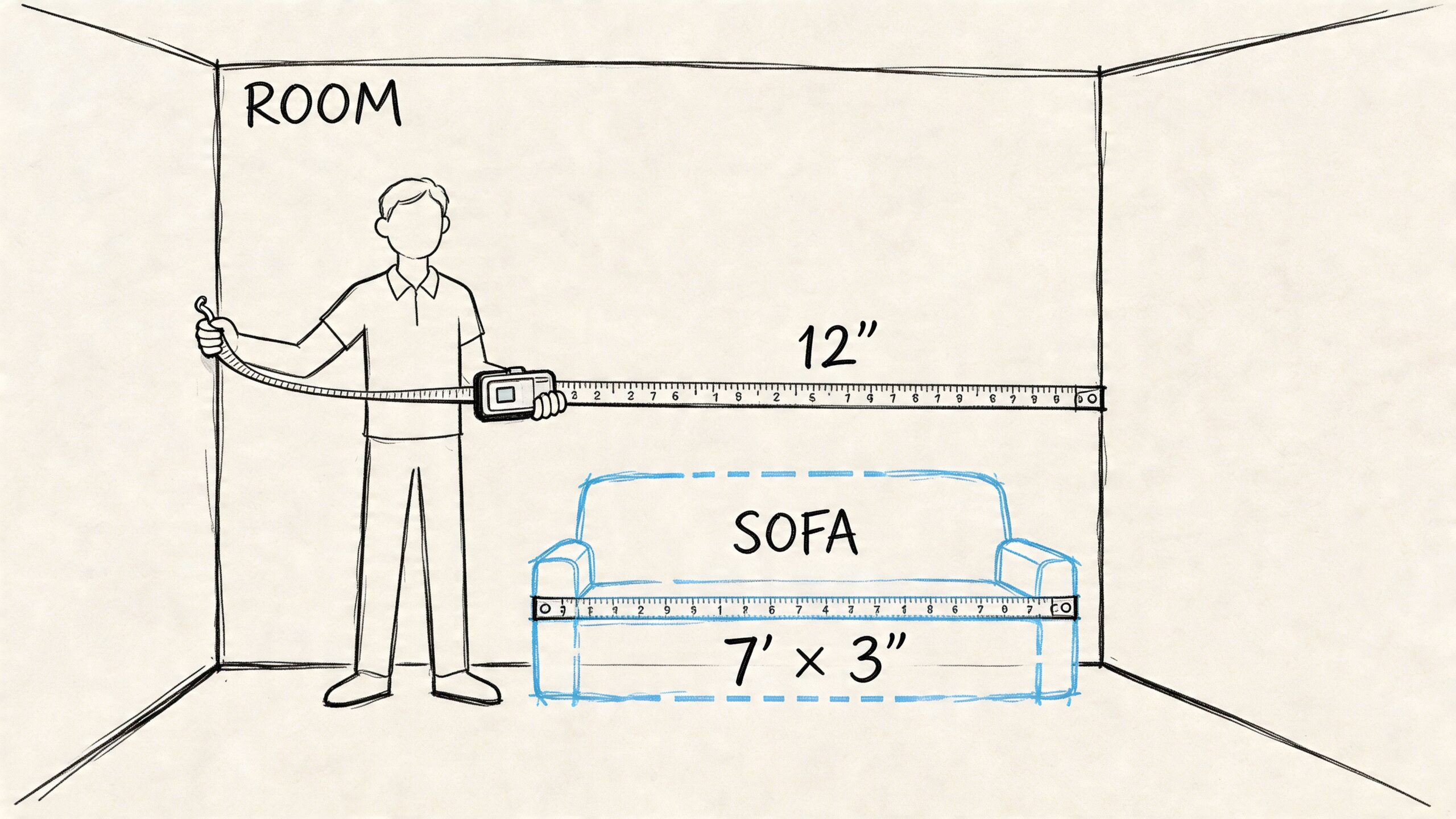
A sofa can be beautifully made and still be a poor choice if it blocks traffic, crowds the room, or won’t make it through the front door. Proper measurement prevents up to 30% of furniture delivery issues, and standard sofa proportions like 24-inch seat depth and 18-20 inch seat height are worth checking against your room and entry points, as explained in this furniture measuring guide for sofas and room layouts.
Start with the room, not the sofa
Before you fall in love with a style, take measurements and write them down. Don’t trust memory. Don’t eyeball it.
Bring these numbers with you:
- Room width and length so you know the overall footprint you’re working with
- Wall space where the sofa will sit
- Distance to nearby furniture so the room still feels open
- Walkway clearance because people need to move around the room comfortably
Painter’s tape is surprisingly helpful. Tape the sofa dimensions out on the floor. That gives you a quick read on whether the piece feels balanced or bulky.
Practical rule: If the taped outline already feels too large when the room is empty, it won’t feel better once tables, lamps, and baskets are back in place.
If you’re furnishing a smaller living room, scale matters even more. A slim arm can save space. A sofa with raised legs can feel lighter visually. A sectional can work, but only if the room shape supports it.
Measure the path into the house
This is the part people skip, then regret later.
Measure every spot the sofa has to pass through:
- Doorways
- Hallways
- Stairwells
- Tight corners
- Ceiling height if the path turns upward
Packaging adds bulk, so leave some breathing room. If you live in an older Maine home, this step matters even more because entryways and staircases can be less forgiving than new construction.
A simple checklist can save a lot of aggravation:
| Area to measure | Why it matters |
|---|---|
| Door opening | Confirms the sofa can enter the home |
| Hall width | Prevents jams during turns |
| Stair width and landing | Helps with multi-level delivery |
| Room footprint | Keeps the sofa in scale with the space |
If you want a handy reference before shopping, Northern provides a step-by-step furniture measuring guide for delivery and room planning.
Understanding Frame Joinery and Suspension
If style sells the sofa, construction determines whether you’ll still enjoy it years from now. The frame and suspension are the parts you don’t notice right away, which is exactly why many shoppers overlook them.
The difference between “looks good today” and “holds up over time” usually shows up.
What a strong frame feels like
A quality sofa should feel solid when you sit down and when you stand back up. It shouldn’t creak, wobble, or flex in a way that makes the whole piece feel loose.
Frame quality often comes down to material and joinery. Kiln-dried hardwood is widely respected because it resists warping better than cheaper materials. Corner blocks and stronger joints help the frame stay square under daily use. If a sofa feels light and flimsy, there’s usually a reason.
In a showroom, try this:
- Lift one front corner slightly and notice whether the rest of the sofa feels stable
- Press on the arms to see if they shift
- Look under the cushions if possible, because hidden construction often reveals the true quality
- Ask direct questions about frame material and how the joints are reinforced
For shoppers who want a plain-English primer on wood quality, this guide to hardwood furniture and long-term durability helps explain why the material underneath matters.
Why the suspension matters just as much
The suspension is what supports you under the cushions. It carries weight every day, and if it’s weak, the sofa starts to feel tired long before the fabric shows wear.
The internal spring system is a critical structural component in long-term sofa durability, and a spring gauge of 8 to 9 is considered ideal for balancing support and longevity, according to this spring gauge and sofa suspension explanation.
That doesn’t mean every shopper needs to become a furniture engineer. It does mean you should know what you’re asking about.
Here’s the practical breakdown:
- Hand-tied systems are prized for staying in place and distributing weight evenly.
- Simpler spring or webbing systems can still be comfortable, but lower-grade versions tend to lose support sooner.
- A strong frame plus weak suspension is still a weak sofa in daily use.
Don’t judge support by the top cushion alone. Sit still for a minute, then shift your weight side to side. A better-built sofa stays level and composed.
If you’re comparing brands, names like Flexsteel earn attention. Not because of marketing language, but because better-known upholstery makers often provide more specific construction details than low-information imports. The more transparent the build specs, the easier it is to compare one sofa to another on something real.
A Guide to Cushions Fill and Comfort
The decision about whether a sofa is “liked” is often made in the first few seconds. The reaction is typically to the cushion feel.
That first impression matters, but comfort and cushion quality aren’t the same thing. A sofa can feel soft on day one and still break down quickly. It can also feel a bit firmer in the showroom and become the seat everyone wants six months later.
Foam first, then softness layers
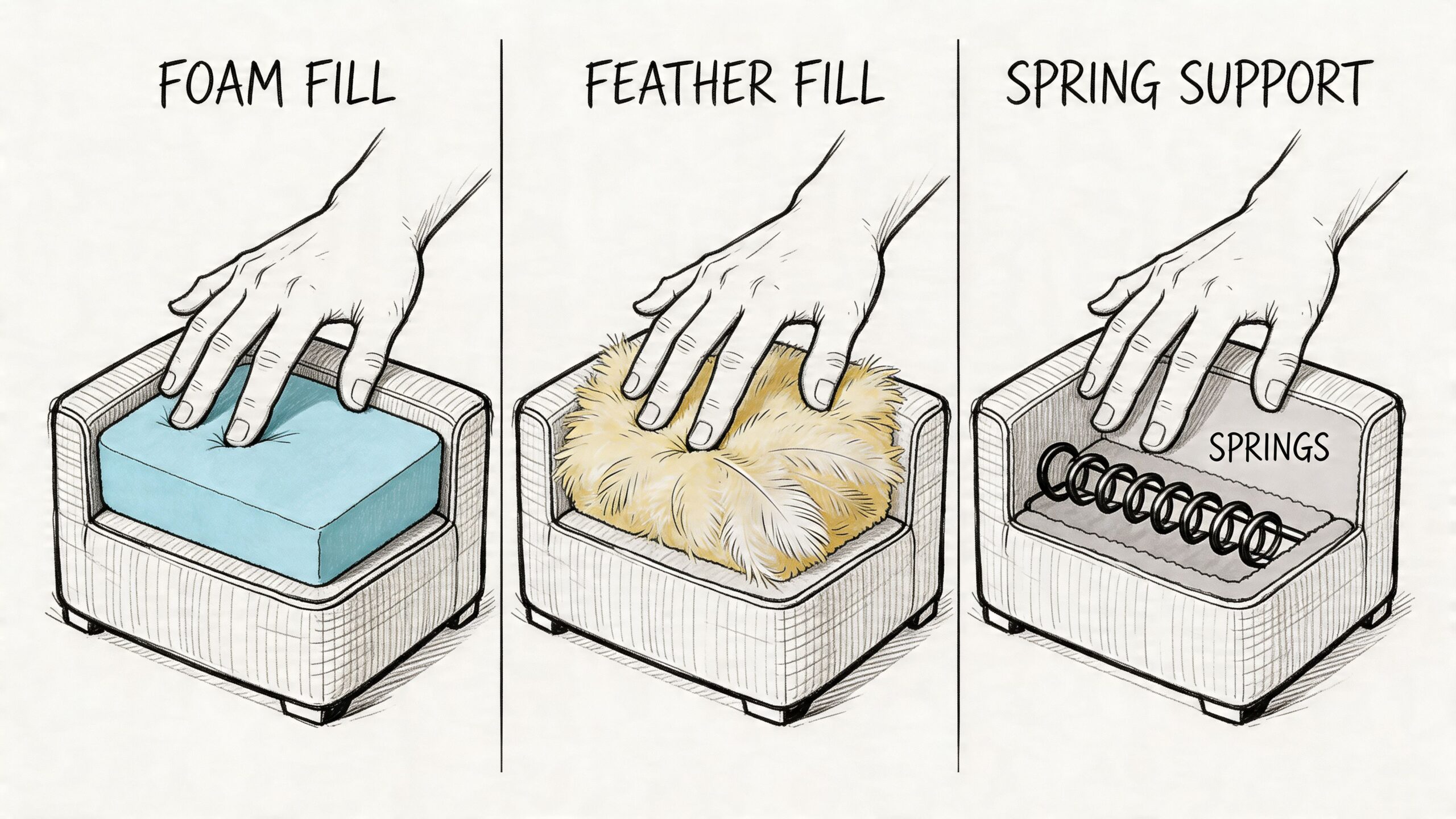
The core of most sofa cushions is foam, and the quality of that foam makes a major difference over time. Polyurethane foam density directly affects durability. Denser foam is heavier and lasts longer, while poor-quality foam may feel acceptable at first but can deteriorate within months and develop permanent dents, as noted in this guide to sofa foam density and cushion breakdown.
That’s the hidden trade-off with bargain sofas. They can feel pleasant in a quick test, then lose their shape much sooner than expected.
A simple comparison helps:
| Cushion type | What it feels like | What to expect |
|---|---|---|
| Foam core only | Consistent, often firmer | Quality depends heavily on foam density |
| Foam with batting wrap | Slightly softer, more finished feel | Better comfort and a more tailored look |
| Feather or down blend | Plush and relaxed | Needs more upkeep and regular fluffing |
| Memory foam or engineered blends | Contouring and supportive | Often chosen for better shape retention |
What works best depends on the household. Some people want a seat they sink into. Others want support that makes it easier to get up and keeps the sofa looking tidy.
Softer isn’t always better. For many homes, resilient support ends up feeling better over time than a cushion that collapses early.
Attached cushions versus loose cushions
This part often gets overlooked, but it changes both maintenance and appearance.
Loose cushions are easier to rotate, fluff, and clean around. If one spot gets all the use, you can usually even things out. They also tend to give a more casual, inviting look.
Attached cushions look neater and require less daily fuss. They can be a smart pick for households that want a cleaner profile and less cushion shifting. The trade-off is that once wear shows up in a fixed seat, you have fewer options.
A few comfort questions help narrow it down:
- Do you sit upright, lounge, or nap? Deep, soft seats suit lounging better than upright conversation seating.
- Do you mind maintenance? Feather blends feel cozy but need attention.
- Do you want the sofa to look consistently sharp all the time? Attached backs often keep a cleaner silhouette.
If you’re trying sofas in person, stay seated for more than a moment. Lean back. Sit on the edge. Tuck your legs up if that’s how you relax at home. A cushion has to match your habits, not just your first impression.
Choosing Upholstery That Suits Your Lifestyle
Saturday night on the coast often looks the same. Someone drops onto the sofa in damp jeans after walking the dog, a child climbs up with a snack, and before long the whole piece is doing real work. Upholstery has to hold up to that kind of daily living, not just look good on the showroom floor.
Match the fabric to the household
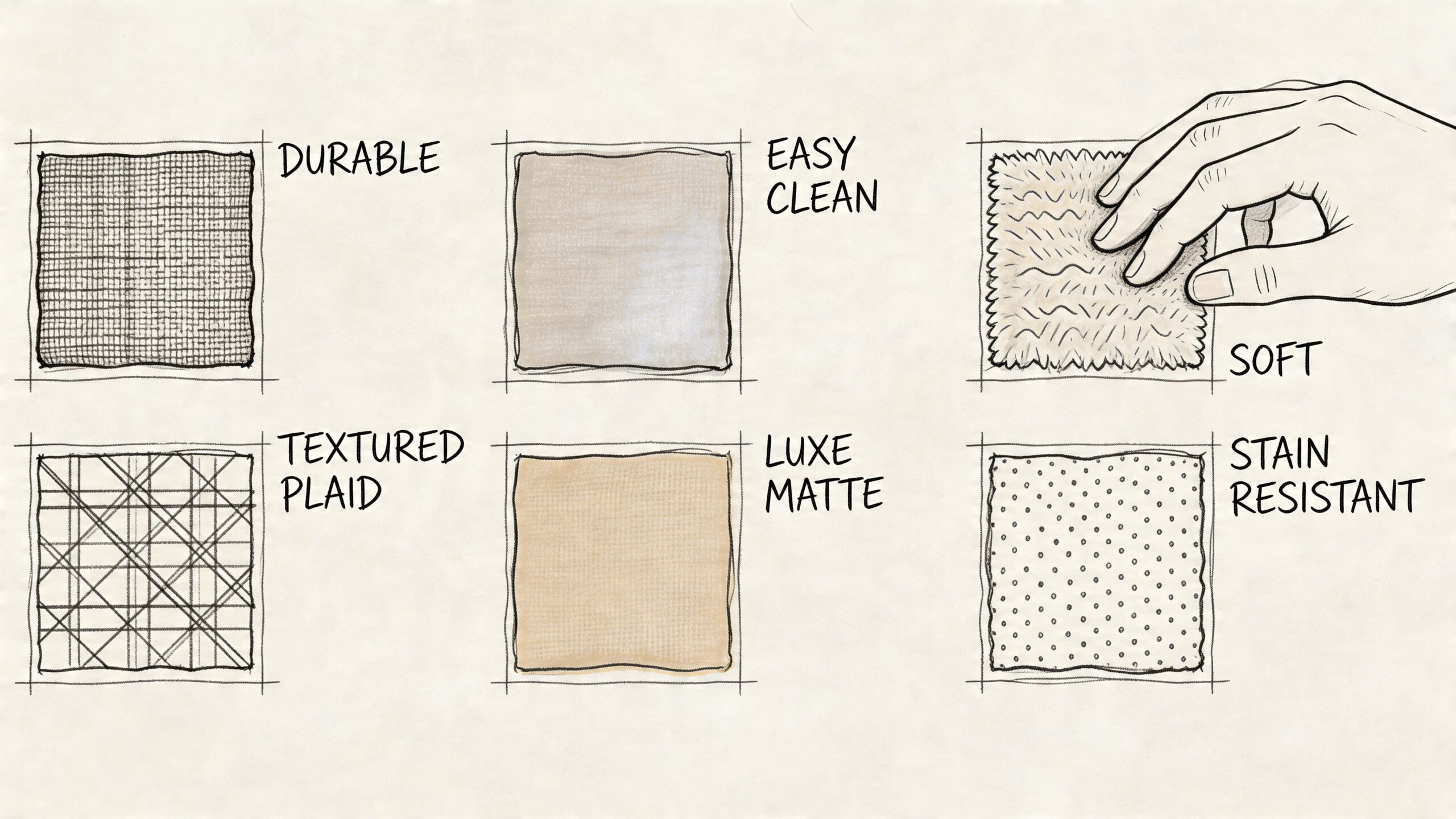
Start with your habits. A sofa in a busy family room needs different upholstery than one in a guest room or formal sitting area. The right fabric lowers the stress of ownership. The wrong one leaves you fussing over every paw print, spill, or snag.
Abrasion ratings matter here. The ACT fabric performance guidelines explain how double rub testing is used to judge upholstery durability for residential and commercial use. In plain language, higher-rated fabrics are usually better choices for homes where the sofa gets used hard every day.
Some practical trade-offs show up again and again in the store:
- Performance fabrics are a smart fit for active homes because they tend to clean up more easily and resist everyday wear better.
- Microfiber is forgiving, comfortable, and often a good answer for households that want low-fuss maintenance.
- Linen blends bring a relaxed, airy look, but they usually make more sense in lower-traffic rooms where wrinkles and wear are less of a concern.
- Velvet can wear well if the quality is good, and it gives depth of color that flatter weaves often cannot.
- Leather and leather-look materials come down to feel, upkeep, and budget. Some customers love the easy wipe-down. Others prefer the warmer hand of fabric.
Texture matters as much as fiber content. Open weaves can catch pet nails. Very smooth fabrics may show every crease or slide. In Maine homes, where boots, blankets, and pets all end up on the sofa, those little details make a bigger difference than people expect.
What to test before you order
A fabric sample tells you a lot if you handle it thoughtfully. Rub it with your palm. Scratch it lightly with a fingernail. Set it in a window and check the color in daylight. If you have a dog at home, ask yourself whether a claw can catch the weave in two seconds.
That quick test often rules out the wrong choice fast.
For a closer look at fibers, finishes, and care needs, this guide to upholstery materials for everyday furniture use can help narrow the field before you order.
Custom upholstery solves a lot of common compromises at a local family store. You may like one sofa’s scale, another sofa’s arm shape, and a third fabric’s durability. Those pieces do not always have to stay separate. If the manufacturer offers custom order options, you can often pair the frame that fits your room with a fabric that fits your life. That is often the difference between a sofa you tolerate and one that still makes sense five or ten years from now.
The In-Store Test and Power of Custom Orders
Online research is useful. It helps narrow the field. But a sofa is one of those purchases that benefits from being tried in person.
You can’t tell enough from a product photo. Seat height, back support, arm comfort, and cushion response all change once you sit down. That’s especially true if more than one person in the home will use the sofa differently.
How to do a real sit test
Don’t perch on the edge for ten seconds and call it good. Use the sofa the way you live.
Try it in a few positions:
- Sit upright with your feet on the floor
- Lean back for a few minutes
- Rest your arm on the armrest
- Shift to the corner seat if it’s a sectional
- Check whether the back supports your shoulders and head comfortably
A sofa that works for reading may not work for napping. One that looks sleek may have arms too hard for everyday lounging. Some people need a shallower seat for easier posture. Taller family members may want more depth.
The right sofa fit is personal. A model that feels perfect to one customer can feel awkward to the next, even when both agree it looks great.
The in-store visit matters for another reason too. It lets you slow down. In a no-hassle showroom, people can compare firmness, scale, and style without rushing. That’s often how the better decision gets made.
Why custom orders solve common compromises
Floor models are starting points, not the whole story.
That’s where custom ordering helps. If you like a sofa’s frame and seat feel but need a different fabric, arm style, or sectional layout, many manufacturers offer those changes. That can be especially useful in older Maine homes, open-concept spaces, or rooms that need a very specific configuration.
Northern Mattress & Furniture 1st offers custom order options through brands such as Flexsteel and Trailways Amish, along with one-on-one help selecting styles, fabrics, and configurations that fit a specific room.
That changes the buying process in a good way. Instead of settling for “close enough,” you can often choose the construction and comfort you want, then tailor the look and layout to your home.
Custom ordering also helps with common trade-offs:
| If you love this | But need this | Custom ordering can help |
|---|---|---|
| The sofa shape | A different color | Swap fabric or upholstery |
| The seat comfort | A better room fit | Adjust configuration or size options |
| The brand construction | A more personal look | Choose among broader finish and textile choices |
Budgeting Financing and Bringing Your Sofa Home
A sofa budget should follow the parts that affect daily use. That means construction, comfort, and fabric come before decorative extras.
If the frame is weak or the cushions break down early, a lower price up front doesn’t feel like a win for long. On the other hand, paying for features you don’t care about doesn’t make sense either. The smart move is matching your budget to how heavily the sofa will be used.
Spend on the parts that affect daily use
For most households, these are the places worth prioritizing:
- The frame and suspension because that’s the structure you can’t easily fix later
- The cushion quality because comfort changes fastest when materials are weak
- The upholstery choice because daily wear shows there first
- The size and configuration because a poor fit is frustrating no matter how nice the sofa is
This is also where transparent pricing matters. Real sale prices are more useful than inflated tags followed by dramatic markdowns. A straightforward value conversation helps people compare options clearly and buy with fewer regrets.
Keep the buying process simple
For some shoppers, paying all at once works fine. For others, spreading the purchase out makes more sense, especially when they’re furnishing a room or moving into a new place.
Financing can be useful when it stays simple and easy to understand. Northern’s furniture financing options and Nest Credit Card pre-qualification include the ability to pre-qualify without a credit score impact, which can help shoppers explore payment options before committing.
Delivery matters too. Even after all the measuring and planning, getting the sofa into the room and set in place is part of the experience. Professional in-home delivery tends to remove a lot of stress from that last step, especially with heavier pieces, tighter entries, or multi-level homes.
A good sofa buying process should feel steady from start to finish. You measure carefully, test thoroughly, choose materials that fit your life, and bring home a piece that supports the way your household lives.
If you’d like help comparing styles, checking fit, or exploring custom options, visit Northern Mattress & Furniture 1st in Augusta or Skowhegan. You can browse at your own pace, ask practical questions, and get guidance on finding a sofa that fits your room, your routine, and your budget.