
Blog
Signs You Need a New Mattress: A Maine Guide


In Central Maine, a lot of people blame rough sleep on everything except the bed. The weather changed. You worked in the yard. You hauled pellets. You slept funny. That happens, sure. But if you’re waking up stiff more mornings than not, your mattress may be telling on itself.
Around Augusta and Skowhegan, I hear the same story in different versions. Someone says their back loosens up after coffee and a hot shower. Someone else says they sleep better at camp, in a hotel, or even on the guest bed. Those are often signs you need a new mattress, not just a tougher morning routine. A bed is part of your home’s daily health, right up there with heat, light, and a good roof.
Families in this part of Maine have been thinking about sleep the practical way for generations. Since 1950, local mattress knowledge has been passed down here the same way a lot of things are in Maine: by paying attention to what holds up, what wears out, and what keeps people comfortable through long winters. This isn’t about chasing the fanciest model on the floor. It’s about finding the right fit so your body can rest the way it should.
Table of Contents
- That Morning Ache Has a Story to Tell
- Key Physical and Sleep Quality Signs
- How to Self-Assess Your Mattress at Home
- Understanding Mattress Lifespan by Type
- Finding Your Right Fit in Central Maine
- An Investment in Your Home You Can Feel Good About
- Frequently Asked Questions About Mattress Upgrades
That Morning Ache Has a Story to Tell
When the seasons shift in Maine, plenty of folks expect to wake up a little creaky. Cold mornings can make everything feel tighter. But when that ache keeps showing up, especially after what should’ve been a full night’s sleep, it’s worth looking at the mattress before blaming your age, the weather, or yesterday’s chores.
A failing mattress usually doesn’t quit all at once. It slips. Support softens. A spot under your hips starts dipping just enough to throw off your alignment. Springs get louder. Foam stops bouncing back the way it used to. You may not notice the bed changing night to night, but your body notices.
A mattress problem often shows up in the morning before it shows up to the eye.
That’s why the first clue is so often the pattern, not the mattress itself. You get out of bed with a sore lower back. Your neck feels pinched. Your shoulders feel loaded up. Then later in the day, once you’ve moved around, you feel more normal. That doesn’t prove the mattress is the cause, but it’s one of the clearest reasons to take a closer look.
If your sleep setup is already part of a bigger conversation about pain, this guide on helping back pain with the right mattress is a useful next read.
In a house, some things wear out loudly. A furnace bangs. A washer leaks. Mattresses are quieter. They wear out underneath you, one uncomfortable morning at a time.
Key Physical and Sleep Quality Signs
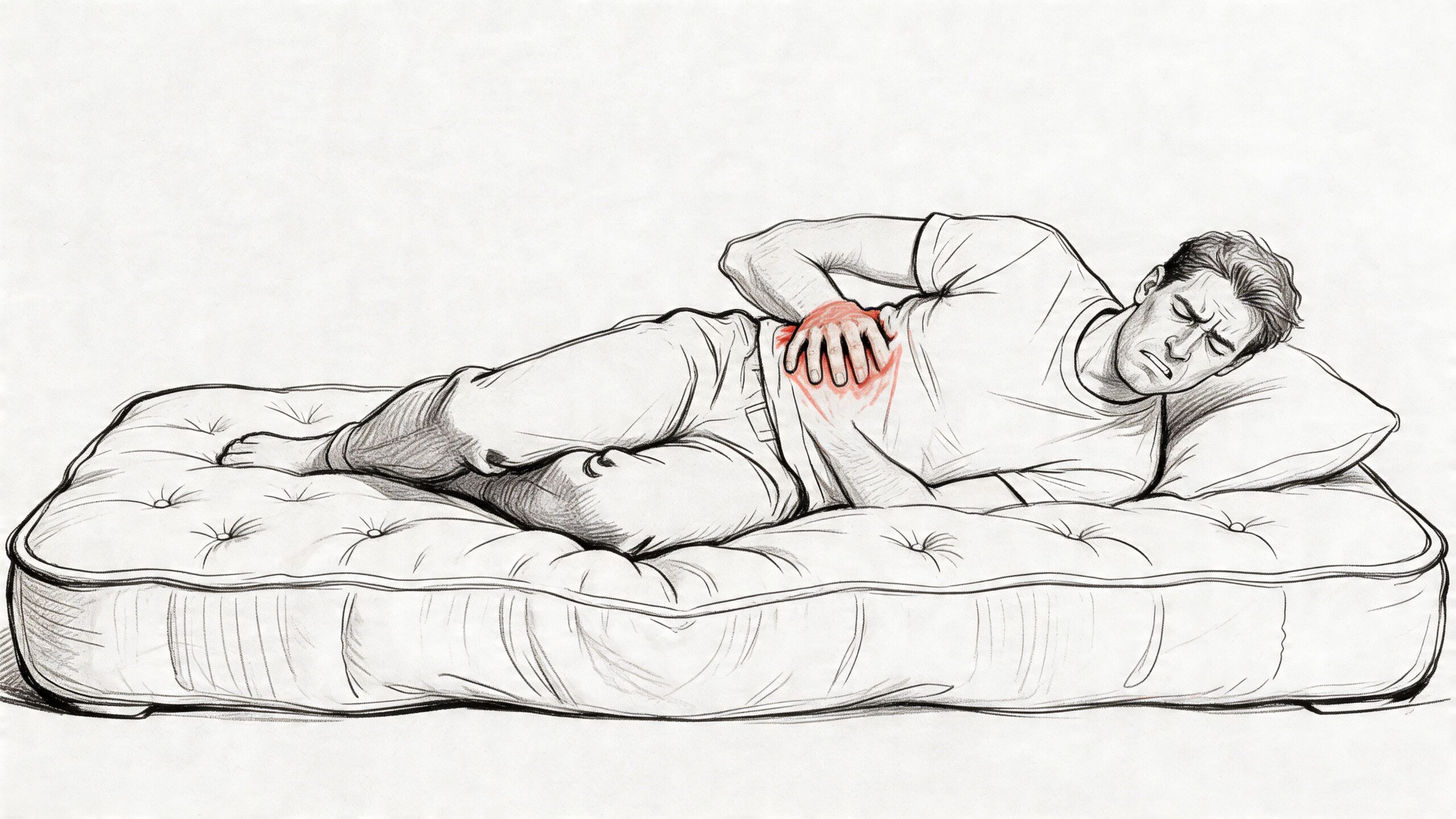
Some signs you need a new mattress are obvious. Others are easy to brush off for months. The trick is to stop looking at one bad night and start looking at repeated patterns.
What your body notices first
Morning pain that’s new or getting worse. Waking up with new aches, pains, or stiffness, especially in the back, neck, or hips, is one of the strongest warning signs. Naturepedic notes that this can affect up to 70% of poor sleepers in sleep studies, and it points to a mattress that’s no longer supporting the body well enough for proper alignment during the night (Naturepedic on signs it’s time to replace your mattress).
Hip and shoulder pressure. Side sleepers usually feel this first. When comfort layers wear down, sharper pressure builds at the shoulders and hips. People often describe it as feeling like they’re sleeping “on” the mattress instead of being gently supported by it.
Stiffness that fades after you get moving. This is a practical clue. If you loosen up after a shower, a walk to the kitchen, or half an hour of moving around, your sleep surface may be putting your body in a poor position for hours at a time.
Practical rule: If discomfort shows up mostly after sleeping and improves once you’re moving, don’t ignore the mattress.
What your sleep habits start doing
More tossing and turning. When a mattress has soft spots, lumps, or poor pressure relief, your body keeps trying to find a better position. That usually means more shifting through the night and less settled sleep.
You feel your partner more than you used to. Motion transfer often gets worse as materials age. If every turn, rise, or edge movement wakes the other person, the mattress may have lost the stability it once had.
You sleep better somewhere else. This one matters more than people think. If you regularly rest better on a guest bed, at camp, or in a hotel, your own mattress may no longer be the right fit.
Allergy symptoms seem worse in bed. Older mattresses can hold onto dust, moisture, and other irritants. If your nose is stuffy or your breathing feels worse at night, the mattress may be part of the problem.
Here’s the trade-off people run into. They try to solve a support problem with softer bedding, another pillow, or an extra blanket under the sheet. That may make the bed feel better for a short while, but it doesn’t restore the support underneath. Comfort accessories can help with feel. They can’t fix a worn-out core.
How to Self-Assess Your Mattress at Home
Before you shop, check the mattress you already have. A good home assessment doesn’t cost anything, and it can tell you whether you’re dealing with normal wear or a bed that’s past its useful life.
Start with the surface
Strip off the sheets and look at the mattress in daylight. Don’t do this with the bed half-made. A fitted sheet hides more than people realize.
Use this quick checklist:
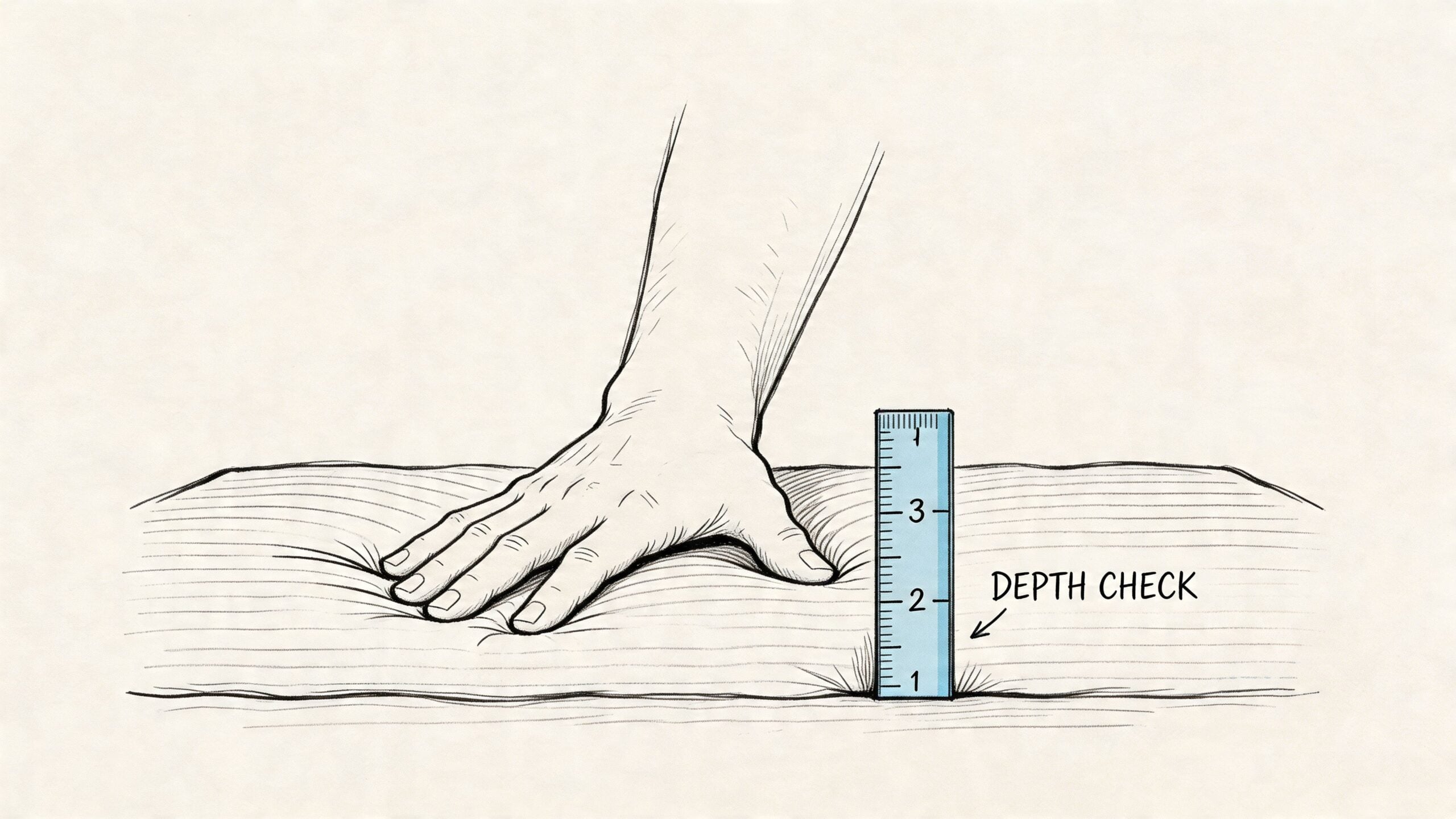
- Lay a straight edge across the mattress. A broom handle, yardstick, or any straight board can work.
- Measure any visible dip. A key benchmark is an indentation deeper than 1.5 inches, which indicates breakdown in the support structure rather than ordinary wear, according to Yankee Mattress’s guidance on signs it’s time to replace your mattress.
- Check the spots where you sleep most. Look under the hips, shoulders, and the center of the bed.
- Look for permanent body impressions. Foam should recover. If the shape stays there, that’s a problem.
If you’re not sure how old your bed is, this article on how old your mattress might be and why it matters can help you think through timing.
Then check how it behaves
Now test the mattress the way you use it.
- Sit on the edge and notice whether it collapses fast or feels uneven.
- Lie in your usual sleeping position for a few minutes. Pay attention to whether your hips sink too far or one side feels lower.
- Rotate it if your mattress allows rotation, then let it settle. If the same impressions stay put, that wear is likely permanent.
- Listen for noise in innerspring or hybrid models. Squeaks and creaks don’t always mean immediate failure, but they often show that the internal system is getting tired.
Don’t judge a mattress by fabric alone. A clean cover can still be hiding a worn support system underneath.
What doesn’t work is pressing down with one hand and declaring the mattress fine because it still feels “soft enough.” Softness and support aren’t the same thing. Plenty of worn mattresses still feel plush at first touch. The problem shows up once your full body weight settles in for the night.
Understanding Mattress Lifespan by Type
A mattress is a use item, not a forever item. That surprises some people because an old bed can still look decent from the doorway. But the inside materials perform the essential work, and those materials wear down with repeated nightly use.

The basic replacement timeline
For most households, mattresses need replacement every 6 to 8 years, because materials gradually break down and lose support, a guideline endorsed by experts cited by WebMD in its overview of signs to replace your mattress. That doesn’t mean every bed expires on the same birthday. Body weight, sleeping style, how often the bed is used, and the quality of the build all matter.
An innerspring usually starts showing fatigue through weaker support and more motion. Foam models tend to show wear through impressions and loss of rebound. Hybrids can age well when built right, but they still depend on both the coil unit and the comfort layers staying sound.
For readers comparing constructions, this guide to what a hybrid mattress is and how it works helps explain why hybrids feel different from all-foam or traditional spring beds.
Average Mattress Lifespan by Type
| Mattress Type | Average Lifespan | Key Reason for Wear |
|---|---|---|
| Innerspring | Often within the general 6 to 8 year replacement window | Coils lose support and the surface becomes less even over time |
| Memory Foam | Often within the general 6 to 8 year replacement window | Foam compresses and may stop recovering cleanly after use |
| Hybrid | Often within the general 6 to 8 year replacement window | Both foam layers and coil systems can wear, even if the feel stays comfortable for a while |
Materials don’t fail on your schedule. They fail when nightly use has taken enough support away that your body starts paying for it.
What works is using lifespan as a checkpoint, then confirming with how the mattress feels and measures. What doesn’t work is keeping a bed just because it was expensive when you bought it or because the outside still looks respectable.
Finding Your Right Fit in Central Maine
Once you know the old mattress is the issue, the next question is which replacement will genuinely help. Many individuals make a mistake here. They shop by sale tag first, then try to live with the result for years.
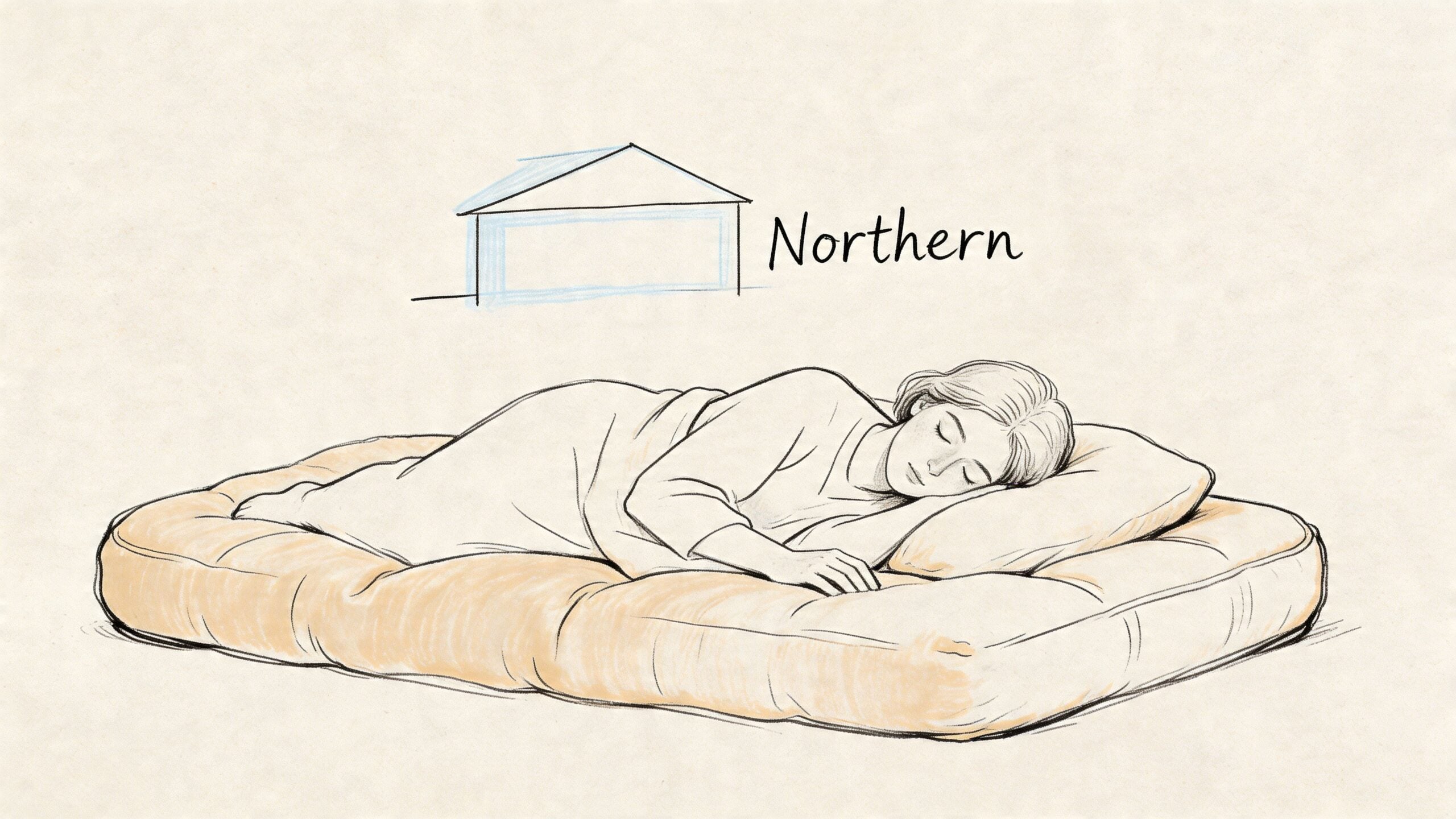
Fit matters more than a quick deal
A mattress has to match the sleeper, not just the room or the budget. The right fit depends on how you sleep, where you carry weight, whether you sleep alone, and whether you prefer a steadier surface or more cushioning. Someone with shoulder pressure may need very different comfort than someone who mostly sleeps on their back and wants stronger support through the middle.
Weight changes matter too. Bear Mattress notes that a weight gain or loss of 20+ pounds can change how your body interacts with the mattress and create new pressure points, even if the bed used to feel fine (Bear Mattress on signs you need a new mattress). That’s one reason an older “good enough” choice can stop working.
Here’s a practical way to think about fit:
- Back sleeper. Usually does best with steady support that keeps the hips from dropping too far.
- Side sleeper. Often needs enough give for shoulders and hips without losing alignment.
- Stomach sleeper. Usually needs a flatter, firmer feel so the midsection doesn’t sink.
- Couples. Often benefit from better motion control and a surface that doesn’t pull both sleepers toward the middle.
What helps in a real showroom
Online photos can show fabric and style. They can’t tell you how your spine sits on a mattress after ten minutes. That’s why trying beds in person still matters, especially if you’ve been waking up sore.
A good showroom experience should feel low-pressure and useful. You should be able to lie down in your normal position, take your time, and compare plush, medium, and firm feels without someone rushing you. Around Central Maine, people also appreciate a place that feels comfortable enough to think clearly. Coffee helps. So does a no-hassle atmosphere.
If you want to plan a stop, you can see the Augusta showroom location before heading out.
What works is testing support with your whole body, in your usual position, long enough to notice pressure and alignment. What doesn’t work is sitting on the edge for thirty seconds and saying, “Seems nice.”
There’s also the home side of the decision. A mattress isn’t just a product. It changes how your bedroom feels, how well you recover overnight, and how your whole house supports daily life. If you need a certain size, comfort level, or even a setup beyond what’s on the floor, custom ordering can make more sense than forcing your sleep around whatever happens to be in stock that day.
An Investment in Your Home You Can Feel Good About
People hesitate at the same point for understandable reasons. A new mattress is a real purchase. But so is living with poor sleep, rough mornings, and a bed you no longer trust.
The better way to look at it is as an investment in health and home comfort. You spend hours on that mattress every night. If it’s not supporting you well, the cheap option can become the costly one in everyday wear on your body.
Value matters here. Real value means honest pricing, not inflated markups dressed up as dramatic markdowns. It also means having options if you need to spread the cost out. Programs like the Nest Credit Card can help make that easier, including the ability to pre-qualify without a credit score impact. If you want a broader look at why this purchase matters, this piece on why a high-quality mattress supports long-term health is worth your time.
The main thing is not to wait until the bed is unbearable. A bad mattress is often used for too long because its decline is gradual. Your body usually notices first.
Frequently Asked Questions About Mattress Upgrades
Can a mattress topper fix a worn-out mattress
Usually, no. A topper can change surface feel. It may add a little softness or cushion. But if the mattress underneath has lost support, a topper won’t rebuild that structure.
Does rotating a mattress help
Yes, in many cases it helps distribute wear more evenly. But rotation is maintenance, not repair. If the mattress already has deep impressions, sagging, or poor support, turning it won’t bring it back.
Can body changes make a mattress stop feeling right
Yes. A gain or loss of 20+ pounds can change pressure points and how much you settle into the bed, which is one reason a mattress can suddenly feel wrong even if it isn’t very old. That issue is often overlooked in standard mattress advice.
Should I replace the mattress if I only sleep badly sometimes
Look for patterns, not perfect consistency. If poor sleep, stiffness, or discomfort keeps pointing back to the bed, that’s worth taking seriously. A mattress problem doesn’t always create misery every single night.
If you’re ready to improve your sleep without the usual showroom pressure, Northern Mattress & Furniture 1st is a solid place to start. Their third-generation team has served Central Maine since 1950, with showrooms in Augusta and Skowhegan, a no-hassle atmosphere, complimentary coffee and bottled water, custom order options beyond the floor, Real Sale Prices backed by the Price Chop promise, and simple financing through the Nest Credit Card with no-impact pre-qualification. Visit a showroom or browse their Support Hub if you want help finding the right fit for your home.